


 Francais
 Deutsch
 Italiano
Refine Your Search
V2 stock footage and images
- Showing 7765 to 7770 of 9941 results more
more Hide
Hide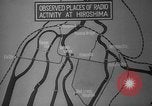
Study of radioactivity and intensity of neutron distribution in the epicenter of atomic bombing of Hiroshima.
Radioactivity measurements observed in Hiroshima after the atomic bomb blast in World War 2. Animation explains the degree of intensity with which neutrons distributed in earth in the area of epicenter. Scientist looks into instrument. Map shows intensity measurements. Scientists carry gamma ray spectrometer instrument to measure intensity through debris and keep it near a building. Measurement is made through the electrometer. Animated map depicts Intensity distribution near epicenter and highlights Shima Center. Rubble and debris in destruction area of Hiroshima. Map shows degree of intensity as 74.6J. Animated graph makes a comparison of two intensity curves. A weather station near Epicenter. Man shows a pair of flash-burned trousers. A flash-burned door. Animated map and graph shows intensity distribution in the neighboring districts of Takasu. Man examines tiled roof and takes samples of water from a jug in Takasu. Bottles with Japanese writing on them. Scientist does chemical analysis. Graph giving chemical details. A group of scientists survey the damage. Map depicts intensity distribution near Takasu.

Japanese survey team studies direction of blast wave in city after atomic bombing of Hiroshima, Japan.
Film titled 'Shadow' shows Atomic bomb damage to the city of Hiroshima in World War 2. Demolished concrete and granite building. Burned concrete. Sealed and burned granite. Damaged electric pole. Shadows on large gas tank caused by turn valve and pipes. Shadow of ladder on tank. Burned back of chairs in room. Burn shadow image of a pedestrian who had been walking on Yorozuya Bridge at the time of the blast. A man stands over the shadow showing the leg stride visible in the shadow. Shadow of railing on concrete bridge. Damaged railings on bridge. Shadow on railings. Study of direction of blast and radiation. Animated chart of blast effect. Credit association building roof, Japanese physicists checking for point of detonation and working. Japanese survey team checks shadow on building. Epicenter as seen from window of building. Survey team checks railing on building. Demolished steel gas tank. Shadow of turn valves on tanks. Japanese soldiers and civilians walk near shrine. Survey team checks monument. Sealed granite monument and instrument used in surveying. Japanese survey team with compass. Animated charts on damage. Animated charts showing distance of various places from point of detonation.
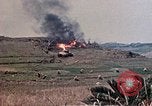
Flamethrower tanks shoot flames into Japanese caves on side of hill in Okinawa.
U.S. 'K' Company, 3rd Battalion, 1st Marine Regiment and tanks move up a hill in Okinawa during World War 2. A Flamethrower tank in operation against Japanese enemy on caves on side of hill. The Flamethrower tank shoots flames into Japanese caves on side of hill.
Battle of Okinawa. Marines carry wounded comrade in a blanket and treat him in a wooded area of Okinawa.
U.S. Marines of 1st and 2nd Battalions,29th Regiment, 6th Division, evacuate wounded in hill areas of Okinawa. Marines in hilly, wooded terrain carry casualty on a blanket. Marines pass with casualty through a wooded terrain. They treat the wounded Marine lying on ground. Marine make casualty tag for wounded marine lying on the ground. (World War II period).
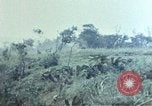
U.S. Flamethrower tanks shoot flames towards Japanese pillbox during the battle of Okinawa.
U.S. 6th Marines, 2nd Battalion, 22nd Regiment advances in Okinawa. Marines advance on the double. Shells burst around. Flamethrower tank operate on a Japanese pillbox and shoot flames towards it. (World War II period).
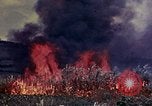
Japanese soldier catching fire in bushes which was burning due to attack by U.S. flamethrower tank in Okinawa.
Flamethrower tank burns bushes in Okinawa. Muzzle of tank flamethrower shooting flames on grass. U.S. Marines riding on M4A2 tank advance toward grass. View of Japanese soldier on fire. He crawls and runs through heavy grass trying to put fire out with hands over his head. Marines with Thompson Sub-Machine gun walks forward to search him. Japanese soldier lay on ground. Several Marines kneeling over him bandage cuts. Flamethrower tank moves in toward grass. (World War II period).
CRITICALPAST.COM: About Us | Contact Us | FAQs - How to Order | License Agreement | My Account | My Lightboxes | Shopping Cart | Advanced Search | Featured Collections | Website Terms & Conditions | Privacy Policy ©2026 CriticalPast LLC.
License Agreement |
Terms & Conditions |
Privacy Policy
©2026 CriticalPast LLC.