


 Francais
 Deutsch
 Italiano
Refine Your Search
V2 stock footage and images
- Showing 8029 to 8034 of 9863 results more
more Hide
Hide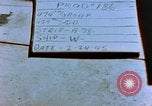
Two soldiers arrest suspected Nazis and a woman takes firewood out of debris in Germany during World War II.
Activities of civilians in Germany during World War II. Two U.S. Army soldiers arrest two suspected Nazis. They stand and interact at the entrance gate of a building that is under guard by American forces. Scene changes to a bomb damaged Atlas relief carving on a destroyed building. Next scene is a wide view of a totally destroyed area from bombing, with the same portion of broken wall with the Atlas carving seen at center. A German woman walks through rubble and debris from bombing, carrying two stacks of broken wooden timber pieces for firewood. (Location is possibly Nuremberg. Despite film slate stating 2-24-1945, these shots appear to be more likely April or May 1945.)
Boys work and play in Reisinger Brunnen-Anlage (Reisinger Fountain Park) in Wiesbaden, Germany, near end of World War II
German boys outdoors in Wiesbaden, Germany, as World War 2 is coming to an end. Opening scene shows two German boys digging earth with shovels on the lawn at Reisinger Fountain Park (Reisinger-anlagen, 65185 Wiesbaden, Hesse Germany), as they prepare to plant new shrubs and trees, that are seen on a truck bed in the background. Closeup of one boy shoveling. Scene shifts to a pond in the park, where German children are punting with poles as they balance on wooden floats. Change of scene shows several boys in closeup on a park lawn, followed by views back at the pond where one boy is punting on a raft. Another, who is wading, stops to pose for the camera. Meanwhile, back on the lawn a group of boys huddles together to pose for the camera.
Charlotte, Grand Duchess of Luxembourg returns home from London, at end of World War II
View of a U.S. Army Air Forces C-47 transport plane flying low over an airfield, a month before the end of world War 2. Next, Grand Duchess Charlotte, of Luxembourg, is seen stepping from the airplane, followed by British officers. she is greeted by Prime Minister Pierre Dupong, of Luxembourg. and receives bouquets of flowers from two young women. She is saluted by an American Brigadier General, who's back is to the camera. In ensuing scenes the Grand Duchess is surrounded by officials near down-town buildings, and then near some woods. A closeup of her stepping into a car, and then view of road sign for "Boulevard du President F.D. Roosevelt." Local residents wave Luxembourg tricolor flags from apartment windows to welcome Duchess Charlotte. Residents celebrating in a crowded city square.
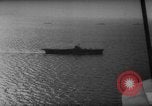
British Navy ships defend against Axis aircraft in the Mediterranean, during World War II.
Film opens showing aerial view of an Illustrious class British aircraft carrier at sea, during World War 2. The original HMS Illustrious (87) in the Mediterranean. Cargo ships in the distance. View from flight deck of aircraft carrier, following a gunboat. Several British warships underway. A British Havant class destroyer. Several British sailors in hard hats observing a Havant class destroyer in the background. Sailors in battle gear firing antiaircraft guns at Axis aircraft. A British Blackburn Skua Mk II fighter dive-bomber aircraft takes off from a carrier. Anti-aircraft guns firing from British ships. Bombs burst in the water close to an aircraft carrier. A British Blackburn B-24 Skua dive bomber takes off from a carrier.

Ceremonies and address by Pope Paul VI at the meeting of bishops and prelates at historic Ecumenical Council in Vatican.
Closing ceremonies and address by Pope Paul VI at the historic Vatican II Ecumenical Council in Vatican. View of the Saint Peter’s Square (Piazza San Pietro, 00120 Città del Vaticano, Vatican City) and surrounding parts of Rome, Italy. The church and buildings and large crowd gathered at the Council. 2,400 bishops and other prelates at the Vatican II Council revise many aspects of Church activity. Pope Paul VI arrives at the Council and waves hands to crowd arrived at the ceremony. The Pope is carried on a sedia gestatoria chair. Pope Paul VI celebrates mass and addresses the assembly at St Peter's Square.

German forces defending against Allies after the Normandy invasion in World War II.
German troops defending against allies, after the Normandy invasion. German antiaircraft crew firing at American bombers over German-occupied France, in World War 2. Destruction from Allied bombing. A wrecked French cathedral. Formations of U.S. B-17 bombers overhead. German antiircraft guns firing. One American bomber hit and falling. French civilians fleeing bombed area, with meager belongings. French emergency vehicles responding. burning wreckage of a downed B-17. Crosses and helmets mark graves of French soldiers. Allied flier POWs carrying their opened parachutes. Others being escorted to prison compound holding many American prisoners of war.Artwork decorating their lying jackets. One POW is from 101st Airborne Division. Waffen-SS General,Josef Dietrich, Commander,5th Panzer Army, consulting with field officers. German troops in camouflage, walk through woods. A huge explosion near the camera. Destroyed Allied armor. Knocked out M4 Sherman tank named "Pistolpackinmamma!"and one named "Blondie," and another,"Alice II."
CRITICALPAST.COM: About Us | Contact Us | FAQs - How to Order | License Agreement | My Account | My Lightboxes | Shopping Cart | Advanced Search | Featured Collections | Website Terms & Conditions | Privacy Policy ©2026 CriticalPast LLC.
License Agreement |
Terms & Conditions |
Privacy Policy
©2026 CriticalPast LLC.