


 Francais
 Deutsch
 Italiano
Refine Your Search
V2 stock footage and images
- Showing 8149 to 8154 of 9863 results more
more Hide
Hide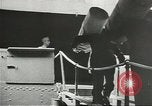
Licensing of Merchant Marine seamen and officers by the U.S. Coast Guard
Chart shows number of Merchant Marine seamen increasing as World War 2 progresses. Agents of the Coast Guard, the U.S. Maritime Commission, and the Public Health Service collaborate to assure fitness of Merchant Marine seamen. Some are seen being given physical exams by a physician. A prospective seaman demonstrates his skill with ropes. Coastguardsman observes skills of a candidate seaman at the wheel of a ship. A candidate receiving his Merchant Seaman's Certificate from the Coast Guard. Officers enter the Marine License Examination Room. Inside, men are seen taking exams to qualify for licenses as Masters, Mates, Engineers, and Pilots. Merchant Marine seamen being sworn in. Licensed seamen engineers being finger printed. Coast Guard officers supervise the signing of Shipping Articles (contracts between masters and crewmen). A line of seamen waiting to sign on to a ship. Coast Guard offices on shore where seamen may sign on to a ship. Seamen receiving pay under supervision of the Coast Guard.
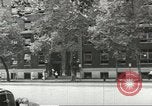
U.S. Coast Guard Commandant Russell Randolph Waesche describes mission of the Coast Guard.
The old Southern Railway Building, 13th Street and Pennsylvania Avenue, N.W., Washington, D.C., housing the U. S. Coast Guard Headquarters during World War 2. Persons are entering the building. Sign identifies the office of the Commandant. The Commandant, Russell Randolph Waesche holds a meeting in the office. Map of the world covers one wall. American and Coast Guard flags are displayed. Commandant Waesche is explaining the mission of the Coast Guard. Closeup of him speaking. Outside, on the street, a contingent of uniformed armed Coastguardsmen stands in formation. Officials reviewing a parade that includes a Coast Guard contingent. Glimpse of ships docked in a port.
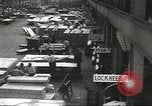
War production workers build airplanes and munitions for war defense, which are then transported in Tennessee, United States.
An aircraft manufacturing plant in Tennessee, United States, shortly before the entry of the United States into World War 2. Interior of the plant where aircraft for Lockheed, Martin, Northrop, Boeing and North American corporations are built. A sign :'US Army Process'. Training airplanes are build. Men work on a machine. Men work on aircraft. A man beside the propeller of an aircraft. Molten metal is processed. Machines and war production workers produce war material like engines and munitions shells. A tower and cable lines. A machine in operation. Steam boilers in operation. Men work with a welding machine. Seals are put on supplies before transporting them outside. Giant trucks carry the supplies out of the plant. The supplies are transported via railroad trains.
Factory workers and children wave to a passing train as seen from a train window with troops on board heading for war
U.S. troops entrain at the New York port of embarkation, United States for transportation to the European Theater during World War II. View of cars, a factory, buildings, a river and waving people as seen from a train window, including some in a building with signs, "Electro Dynamic Works Electric Motors, Elco Works Cruisers, Electric Boat Company.:" The citizens and war production workers are waving to the troops on board the railroad train, who are bound for service in World War 2. Factory workers wave from windows to wish the troops well. A suburban rail road station platform. Children near tracks wave to the passing train of troops, including children on steps of East 33rd Street rail station in Bayonne, New Jersey.
American farmers in farms and corn and tomato crops in the United States.
World War 2 film 'It's Up to You!' shows farm activities during time of war production in the United States. Views of farmlands. An American farmer with his cattle cart on a field. A corn crop. A tractor driven in farm. A farmer gives grass to his horses. The farmer looks at the sky. The farmer loads haystack on his horse cart. A tomato crop. Views of bushels, eggs, pigs, cows and milk bottles.
A farmer talks about inability to produce enough foods to feed soldiers and populace without rationing in the United States.
Rationing during World War 2 in the United States. A dramatization: A farmer works at a machine. The farmer gets up and climbs up a hilly terrain. He looks down. He gets into a horse cart. He plows a field. He works in the field. He drives a tractor. He bends his head on the steering wheel as he gets tired. Production of grains, vegetables and fruits. The farmer talks about the inability of U.S. farms to produce enough food to feed soldiers, Navy seamen, Allies and U.S. population without rationing. A ration book for equal share in food. Close up view of hands of person on ration book, showing cover with title 'War Ration Book Two" and views of pages of ration stamps.
CRITICALPAST.COM: About Us | Contact Us | FAQs - How to Order | License Agreement | My Account | My Lightboxes | Shopping Cart | Advanced Search | Featured Collections | Website Terms & Conditions | Privacy Policy ©2026 CriticalPast LLC.
License Agreement |
Terms & Conditions |
Privacy Policy
©2026 CriticalPast LLC.