


 Francais
 Deutsch
 Italiano
Refine Your Search
V2 stock footage and images
- Showing 8635 to 8640 of 9862 results more
more Hide
Hide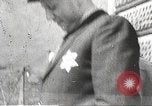
Jews walking on the streets of Dombrowa, Poland.
Jews in German-occupied Dombrowa, Poland, during World War 2. Jews on streets of the city of Dombrowa after the 1939 invasion of Poland by Germany. Close-up views of numerous Jewish people of all ages, including children, wearing the star of David patch or badge on their outerwear with "Jude" label identifying them as Jewish. People walking on the street. Buildings along the sides of the street. Crowd of people gather outside a building. Men watching from the window of the building. Many people wearing star of David patches.
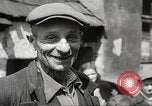
Jews standing on the street outside buildings in Dombrowa,Poland.
Jews in Dombrowa, Poland during World War 2 time frame. Jews on the streets of the city Dombrowa. Buildings along the sides of the street. Boy in background wears a star of David patch on his coat, identifying him as Jewish (during German occupation). A man standing near a building. The man holds a bucket in his hand. Cows moving on the street. Men standing near the cows. The men discuss among themselves. Men standing outside the building. A star of David on a carriage or vehicle with a sign above it in German indicating it is affiliated with a Jewish committee in Dombrowa.
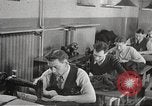
Jewish men working in a garment factory in Dombrowa,Poland.
Jews in German occupied Dombrowa, Poland during World War 2. View of garment factory workers. The interior of the factory. Men seated at their desks working. The men work on the sewing machines. A man stands nearby and instructs the workers. The men wear Jewish star of David badges.
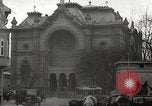
Jews walking and standing outside buildings and houses in in Ungvar, Province of Ruthenia in Hungary.
Jewish resident in Ungvar (Uzhhorod), Province of Ruthenia, in Hungary (Carpatho-Ukraine). Jewish synagogue and other buildings along the sides of the street in the town. Jews walking on the street. Closeup views of Jewish people including a orthodox Jew teenage boy with side curls (payos). Other Orthodox Jewish men and boys with various hats and payos. The exterior of a building. Men discussing amongst themselves. A man bringing a hen to a Rabbi. Names on the stores including Adolf Mermelstein Textic. Closeup view of Jewish man smoking a pipe. (Footage is just before outbreak of World War 2.)
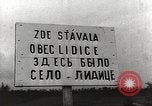
Women survivors of the Lidice massacre place wreaths at the common grave of the people who were killed; mass war destruction.
A film on the reconstruction of Europe after World War II. Empty fields marking the site of Lidice, Czechoslovakia. Women survivors of the Lidice who had been sent to concentration camps. They place wreaths on the common grave of the people who were killed at Lidice. View of a lineup of captured Nazi SS soldiers and officers involved in the destruction of Lidice. Packed courtrooms at Nuremberg, Germany with German Nazi leadership present at Nuremberg Trial. Rubble and destroyed bombed-out Reichstag building in Berlin. Debris on the street. Past events show German Chancellor Adolf Hitler addresses people and talks about the destruction of other cities. Ruins of buildings from war. A wrecked bridge and burned out fields of a farm from World War 2.
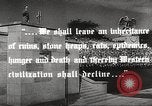
Starved children and dead bodies in concentration camps; victims of German Nazis and Japan during World War II.
A film on the reconstruction of Europe after World War II. Past events show German Chancellor Adolf Hitler addressing the German soldiers for the destruction of the cities. Corpses piled up in a Nazi concentration camp in Europe, victims of Nazi atrocities. Ropes, cords, and whip that had been used for torture of atrocity victims are seen hanging on a wall. Bodies of children dead following attacks by Japan. View of crematorium ovens in a Nazi camp, with bones in doorway of an open oven door. Bones piled up in a concentration camp. A crucifix of Christ standing amidst church ruins. Hitler youth seen playing drums at a Hitler youth rally. Close up of Adolf Hitler giving hail sign to a group. Close-up of uniform of a German Nazi officer and uniform of an Imperial Japanese officer. Image of German General Gerd von Rundstedt and slate on screen displaying some of his words spoken at the beginning of World War 2, advocating for mass destruction of Germany's enemies and systematic malnutrition and starvation of the oppostion. Views of starved infant and toddler age children in hospital beds under care of physicians following rescue and liberation. Several of the infants are crying.
CRITICALPAST.COM: About Us | Contact Us | FAQs - How to Order | License Agreement | My Account | My Lightboxes | Shopping Cart | Advanced Search | Featured Collections | Website Terms & Conditions | Privacy Policy ©2026 CriticalPast LLC.
License Agreement |
Terms & Conditions |
Privacy Policy
©2026 CriticalPast LLC.