


 Francais
 Deutsch
 Italiano
Refine Your Search
V2 stock footage and images
- Showing 8677 to 8682 of 9860 results more
more Hide
Hide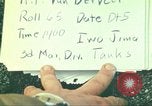
U.S. 3rd Marine Division tanks landing on Iwo Jima during World War II.
Slate identifies date as "D+5." Sherman tank,of U.S. 3rd Marine Division, drives out of Landing Ship Tank (LST) 477 beached next to LST 808, at Iwo Jima, during World War 2. The name:"Aileen," and "USMC 10069" are painted on its side. Tank crew are seen in the tank and legs of Marine riding upon it. Tanks lined up and firing their guns, on rocky terrain.
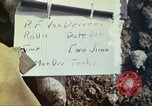
U.S. 3rd Marine Division tanks fire at Japanese positions on Iwo Jima Island during World War II.
United States Marines of the 3rd Marine Division on Iwo Jima Island during World War 2. 3rd Marine Division Sherman tanks firing point blank at Japanese positions. Marine riflemen taking cover below crest of hill, behind the tanks. One Marine fires a grenade with his rifle. A Marine fires his weapon and several Marines move forward to a new protected position. Several Sherman tanks line a ridge and fire their guns.
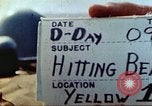
U.S. 4th Marine Division engaged in the Battle of Iwo Jima during World War II
U.S. 4th Marine Division during the Battle of Iwo Jima in World War 2. Views from Landing craft arriving at Yellow 1 Beach during U.S. amphibious assault on Iwo Jima. A sherman tank at the water's edge. The next day, two marines tend to a wounded out of sight below a bluff. One is seen holding a container of blood plasma above his head as they administer emergency treatment. A sherman flailing (crab) mine-clearing tank equipped for deep wading moves across the beach. Closeups of marines hunkered down on the beach, taking cover near armor, as they attempt to move inland. Marines and equipment covering the beachhead. Close offshore, an explosion sends water into the air. LSM-216 is seen maneuvering close to shore, attempting to bring ashore "C" Company tanks to Yellow Beach II. Marines setting a smoke screen of dense white smoke.
Nighttime scenes from U.S. Naval warship off coast of Corregidor, in World War II
Flashes from Naval guns firing at night, during bombardment of Corregidor, during World War 2. Flare persists in the dark. Large explosion with fire and smoke in the night.
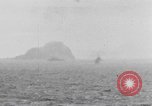
U.S. warships bombard Corregidor during Philippines campaign in World War II
U.S. warships bombarding corregidor during World War 2. Heavy smoke rising from shelling. Camera pans across the water showing variety of U.S. warships.Japanese mines being exploded, in the water, by machine gun fire from U.S. ship.
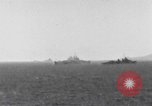
U.S. Navy warships and U.S. Army Air Forces bombers strike Corregidor during Philippines campaign in World War II
U.S. light cruisers firing their guns at Corregidor during World War 2. Explosions cover the shoreline.US warplanes flying overhead. A B-26 bomber flying close overhead. Continuous explosions and smoke, on shore, from bombing and naval bombardment.
CRITICALPAST.COM: About Us | Contact Us | FAQs - How to Order | License Agreement | My Account | My Lightboxes | Shopping Cart | Advanced Search | Featured Collections | Website Terms & Conditions | Privacy Policy ©2026 CriticalPast LLC.
License Agreement |
Terms & Conditions |
Privacy Policy
©2026 CriticalPast LLC.