


 Francais
 Deutsch
 Italiano
Refine Your Search
V2 stock footage and images
- Showing 9799 to 9804 of 9858 results more
more Hide
Hide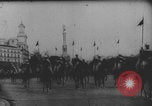
Nazi German Ambassador Hans-Adolf von Moltke submits his credentials to Franco during WWII.
Nazi German Ambassador to Spain Hans-Adolf Helmuth Ludwig Erdmann Waldemar von Moltke formally presents his credentials in the Royal Palace of Madrid during World War 2. The German ambassador is accompanied by a Moorish Cavalry parade to the Royal Palace (C. de Bailén, s/n, 28071 Madrid, Spain). Moorish Cavalry soldier carry pennants, flanking the ambassador’s staff car. Ambassador von Moltke performs a Nazi salute while carrying his credentials to Generalissimo Francisco Franco. Ambassador von Moltke and Franco sit together after von Moltke formally submitted his credentials.
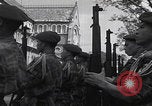
South Vietnamese Prime Minister Nguyen Khanh and United States Ambassador Lodge unveils a plaque to the memory of President John F. Kennedy in Saigon
Dedication of the "John F. Kennedy Square" in Saigon, South Vietnam during the Vietnam War. South Vietnamese soldiers standing at attention at the side of the Notre Dame Cathedral of Saigon (01 Công xã Paris, Bến Nghé, Quận 1, Thành phố Hồ Chí Minh, Vietnam). United States Ambassador Henry Cabot Lodge, and the South Vietnamese Prime Minister, Maj. Gen. Nguyen Khanh, inspect South Vietnamese troops. A military band plays music. View of the square in front of the Notre Dame Cathedral of Saigon. Th Saigon Central Post Office (2 Công xã Paris, Bến Nghé, Quận 1, Thành phố Hồ Chí Minh 70000, Vietnam) is seen nearby. The square in front of Saigon's Roman Catholic Notre Dame Cathedral is renamed President John F. Kennedy Square, in honor of the late United States President John F. Kennedy. Vietnamese and White civilians witness the ceremony from across a street. ). Ambassador Henry Cabot Lodge reads a speech behind a podium. Prime Minister Nguyen Khanh listens to the United States Ambassador’s speech. United States military officials in attendance. Ambassador Lodge and Prime Minister Nguyen Khanh jointly unveils a plaque to the memory of President John F. Kennedy. Plaque reads “Cong Truong Tong Thong John F. Kennedy”. Photographers take photos of the unveiling event. South Vietnamese soldiers standing at attention as a staff car drives away. Statue of the Virgin Mary in the square.
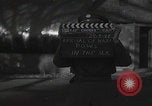
German Nazi prisoners of war disembark from bus, eating at mess hall in the United Kingdom during World War II
Arrival of German Nazi prisoners of war in the United Kingdom during World War 2. A bus arrives. A military policeman disembarks. German prisoners of war disembark from the bus one by one under guard. German prisoners of war, including captured German generals, enter the Transient Personnel Entrance of a mess hall. Sign with “Messing Hours” hang on the right side of the building. Nazi prisoners of war eating at a mess hall under guard. A German prisoner of war is seen with his hands clasped. Some prisoners drink from mugs. A man pour coffee for German generals.
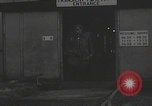
German prisoners of war enter bus in the United Kingdom during World War II
German Nazi prisoners of war detained in the United Kingdom during World War 2. Captured German generals exit the Transient Personnel Entrance of a mess hall. They are joined by the Military Police. Military Policeman checks the bus filled with prisoners before the bus’s departure. The bus drives away. More German prisoners of war crowd outside the mess hall. Two British women pose together, flashing the “Victory” hand sign.
German Nazi prisoners of war fed during World War II
German Nazi prisoners of war detained in the United Kingdom during World War 2. Military Police guarding outside Nissen huts. A bus full of German prisoners of war arrives. Military policemen disembark first. German prisoners of war disembark from the bus one by one under guard. Military police instruct prisoners to “Leave your luggage!”. Captured German generals crowd in one corner to wait for others to disembark. German prisoners of war are led away. Prisoners of war eating and chatting in German inside a mess hall. A prisoner hands out a soup bowl, receives a tray with food. Captured German generals speaking to each other. British Military Police watch over prisoners of war. One of the captured German generals is still wearing an Iron Cross.
United States Air Force propaganda film about the Roswell Incident and Project Mogul weather balloon experiments.
The Roswell incident according to the United States Air Force. Roswell Daily Record newspaper shows article about flying saucers. Popular books on the Roswell incident such as “Roswell Ufo Crash Update: Exposing the Military Cover-Up of the Century” and “A History of UFO Crashes” by Kevin D. Randle and “The Roswell Incident” by Charles Berlitz. Magazines People and Omni featuring UFO stories. The International UFO Museum (114 N Main St, Roswell, NM 88203, United States) in Roswell, New Mexico. An “EYES ONLY” document prepared for President-Elect Dwight D. Eisenhower. Forensic experts examine a strange body believed to be alien remains. Foreign books on the Roswell incident written in French and Japanese. A New Mexico magazine shows a UFO flying saucer and the words “UFO The Roswell Incident” on its cover. The sliding door of the United States Air Force archives closing. New Mexico Congressman Steven Schiff on a newspaper article about UFO. View of the United States Capitol in Washington DC. The Washington Post January 14, 1994 article with title “GAO Turns to Alien Turf in Probe”. An accompanying photo depicts a flying saucer and alien remains. View of the Pentagon. A man and a woman uncover records and files from a United States Air Force archives. Archive shelving inside the United States Air Force. Archivists pushing a trolley. Map shows the location of Roswell in New Mexico. Pages of a report being flipped. Page of a report reads “WHAT THE ROSWELL INCIDENT WAS NOT”. Another page reads “An Extraterrestrial Craft”. Page of a report reads “to project “Mogul” be classified “TOP SECRET”. An atomic bomb explosion with red skies in the United States. The Japanese bombing of Pearl Harbor on December 14, 1941, during World War 2. Debris and fire from surprise attack. An acoustic sensor used in Project Mogul. A radar reflecting target being carried by a white weather balloon during Project Mogul. Weather balloons on the beach. A scientist holds a radar target tied to a weather balloon. Scientist lets go of the weather balloon with radar target. A man standing on top of a United States Army bus with satellite dish observe the weather balloon flying upwards. Photographs of “flying disk” fragments from Roswell in 1947. A man holds a fragment claimed to be from a “UFO”. “Flying Disk” debris that are debris made of aluminum foil, rubber, paper, and sticks. Army Air Force officials identifying debris from radar targets and weather balloons found in Roswell. Brigadier General Roger M. Ramey, Commanding Officer of the Eighth Air Force, inspects the remains of a weather balloon and Rawin radar target on July 8, 1947. Colonel Thomas J. DuBose, the Chief of Staff of the Eighth Air Force, sits on the right. Roswell Daily Record front page reads “Gen. Ramey Empties Roswell Saucer”. Brigadier General Roger M. Ramey with weather balloon debris.
CRITICALPAST.COM: About Us | Contact Us | FAQs - How to Order | License Agreement | My Account | My Lightboxes | Shopping Cart | Advanced Search | Featured Collections | Website Terms & Conditions | Privacy Policy ©2026 CriticalPast LLC.
License Agreement |
Terms & Conditions |
Privacy Policy
©2026 CriticalPast LLC.