


 Francais
 Deutsch
 Italiano
Refine Your Search
V2 stock footage and images
- Showing 1093 to 1098 of 9858 results more
more Hide
Hide
F2H Banshee aircraft catapults from USS Midway.
F2H Banshee aircraft catapults from USS Midway. Number of other F2H Banshee aircraft takes off from the flight deck.

U.S. Army orientation film "Here is Germany" showing the contrast in life in Germany pre-war and during World War 2
U.S. Army training film titled 'Here is Germany'. Circa 1930 - 1938 views of pre-war German countryside, and German cities including Berlin and others before destruction in World War 2. Shots include famous German landmarks and buildings in major cities including Brandenburg Gate and Victory Column sculpture close-ups and other monuments all before bombing of World War II. Lifestyle of German people with families and children in their routine lives in the decade of 1930 before the war. Farmers working fields, mined coal transported by rail, potatoes poured from a full sack, a boy shepherd with geese; a farmer counting pigs descending a ramp at a farm. City port or harbor scene with ships and a modern looking railroad train arriving at a station, sign on side reads Deutsche Reichsbahn (German Reich Railway). High speed highway roads like the Autobahn. German cruise ship at sea. Aerial view of airport with "Berlin" sign on ground. German schools, offices, factories and markets. German woman braiding a girl's hair. German woman taking in washed clothing from a clothesline. German men, women, and children cleaning and polishing work areas and possessions. A German library with people studying and others at book shelves. German classroom with a teacher instructing children and writing on a blackboard. Scenes of German musicians and symphony orchestra and musical instruments, artisans, masons, cooks. Busy roads with cars. Narrator then presents a darker other side, showing an arms factory during rearmament of Germany, German soldiers escorting away a religious priest. German military officials. Scenes circa 1945 of victims of German armies and of the concentration camps. Lumps of dead bodies from massive public shootings, a man being tortured, burning chambers, prisoners of war, concentration camps, human ovens, gas chambers. Survivors of the German custody in relief camps of Red Cross. Evidence of atrocities committed by Nazi Germany. Articles made of human skin and bones. Daily utility items like toys and brushes made from human body parts. Scenes of survivors of concentration camps. Polish people dead from Nazi atrocities at Lublin Castle. Italians and Belgians murdered by Germans, American POWs murdered by Germans. Scenes return again to 1930s views of peaceful German citizens and German lifestyle juxtaposed with views of German soldiers and military actions in World War 2. Some famous Americans of German roots: Wendell Willkie, Admiral Chester Nimitz, Henry J. Kaiser. Narrator talking about American customs and values. View of two teenage American boy students viewing a housing area and taking notes. One of the teenage boys is African American. Some men gathered at a bar in an American town. A man holding a long fly fishing pole preparing to depart on a fishing trip. Woman neighbors in discussion. Young American women walking down a sidewalk in an American town as a group of American boys watch and admire them.

Colonel from G-2 (Intelligence) briefs Commander, 29th Infantry Division, and his staff, during World War II
Major General Charles Gerhardt, Commanding General, U.S. 29th Infantry Division, with members of his staff, at their Headquarters in occupied Germany, during World War 2. He stands in front of a series of maps and discusses the status and plan for the Allied offensive in Germany since the securing of bridgeheads across the Ruhr River. A Colonel from G-2 (Intelligence) explains the enemy capabilities and other details to the officers. He also answers General Gerhardt's questions.

Dimensions of 4.2 inch mortar of United States
A film titled 'Army's newest mortar' Different parts and dimensions of United States 4.2 inch mortar are explained. Used for direct fire against stationary objects 4.2 inch mortar consists of a clamp, reaction chamber, fixed firing pin. Soldiers assemble the mortar. It is mounted on a tripod stand. Soldiers carry it in a machine gun cart. Trinitrotoluene (TNT) filled shells are fired from the mortar Rocket drivers are used for firing at low elevation areas whereas gravity fire is used for the areas at a higher elevation. (World War II period).
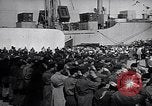
Soldiers of United States 591st Engineering Corp return home from the European theater of war in World War 2
A newsreel titled '2,000,000th G. I, head for home' shows soldiers of United States Army 591st Engineering Corp head for home after 22 months from European theater of war. Charles Hudgins being presented a plaque by an officer as other soldiers look on, as Hudgins is the 2,000,000th soldier to return. American soldiers say goodbye to dear ones before embarking a ship at a European port. Second half of clip shifts subject matter, showing exterior views of the landscape and grounds of the Culzean Castle in Ayrshire, Scotland, then owned by the Kennedy family, who donated it in 1945 to the National Trust for Scotland, with the stipulation that the top floor apartment of the Castle would be offered to General Eisenhower for his use for the rest of his life (it was later nicknamed the "Scottish White House" by then President Eisenhower). Views of the castle grounds, walls, gates, defense cannons.
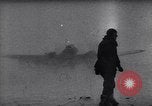
Soviet Russian P3-2 dive bomber aircraft takes off to bomb German positions.
Shows Soviet Army personnel of Air Force arming a Petlyakov Pe-2 bomber aircraft to attack a German position. Bomber armed and it takes off. View of Pilot in cockpit of airplane in flight. A track made in snow by a German tank. German positions bombed by the Pe-2 bomber. (World War II period).
CRITICALPAST.COM: About Us | Contact Us | FAQs - How to Order | License Agreement | My Account | My Lightboxes | Shopping Cart | Advanced Search | Featured Collections | Website Terms & Conditions | Privacy Policy ©2026 CriticalPast LLC.
License Agreement |
Terms & Conditions |
Privacy Policy
©2026 CriticalPast LLC.