


 Francais
 Deutsch
 Italiano
Refine Your Search
V2 stock footage and images
- Showing 1459 to 1464 of 9860 results more
more Hide
Hide
Scenes from 8th Air Force B-17 daylight bombing missions over Europe during World War 2
U.S. Army Air Force B-17 Flying Fortresses in daylight bombing missions over enemy terrain in Europe during World War II. Interiors of a B-17 in flight. Crewmen at their stations. Views of industrial sites and ships in water below. Airmen with helmets and oxygen masks on. Heavy Flak bursts at the same altitude. Attacks by German Me-109 fighters. Waist gunner of B-17 firing at the German aircraft. A bombardier in the nose of the aircraft, at a bomb sight. Bombs drop from B-17s and hit the ground. The bombardier signals "OK". Heavy smoke from target area. B-17 gunners firing at German fighters. A B-17 hit in number 2 engine. Me-109s attacking. B-17 Flying Fortress aircraft that has been hit is seen falling, out of control toward the ground. A B-17 with smoke coming from number 3 engine and descending.
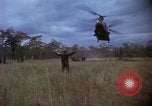
Soldiers of the 2d Battalion, 8th Cavalry,1st Brigade load a 105mm Howitzer into the CH-47 during the Vietnam War in Vietnam.
Activities of United States1st Cavalry Division during the Vietnam War in Vietnam. The U.S. Army Boeing CH-47 Chinook is directed to landing. Soldiers of the 2d Battalion, 8th Cavalry Regiment, 1st Brigade (United States), load a 105mm Howitzer into the CH-47.

Analysis of the German labor force from 1939 to 1943 (WW2)
Analysis of the Germany's labor force, military strength and effects of World War II on manpower. German soldiers march. Men work in factory on equipment and machinery. Women work in factory. A cemetery of World War 1 soldiers in Germany. Narrator explains how loss of man power from world War 1 deaths, and subsequent lower birth rate leads to war production worker needs being filled by many young German women and even German boys and girls working in industrial factories also. Wounded German soldiers being treated in field during World War 2. A map points Germany, Sudetenland and Austria. Graphs examine labor force by sex, age and military replacement availability; compare the labor force according to sex from 1939-1943; detail the increase of work force through the women part time workers and the veterans. Women weld equipment in a factory. Men do mining work. Narrator speaks of foreign workers (such as from Poland, Netherlands, Czechoslovakia, Yugoslavia), and how some now serve "under economic pressure and compulsion" (as forced labor or slave labor). Views of forced labor crews working digging earthworks. Laborers also work on building or repairing railroad stations and track work. Lines of prisoners of war, also used for labor, walk under German guard as lines of German uniformed troops walk in the opposite direction. Graphs compare the labor force in agriculture, industry, trade services, transport and government.
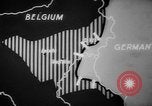
British and American troops join together for attack during Battle of the Bulge, scenes from Malmedy massacre and Houffalize (WW2)
Map points to Allied positions during Battle of the Bulge in World War II. British soldiers walk in a trench on the prong of the attack south of La Roche en Ardenne (La Roche-en-Ardenne or sometimes just Laroche). Trench in the snow covered area. British soldiers wear warm clothes and try to stay warm in the trench. British soldier knocks hole in ice and draws water into a bucket. British soldiers wash and shave with the freezing water. They heat water and use it to make cups of tea. They move on tanks to location where British and American forces meet and greet. The soldiers talk amongst themselves. On 14 January 1945 armored recce cars of the 2nd Derbyshire Yeomanry, 51st Highland Division, meet GI's of the 347th Infantry, 87th U.S. Infantry Division, near Ortheuville. The first link up between troops of VIII Corps and British 30 Corps. Another encounter between British soldiers, dressed in white camouflage smocks, with Americans of the 87th U.S. Infantry Division at Champlon. Later that same day. Field Marshal Montgomery wearing a new beret, commands the northern forces. British soldiers advance on a roadway and supplies move on vehicles. Houses in the background. U.S. 3rd Army soldiers shovel snow during a blizzard, clearing the way for trucks with supplies and mail to pass. Large tractors with snow plow attachments clear snow. On January 14, 1945, American forces gently sweep snow from the bodies of American soldiers at Malmedy who had surrendered to the Germans a month prior but were then massacred. (These were mostly U.S. forces of the American 285th Field Artillery Observation Battalion) German prisoners of war look on apprehensively as the Americans uncover the victims of the Malmedy Massacre. American soldiers look at from a snow covered hillside into the village of Houffalize in Belgium. A twisted sign for Houffalize is seen, and wreckage and destruction in the town. Close views of wrecked and burned homes in Houffalize. Destroyed tanks with one tipped in a river

World War 2 war material production and farmers increase production of wheat, corn, and vegetable oil crops in the U.S.
Agricultural progress motivated by the demands of World War II, in the United States. Houses and trees on a farm. Chickens roam in front. Night time battle scenes during World War 2 with smoke, bombs, and tracers. Men work in war material and munitions factories for the manufacturing and production of war tools and equipment. Molten steel poured in molds. A sign, "Defense Plant. Part of the Aresenal of Democracy." Cattle graze on the farm. Recruited and Mobilized United States soldiers march on streets of a town in America. Farmer supervises a grain processing machine in a field. Farmer works on a red Allis-Chalmers tractor. Wheat combine harvester in a field. Corn being harvested in a field. A soybean field and a farmer holds up a soybean plan. A rotating display shows harvested oils and their uses such as heavy soy oil for brake linings, soy flake flour, soy cake coatings and uses in auto parts. Tractor with attachment being used to harvest soybeans.Farmer on tractor on the farm. 'Lake County Oil Mill' written on an oil tank in Tiptonville Tennessee. Rotating display of bottled and canned linseed oil products including oil and paints for painting war equipment. Farmer on tractor harvesting flax seed for linseed oil. Close view of farmer's hands holding flax plants. Production of peanut oil. Farmers hand holding a bunch of peanut plants. Display of peanuts and peanut oil. Tractor driven on peanut farm. Workers harvest peanuts. Farmer on tractor drives on field of castor bean plants. Rotating display shows products made from oils including insecticides, plastics, fibers. Farmers hands holding a bunch of cotton. Worker in field picking cotton. Farmer shows a new variety of longer staple cotton and stretches out the fibers which can be used for parachute cords.
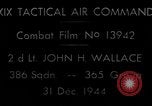
Gun camera footage of air-to-air attack by the 386th squadron, 365th fighter group in the European Theater during World War 2.
P-47s of the XIX Tactical Air Command in the European Theater of Operations. 2d lieutenant John H Wallace flies the aircraft. High altitude view of an area. Houses and trees. Gun camera footage as 386th squadron 365th fighter group attack air-to-air. German Luftwaffe Enemy plane is hit. It burns and goes down.
CRITICALPAST.COM: About Us | Contact Us | FAQs - How to Order | License Agreement | My Account | My Lightboxes | Shopping Cart | Advanced Search | Featured Collections | Website Terms & Conditions | Privacy Policy ©2026 CriticalPast LLC.
License Agreement |
Terms & Conditions |
Privacy Policy
©2026 CriticalPast LLC.