


 Francais
 Deutsch
 Italiano
Refine Your Search
V2 stock footage and images
- Showing 1507 to 1512 of 9860 results more
more Hide
Hide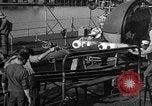
United States LTV-N-2 Loon missile hoisted on board in United States.
United States LVT-N-2 Loon 777 and 785 missiles prepared and launched in United States. A Loon missile hoisted in a sling is taken on board. Men attach beacon antenna check line to the wing of the missile. Men check out rig and rockets. They attach air pressure lines. Man uses link meter on check. Final securing of covers and wing support by men. A man makes final checks on radio.

United States LTV-N-2 Loon missile test fired in United States.
United States LVT-N-2 Loon 777 and 785 missiles launched in United States. A Loon missile on a sled aboard a United States Navy submarine Cusk. Missile launched and in flight. A part of the missile falls in the sea and missile cruises ahead.
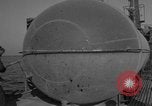
Preparations and launching of United States LTV-N-2 Loon missile during a test in the United States.
United States LVT-N-2 Loon 777 and 785 missiles prepared and launched in United States. Hangar door opens aboard a vessel. Rails between hangar and launching ramp lay. Men remove missile wings and Loon 785 taken out of the hangar. Men install wing spars and make other preparations before launching the missile. Air spark, control circuit and rocket squib tested. Loon ready to be launched aboard United States Navy submarine Cusk. Missile takes off. While in flight a part of missile detaches and falls into the ocean. Cusk crash dives in water after the launching of the Loon missile.

War production factory workers arriving for work at an ordnance factory in United States early in World War 2
An ordnance factory in United States. Workers of an ordnance factory arrive for work in war production jobs in the United States early in World War 2. A guard on the gate of the factory checks a woman's bag. Men and women war production workers walk into the factory.
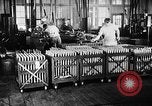
Shells produced at an ordnance factory in United States, World War 2.
War materiel production: Manufacturing of ordnance in United States early in World War 2. Workers mine shells as they work on a machine at an ordnance factory. War production worker removes gun shells from a machine. Shells lined up on a factory conveyor belt and move forward. Man inspects the shells as he places them on an instrument and a meter shows a reading. A man attaches nose of the shells after they have been armed. Shells piled up in trolleys as men push them.
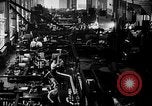
Manufacturing of gun barrels at an ordnance factory in United States early in World War 2
War production in the U.S. early in World War 2. Manufacturing of ordnance war materiel in United States. Metal gun barrels piled up in trolleys on factory floor of an ordnance factory. In background, machinists are seen turning gun barrels on a lathe. A worker removes a barrel from those on a trolley, inspects it and places it back in the trolley. Men push trolley carts loaded with gun barrels.
CRITICALPAST.COM: About Us | Contact Us | FAQs - How to Order | License Agreement | My Account | My Lightboxes | Shopping Cart | Advanced Search | Featured Collections | Website Terms & Conditions | Privacy Policy ©2026 CriticalPast LLC.
License Agreement |
Terms & Conditions |
Privacy Policy
©2026 CriticalPast LLC.