


 Francais
 Deutsch
 Italiano
Refine Your Search
V2 stock footage and images
- Showing 1837 to 1842 of 9860 results more
more Hide
Hide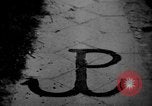
Various scenes of Polish freedom fighters in hiding from German forces during WW2
A graffiti depicting the “PW” Kotwica emblem of the Polish Underground State during German occupation of Poland in World War 2. Still images depicting the resistance fighters of the Polish Underground State preparing for battle in forest. Still images of Polish resistance fighters wearing old Polish army uniforms. Images of Polish resistance fighters aiming with machine gun and holding ammunition belt of machine gun. Images of Polish resistance fighters in various activities such as praying together, sharing meals, using radio to communicate, treating the wounded and riding horses. Footage of destroyed bridges, railway tracks and infrastructure after being bombed and sabotaged by Polish resistance fighters. Polish resistance fighters pulling down a sign. Footage of derailed trains in Poland.
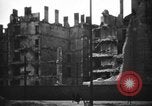
Polish citizens commemorate victims of Wawer Massacre, raise Adolf Hitler puppet in effigy during WW2
Destroyed city blocks and rubble in Warsaw ghetto during World War 2. A man writes “WAWER” on pavement as reference to the 1939 massacre of 107 Polish civilians by German forces in Wawer, near Warsaw. Women leave flowers on pavement to commemorate victims in Wawer. Pavement Polish graffiti with the symbol of the PW Polish Underground State. Polish men play with a cartoon Adolf Hitler paper marionette puppet hung on a wall. Polish men hoist cartoon Adolf Hitler puppet in effigy up a lamppost. Bottom of streetlamp with graffiti words written in German.
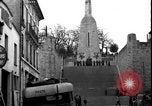
French officers award Fourragère military award to Major General Walton H. Walker during WW2
United States Major General Walton H. Walker receives Fourragère military award from the French during World War 2. French officers march down monument stairs of the Victory Monument in Verdun (Rue Mazel, 55100 Verdun, France) Major General Walton H. Walker, of the XX Corps, receives the Fourragère. Major General Walton H. Walker shakes hands with French officers. French troops pass in review at the Verdun Victory Monument.
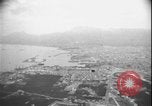
Aerial view of Palermo, Sicily harbor covered by mechanized smoke screen of US Army during Invasion of Sicily in WW2
Mechanized smoke screen surrounds the harbor of Palermo, Italy during World War 2. Thick smoke screen, provided by the 69th and 78th Chemical Smoke Generator Companies of the United States Army, covers the view of Palermo old town, the Gulf of Mondello, and the nearby Palermo mountain range.
General George S. Patton Jr. with troops in Palermo, Italian prisoners-of-war being marched out of town during Invasion of Sicily in WW2
United States Army General George S. Patton Jr. examines a field map with other army officers under a camouflaged netting during the Invasion of Sicily in World War 2. General Patton points to map while military officers listen. Hundreds of Italian prisoners-of-war, holding white flags, march through the devastated streets of Messina, Sicily. A United States military jeep drives on the road near prisoners. General George S. Patton is smiling with other military officials. General George S. Patton, Major General Lucian K. Truscott, and General Hobart S. Gay in conversation beside a military jeep in Palermo. General George S. Patton, while seated in the passenger seat of jeep, talks to an officer. A United States Army cameraman is shooting smoke and flames from trees behind a wall. Smoke in nearby building.
United States demolition crew soldiers demolish a wall to destroy a bypass in Sicily during WW2
United States soldiers move in columns into a town during the Invasion of Sicily in World War 2. United States soldiers pass by a nasone (Italian water fountain) while marching in Messina Sicily Italy. United States soldiers examine a map together. Soldiers, as a demolition crew, set up charge in brick wall that is blocking their way. Soldier inserts charge in brick wall hole. Soldiers evacuate before bypass explodes. Explosion and smoke from destruction of wall.
CRITICALPAST.COM: About Us | Contact Us | FAQs - How to Order | License Agreement | My Account | My Lightboxes | Shopping Cart | Advanced Search | Featured Collections | Website Terms & Conditions | Privacy Policy ©2026 CriticalPast LLC.
License Agreement |
Terms & Conditions |
Privacy Policy
©2026 CriticalPast LLC.