


 Francais
 Deutsch
 Italiano
Refine Your Search
V2 stock footage and images
- Showing 2323 to 2328 of 9860 results more
more Hide
Hide
Japanese prison guards and prisoners of war at Japanese prison camp and an airplane carrying prisoners in Manchuria (WW2)
Former Japanese prison guards and liberated allied prisoners of war at a Japanese prison camp in Manchuria during the Second Sino-Japanese War (World War II). The guards dig up Red Cross cartons intended for the prisoners. They were confiscated and buried by the Japanese. Soldiers stand with guns. A soldier plays guitar. A United States Army general speaks. Panoramic views of emaciated ex-prisoners. The liberated prisoners are loaded into transport planes. The airplane in flight.
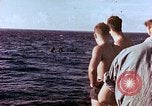
Australian prisoners of war rescued and helped aboard submarine by U.S. Navy rescue team near the Philippines (WW2)
Australian prisoners of war rescued after sinking of the Rakuyo Maru, a Japanese prison ship carrying them at sea near the Philippines, during World War II. Survivors afloat on parts of wreckage. Crew members on USS Sealion (SS-315) and USS Pampanito (SS-383) helped the survivors to deck of their submarines. Survivors adrift with life belt. They are pulled aboard the ship with the help of a rope.
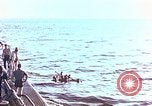
Australian prisoners of war at sea rescued and U.S. Navy submarine crew members help them aboard submarine near Philippines (WW2)
Australian prisoners of war rescued by USS Sealion (SS-315) and USS Pampanito (SS-383) after sinking of the Rakuyo Maru, a Japanese prison ship carrying them at sea near the Philippines, during World War II. Rescue team members on the deck of the submarine. They help the survivors aboard the ship. Crew members remove the fuel oil from the body of survivor.
Rescue operation for Australian prisoners of war after sinking of a Japanese prison ship; survivors helped aboard submarine (WW2)
Australian prisoners of war rescued at sea near the Philippines by crews of USS Sealion (SS-315) and USS Pampanito (SS-383) submarines during World War II. The survivors had been aboard the Rakuyo Maru, a Japanese prison ship that was sunk by U.S. forces (including the Sealion and Pampanito). Crew members on deck of the submarine. Other crew members in the sea assisting the survivors who cling to wrecked parts of the ship. Survivors adrift with life belt. Crew members pull them aboard. Exhausted survivors on the deck are covered with fuel oil. Crew members clean off the fuel oil.
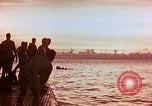
Australian prisoners of war at sea rescued and the survivors helped aboard by U.S. submarine crew members in Philippines (WW2)
Rescue team members on the deck of a U.S. submarine (both USS Sealion (SS-315) and USS Pampanito (SS-383) participated in the rescue) . Crew members carry Australian survivors found clinging to wrecked parts of the Rakuyo Maru, a Japanese prison ship, that had been carrying the prisoners, during World War II. The Rakuyo Maru had been torpedoed by U.S. submarines including these same rescue ships, days earlier. Exhausted survivors pulled on deck with the help of rescue line. They are covered with fuel oil. Men help the survivors aboard. Crew members with other survivors on the submarine.
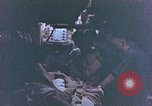
Australian survivors from wreckage of Japanese prison ship Rakuyo Maru rest inside U.S. submarine near Philippines after rescue (WW2)
Australian prisoners of war rescued by crews of U.S. Navy submarines USS Sealion (SS-315) and USS Pampanito (SS-383) days after sinking of the Japanese prison ship Rakuyo Maru at sea in Philippines, during World War II. The rescued survivors rest on beds in the submarine. Crew members talk to them.
CRITICALPAST.COM: About Us | Contact Us | FAQs - How to Order | License Agreement | My Account | My Lightboxes | Shopping Cart | Advanced Search | Featured Collections | Website Terms & Conditions | Privacy Policy ©2026 CriticalPast LLC.
License Agreement |
Terms & Conditions |
Privacy Policy
©2026 CriticalPast LLC.