


 Francais
 Deutsch
 Italiano
Refine Your Search
V2 stock footage and images
- Showing 4435 to 4440 of 9941 results more
more Hide
Hide
United States 7th Army vehicles slip on the icy winter roads, capture German soldiers (WW2)
The United States Army infantry advances in the Ardennes during the Battle of the Bulge in World War II. United States Army truck drives in the snow with its wheels angled to the right, slipping even with chains on. Military vehicles slide on icy roads as units of the 7th Army advance in the Ardennes Forest. Heavy snow falls over a moving truck. A truck towing a M115 howitzer. M4 Sherman tanks, tank destroyers and other tracked vehicles struggle to drive in the snow. Various tracked vehicles slide and slip on the icy roads, including an M4 Sherman tank that nearly hits a house after losing traction on the ice. A soldier shovels sand out of a truck onto the road. A half-track tows heavy equipment. 7th Army soldiers keep watch in the snow-covered forest. 7th Army Infantry troops march along the road on foot. A soldier pushes down on propeller to start a Piper Cub L4 observation plane. A United States Army Piper Cub L4 observation plane takes off from airfield. Aerial view of tanks moving in snow-covered fields. M4 Sherman tanks fire at enemy position after receiving signal to fire. Smoke rises from German positions. Gun crews fire with M1A1 Long Tom field artillery. Soldiers fire with their rifles. German soldiers wearing parts of captured U.S. Army uniforms (perhaps associated with Operation Greif) are captured in the Ardennes Forest. German prisoners wearing American overcoats put their hands on top of their heads. A captured German prisoner takes off boots. Captured German prisoners are led away by 7th Army infantry troops.
The funeral for British Commanding Officer Admiral Sir Bertram Ramsey (WW2)
A tribute to the passing of British Commanding Officer Admiral Sir Bertram Ramsey. Funeral of Sir Bertram Ramsey in Saint-Germain-en-Laye New Communal Cemetery during World War II. Sir Ramsey deliberating plans to invade Sicily with Field Marshal Bernard Montgomery in North Africa. Sir Ramsey exits a building with United States General Dwight D. Eisenhower before the invasion of Normandy. Sir Ramsey and General Eisenhower talking. Military officials and troops attend the funeral and internment of Sir Bertram Ramsey in Saint-Germain-en-Laye. The coffin of Sir Ramsey is draped with the Union Jack flag and is carried on a gun carriage on a snow covered road. General Eisenhower and other Allied generals attend the funeral march. British Auxiliary Territorial Service (ATS) women stand at attention in the snow. A chaplain leads the funeral service. Troops fire the three-volley salute during the military funeral. Dwight Eisenhower and other generals salute and pay their respects.
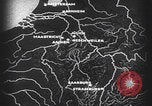
German Wehrmacht troops recapture village, British and Free French prisoners of war are led away (WW2)
German propaganda film with English dubbing. Wehrmacht troops enter a recaptured town during the Battle of the Bulge during winter of World War II. A map showing cities in the Netherlands, Belgium, Germany, and Eastern France. German Wehrmacht infantry march through the snow on the Western Front. German troops arrive at a village after the Rundstedt-Offensive allowed Germany to regain some territories from the Allied forces. German soldiers find a woman hiding in a cellar or basement. Wehrmacht troops pass by burning wreckage of American Jeeps and debris. Sign reads “Civilian travel beyond this point is forbidden” in English, French and German. German soldiers carry supplies to areas restricted to civilians. British and French prisoners of war (POWs) are captured by Germans. The prisoners of war are led away through snow covered streets. Some men carry injured prisoners. A French soldier holds a small pennant of Free France. British and Free French Prisoners of War (POWs) are marched to the rear. A destroyed church and its bell tower. A Roman Catholic relic lies among wreckage. Upturned chair and cabinet with scattered papers on the floor. A damaged statuette of Jesus Christ with hands missing. Wreckage in German homes and churches allegedly caused by United States occupation forces is shown. German Panzer tanks roll into a village, pushing aside a cart that is blocking the road.. German troops arrive with horse-drawn carts, passing by a dead white horse. Closeup view of faces of German soldiers marching through village.
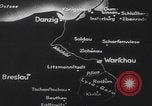
German Panzergrenadier and Luftwaffe attempt to stop the Soviet Red Army offensive in the Eastern Front (WW2)
German Panzergrenadier troops use artillery, mortars, and machine guns to stop the Soviet Red Army offensive in Poland and the Eastern Front during World War II. Map of Poland with the names of cities and the Vistula River in German. German troops in dugouts wait for the Red Army. A German soldier adjusts the straps of his Stahlhelm helmet. Bombers dropping bombs over enemy positions. A bomb explodes upon hitting the ground. German gun crew firing with anti-aircraft gun (likely 8.8cm FlaK 18 L-56). Explosion in a forest. A German soldier backs away. Gun crews fire anti-tank flaks covered with camouflage. A flamethrower tank shoots flames at ground. A German grenadier tosses a fuel container from foxhole while other Grenadiers load shells into mortars in foxholes. Pillars of smoke rises in battlefield. German troops shooting with rifles and machine guns from a basement. A German soldier fires with a Panzerschreck rocket launcher. Rockets firing in salvo. A German soldier with machine gun pointing. German troops and tanks advancing. Soldier assumes prone position in snow-covered village. German Panzer tanks firing at Soviet positions. More explosions from German tanks. Panzerschreck and mortar firing. Smoke from shell and rocket explosions covers the field. German soldiers stand on snow-covered foxhole. A bomber in flight. German soldier dressed in winter camouflage coat watches the bomber drop bombs. Explosion from bombs hitting the ground. Tanks firing at enemy positions. Panzergrenadier troops firing rifles from behind fences, climb from basement or walls. Aerial view of track marks from Soviet motorized column over snow covered winter landscape. Gun camera view of German Luftwaffe aircraft strafing a Red Army motorized column and Soviet tank explodes. A German aircraft in flight. Bullets flying in the battlefield at night.
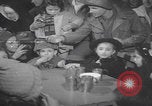
United States Army soldiers and the Red Cross throw a Christmas party for Italian orphans (WW2)
United States Army soldiers and the Red Cross host a Christmas party for orphans in Montecatini, Italy during World War II. Italian nuns and young children gather around a table. United States soldiers distribute cookies to orphans. Some of the girls hold their presents. Some soldiers and female Red Cross workers carry young orphans during the Christmas party. A soldier puts his helmet on an Italian girl Soldiers give a girl chocolate and talk to her. Orphans admire their gifts from soldiers and the Red Cross. A Red Cross worker smiles while holding an orphan. A soldier helps a boy drink from a cup. Another bald Italian boy speaks to the soldier. A soldier plays the piano. Soldiers sings with children.
Junkers 52 transport aircraft take off from the Luftwaffe Peenemünde-West test site (WW2)
German Luftwaffe conduct flight tests in Peenemünde, Germany during World War II. German subtitles. Junkers 52 transport aircraft in the Luftwaffe test site in Peenemünde-West. The Junkers 52 (three engine, long wing model) transport aircraft takes off from the runway. The aircraft tows a glider. Junkers 52 take-off from left to right pulling behind the high wing glider. Camera follows in slow pan as the two aircraft take off towards right over wooded area.
CRITICALPAST.COM: About Us | Contact Us | FAQs - How to Order | License Agreement | My Account | My Lightboxes | Shopping Cart | Advanced Search | Featured Collections | Website Terms & Conditions | Privacy Policy ©2026 CriticalPast LLC.
License Agreement |
Terms & Conditions |
Privacy Policy
©2026 CriticalPast LLC.