


 Francais
 Deutsch
 Italiano
Refine Your Search
V2 stock footage and images
- Showing 4855 to 4860 of 9941 results more
more Hide
Hide
Japanese invasion of Hong Kong during World War II.
View, from Japanese Seaplane tender/troop carrier, Kamikawa Maru, of several gunboats following behind her during approach to Hong Kong in World War 2. Aichi E13A Japanese float plane (Jake) is partially visible on ship's catapult. Japanese troops assemble on deck of ship and are inspected by officers. A float plane is catapulted. The Japanese troops enter assault boat, carrying rising sun naval ensigns. The float plane taxis past troops in their boat. The troops wave to their shipmates who wave back from the Kamikawa Maru. Assault boats underway with gunboats following. Naval guns firing from twin turret aboard Japanese warship. Heavy guns firing from battleship. Aichi E13A plane overhead. Japanese warships in bay below. Aerial view of smoke rising in Hong Kong from naval barrage and bombing. Japanese troops taking fortified positions, running past barbed wire obstacles, and climbing a steel crane at the port with a sign reading "Babcox and Wilcox Ltd, 5 tons at 30 ft and 2- 1/2 tons at 45 ft ." Smoke billowing in the air as Japanese troops run along a rooftop.Smoke rising from a virtual sea of flames. Scene shifts to later after fires have been extinguished. Senior Japanese officers inspect the state of the port and facilities. Sunken British ship, at pier, in camouflage paint. Surrendered British sailors, and some soldiers, held in a large open square.
Allies defeat Nazi Germany in World War II
Invasion of Germany by Allied forces during World War and unconditional surrender by Germany during World War 2. At TC: 00:19 thru 00: 21, Generalfeldmarschall Albert Kesselring, Commander of Axis forces in Italy, is seen outside a building in the mountains. Rear view of the war-damaged Reichtag building and View of the Brandenburg Gate as Soviet troops occupy during Battle of Berlin. General Dwight D. Eisenhower conferring with an unidentified General. Lieutenant Generals George S. Patton and Omar Bradley are with him. Soviet soldiers waving to Americans on opposite sides of the Elbe River. American soldiers paddling an inflated boat across the river. U.S. 69th Infantry division and Russian 58th Guard Division troops under Major General Rusakov embracing meet at the Elbe River in Torgau Germany on April 26, 1945. Several succeeding views of American and Soviet soldiers celebrating together, shaking hands, hugging, and offering toasts and drinking together to celebrate their alliance in defeating the Germans. A group of American and Soviet soldiers posing for pictures atop a concrete foundation with a banner across it reading: "Our Greeting to the Heroes Army of United States of America." A battery of tanks firing their guns. Two British soldiers confer in a town during battle; one has a cigarette in his mouth and the other is pointing in a direction. A Soviet IS-2 tank moving past a burning building. Destroyed street sign pointing at Hamburg. Local citizens waving white flags. Allied armor crossing a bridge over the Rhine River. British Marshal Bernard Montgomery and German General Eberhard Kinzel sign a document of surrender at Lüneburg Heath on 4 May 1945. Civilians moving about on streets of Berlin after Germany surrenders in World War 2. A British soldier posts an announcement from Allied occupying forces declaring the dissolution of the Nazi Party. Closeup of German citizens looking at the announcement. Local people standing amidst rubble near damaged buildings. A British Cromwell tank moving past the camera. Glimpse of a German family. Sherman tanks moving along a roadway. American Lieutenant Generals Leonard T. Gerow and William Simpson in Berlin. Trucks and tanks driving past fires. A long line of German prisoners of war marching beside a field under guard. German General Alfred Jodl and others leaving a car and entering General Eisenhower's Headquarters in Reims, France, May 7, 1945, where General Alfred Jodl, Chief of the Operations Staff in the German High Command, signs a document of unconditional surrender. Admiral Von Friedeburg of the German Navy, and Major Wilhelm Oxenius of the German General Staff sit beside him.
A catholic priest kneels in prayer at a church in Hiroshima, Japan.
A Catholic church (Jesuit Church of Our Lady of the Assumption Hiroshima, Japan) and newly constructed houses in Hiroshima, Japan. A Catholic Jesuit priest walks from underneath a choir loft, at his side are four Japanese children. The Jesuit priest kneels in prayer. A church tower with debris in the foreground. The priest looks around the gutted interior while at his side stand the four children. A small barley field amid the ruins along the south east section of Hiroshima being tended by the owner. Newly constructed houses built on the former site of Japanese Transport Regiment Barracks which is located north of Gokoku Shrine (21-2 Motomachi, Naka Ward, Hiroshima, 730-0011, Japan) in Hiroshima.A Catholic church (Jesuit Church of Our Lady of the Assumption Hiroshima, Japan) and newly constructed houses in Hiroshima, Japan. A Catholic Jesuit priest walks from underneath a choir loft, at his side are four Japanese children. The Jesuit priest kneels in prayer. A church tower with debris in the foreground. The priest looks around the gutted interior while at his side stand the four children. A small barley field amid the ruins along the south east section of Hiroshima being tended by the owner. Newly constructed houses built on the former site of Japanese Transport Regiment Barracks which is located north of Gokoku Shrine (21-2 Motomachi, Naka Ward, Hiroshima, 730-0011, Japan) in Hiroshima.A Catholic church (Jesuit Church of Our Lady of the Assumption Hiroshima, Japan) and newly constructed houses in Hiroshima, Japan. A Catholic Jesuit priest walks from underneath a choir loft, at his side are four Japanese children. The Jesuit priest kneels in prayer. A church tower with debris in the foreground. The priest looks around the gutted interior while at his side stand the four children. A small barley field amid the ruins along the south east section of Hiroshima being tended by the owner. Newly constructed houses built on the former site of Japanese Transport Regiment Barracks which is located north of Gokoku Shrine (21-2 Motomachi, Naka Ward, Hiroshima, 730-0011, Japan) in Hiroshima.
U.S. Navy warships operating off the coast of Enewetak, Marshall Islands during World War II
U.S. naval operations off Enewetak Island in the Marshall Islands during World War 2. A Vought OS2U Kingfisher float plane, with sailor standing in its cockpit, is hoisted on a crane. Camera focuses on a U.S. Porter Class Destroyer moving to the right, and then pans astern, to another one headed in the opposite direction and several destroyer escorts. Next, a Northampton CA class heavy cruiser is seen. Closeup of 3-inch being fired aboard a warship. Scene switches to Five-inch 25 caliber guns being fired from Northampton class cruiser. Camera pans horizon. Scene shifts to deck of Northampton CA class cruiser and catapulting of its OS2U Kingfisher observation plane. Smoke rising from Naval gunfire striking the island. landing craft seen in the water. Image temporarily obscured by heavy smoke.
Various U.S.naval aircraft operating at Navy airfield on Ford Island in Pearl harbor, Hawaii
Naval aircraft operations at Navy airfield on Ford Island in Pearl Harbor, Hawaii, after U.S. entry into World War Two. A biplane Grumman J2F utility plane taxis. Two of them take off. A USN PBY-5A Catalina taxis on the airbase. Two Navy ground crew seated on a bench at the airbase, watching the airplanes. A land version of OS2U-3 Kingfisher, with fixed landing gear, taxis in and several ground crew help it to park. Also shown are new Brewster F2A-3 fighters.
U.S. forces launch amphibious Assault on Iwo Jima in World War II.
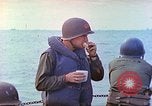
U.S. invasion of Iwo Jima during World War 2. A sailor eats a sandwich. U.S. Landing ship Infantry (LSI) No. 1029, firing rockets at the shore of Iwo Jima. Change of scene to aboard ship further from shore. Mount Suribachi visible in background. Other ships closer to shore. A U.S. Destroyer off the shore. A line of armed landing craft approaching Iwo Jima, headed by LCI-717. Views and closeup of USS Brule (APA-66) . Attack transports USS Cape Johnson (AP-172) and USS Fond du Lac (APA-644). the Destroyer Escort, USS Vammen (DE-644). The camouflaged Light Cruiser, USS Vicksburg (DL-86) bombarding the coast of Iwo Jima with 5 inch and 6 inch guns. A landing craft infantry approaching the shore, firing rockets. Large explosions in the water at a distance. USS LCI-65 returning from the shore. (Note: The ship at the 1:07 - 1:18 sec mark is a Pensacola class heavy cruiser and the ship at the 2:11 - 2:40 sec mark is the battleship USS North Carolina BB 55.)
CRITICALPAST.COM: About Us | Contact Us | FAQs - How to Order | License Agreement | My Account | My Lightboxes | Shopping Cart | Advanced Search | Featured Collections | Website Terms & Conditions | Privacy Policy ©2026 CriticalPast LLC.
License Agreement |
Terms & Conditions |
Privacy Policy
©2026 CriticalPast LLC.