


 Francais
 Deutsch
 Italiano
Refine Your Search
V2 stock footage and images
- Showing 5401 to 5406 of 9941 results more
more Hide
Hide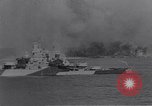
American forces in combat on land and sea, in Europe and the Pacific during World War II
American naval triple guns firing, in World War 2. The battleship, USS West Virginia, modernized and in camouflage, firing guns at a Pacific island. U.S.troops firing weapons from a beachhead. American soldiers manning a 155mm howitzer under camouflage netting. Another gun crew firing at zero elevation from heavily sandbagged position near buildings. Black flak clouds filling the air as American aircraft carrier fights off Japaneae Kanikase attack. The Kamikase plane appearing to by hit by flak. Cluster of Doouglas Dauntless planes on the carrier deck. Closeup of sailors firing double Bofors 40mm anti-aircraft guns from the carrier. Downed aircraft plunging into the sea. American troops riding a landing vehicle tracked (LVT) during amphibious assault. Landing craft stacking up along beach and subject to intense enemy fire during amphibious assault. One is hit and blows up. Flame thrower being usee to drive Japanese defenders from fortified positions. One runs out aflame. U.S. soldier throwing a grenade. American troops quick time entering an occupied town in Europe. Explosions and U.S. infantry passing destroyed buildings. Soldier firing a mortar. U.S. soldiers carrying a wounded on stretcher under fire.
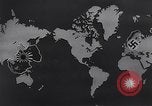
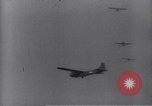
American paratroopers training and operating from C-47 and C-46 aircraft during World War II
Opens showing maps of German and Japanese occupied territory during World War 2. Camera zooms in on the Japanese territory and shows points of Allied pressure against it during the war. Camera zooms in on German occupied areas and shows Allied pressure from The Atlantic and Mediterranean. View from above of formations of C-47 transport aircraft flying over water. (It may involve an invasion rehearsal, because the planes are not in D-Day stripes.) Formations of boats leaving long wakes as viewed from aircraft overhead. U.S. paratroopers relaxing inside a C-47 aircraft. They are alerted and don their helmets preparing to jump. Formation of C-46 Commando transport aircraft viewed from below. A paratrooper hooked up to a static line inside a transport plane. View from one of the aircraft in a formation dropping paratroopers over desert area. Their black chutes opening below the aircraft. Occasional white chutes seen. White parachutes seen from above as they descent toward agricultural land below.
U.S. gliders landing in France on D-Day during World War II
U.S. Army Waco CG-4A combat gliders viewed from the ground where others have already landed, in France on D-Day during World War 2. One lands successfully. Another looms overhead near trees, makes a landing, and while sliding a long way to a stop, noses over completely and is destroyed.
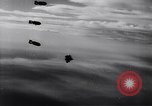
Air war over Germany in final phases of World War II in Europe. B-17s bomb railroad tracks, marshaling yards and numerous other targets.
Relentless bombing of Germany by Allied Forces in World War 2. Bombing on important roads and buildings in German cities by the bombers of the United States Army Air Force. B-17 bombers of the 306th Bomb Group,out of Thurleigh, England (Triangle H tail code) seen in formation. They drop bombs from high altitude on a German city. Black flak clouds and contrails are seen. Immense explosions and destruction on ground from saturation bombing. Serial blasts at a railway marshaling yard, on a road. Bombs gliding towards target leaving a smoke trail behind. Buildings bombed by Allied bombers.
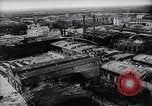
Early postwar views of destruction from Allied bombing in Germany during World War II
Low altitude aerial views of devastated industrial plants and factory buildings inside Germany at the end of World War 2 in Europe. Closeups of the destruction photographed from on the ground and inside the remains of German factories. Views of destruction in various places. Destroyed commercial buildings and apartment houses inside German city. A destroyed railroad train station. Aerial views showing numerous whole blocks completely flattened in German industrial area. Destroyed petroleum facilities, with a huge storage tank collapsed. Destroyed heavy equipment and facilities. Skeletons of low buildings in area surrounded by woods. Aerial view through missing roofs of buildings
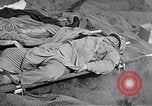
U.S. Marine casualties being evacuated from Iwo Jima during World War II
U.S. Marine casualties in the Battle for Iwo Jima , during World War 2. Bodies of fallen U.S. Marines, on stretchers, on the sands of Iwo Jima. Wounded marines on stretchers, being placed aboard beached Landing Vehicle Tracked (LVT) for evacuation. Marines using a microphone and loudspeaker system to direct evacuation activities on the shore.
CRITICALPAST.COM: About Us | Contact Us | FAQs - How to Order | License Agreement | My Account | My Lightboxes | Shopping Cart | Advanced Search | Featured Collections | Website Terms & Conditions | Privacy Policy ©2026 CriticalPast LLC.
License Agreement |
Terms & Conditions |
Privacy Policy
©2026 CriticalPast LLC.