


 Francais
 Deutsch
 Italiano
Refine Your Search
V2 stock footage and images
- Showing 5677 to 5682 of 9941 results more
more Hide
Hide
Brenner Pass rail line smashed in Trento and Bolzano.
Brenner Pass rail line smashed in September 2, 1943. Bomb group in flight. Official in bomber. Aerial view of Trento. Bombs dropped over Brenner Pass. Bombing over Brenner Pass in Bolzano. Bomb explosions. Smoke rises over target. (World War II period).
The first American P-38 Aircraft to land at a new emergency airfield near Salerno, Italy, crashes into a water truck at the edge of the runway.
Slate states: “Dust causes crash. P-38 plows into water truck. Pilot escapes. Two killed.” Members of the U.S. Army 817th Engineers Battalion, who have been building an emergency airfield , near Salerno, Italy, during World War 2, respond when the first P-38 airplane to land at the field, crashes into a water truck at the side of the dirt runway. Smoke rises from the crash scene. Camera focuses on the burning P-38 aircraft and the water truck. Soldiers use improvised slings to move the bodies of two victims away from the crash site. Meanwhile, other P-38 aircraft continue to land at the field. Smoke continues to billow from the burning P-38 airplane.
Italian air forces join Allies in Cape Bon, Italy, bringing their own ground crew, doctors and pilots
Italian air force joins allies at North Korba Airdrome in Cape Bon, Italy. 31 Italian planes bring their own ground crews and doctors. Italian planes in flight. Planes take off from airfield. An officer salutes as he disembarks. Ground crew disembark from the Italian planes. Ground crew and doctors talk to Captain Francesco Aurelio Di Bella. Captain Di Bella drinks water. Ground crew and doctors seated in truck and truck driven. They eat food. 2nd Lieutenant Fulvio Andrei, fighter pilot, interviewed. Captain Francesco Aurelio Di Bella, one of Italy's torpedo bomber aces, interviewed. (World War II period).
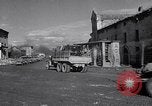
Heavy U.S. 5th Army vehicle traffic through Mignano, Italy, during World War II.
U.S. 5th Army trucks carrying mules, drive through the center of war-torn Mignano, Italy., during World War 2. An MP (Military Policeman) stands in center of the intersection, directing traffic. The trucks drive past an Agip (Azienda Generale Italiana Petroli) gas station and war damaged buildings. Other army vehicles pass through the square on intersecting roads. A different view shows empty Army stake trucks moving past an open muddy area where a bulldozer and another vehicle are parked and a U.S sentry is posted. Scene shifts to Italians working on the remains of a destroyed building. Army trucks continue to drive through the MP-controlled intersection. A small donkey stands by a tree. Four local men and women picnic in the shade from building remains. Italian soldiers, standing in the back of a partially open truck, ride past the camera. More army trucks come through the town, carrying horses and mules, Closeups of the animals in the open trucks. An Italian soldier rides with mules, on one of trucks. Army trucks are seen parked in various places off the roads. Closeup of the MP directing traffic. His 5th Army shoulder patch is clearly visible. He uses hand signals and a whistle to direct traffic. The four Italians seen picnicking, earlier, are now in a sunny spot, outdoors, with their kitchen implements. Two troop trucks pass carrying a few soldiers, and towing damaged heavy field guns. Several Italian soldiers are seen in the second vehicle. More jeeps and trucks pass the MP at the intersection.
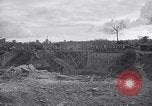
U.S. 5th Army vehicles traverse bridges at Volturno River near Mignano, Italy, in World War II
U.S. 5th Army vehicles cross two small bridges across the Volturno River, near Mignano, Italy, during World War 2. An MP (Military Policeman) monitors and directs traffic from side of the muddy road. Army engineers repair another bridge and use compressed air gun to drive fasteners. Closeup of the new bridge boards and construction work. Jeeps, trucks, personnel carriers, and other vehicles are all on the move. A destroyed civilian vehicle is seen at side of road.
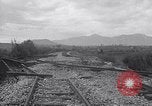
5th army's front line activities in town of Mignano, Italy; after wrecked by shellfire.
Town of Mignano wrecked by shellfire in Italy during World War 2. Destroyed railway tracks. Artillery fired at Mountain of Cassino that is held by Germans. Smoke rises from fire. Collapsed building. African American soldiers at work in rubble searching for casualties. African American soldiers warm themselves by a small fire. One African American lights a cigarette using a burning piece of wood from a fire, and he smokes the cigarette.
CRITICALPAST.COM: About Us | Contact Us | FAQs - How to Order | License Agreement | My Account | My Lightboxes | Shopping Cart | Advanced Search | Featured Collections | Website Terms & Conditions | Privacy Policy ©2026 CriticalPast LLC.
License Agreement |
Terms & Conditions |
Privacy Policy
©2026 CriticalPast LLC.