


 Francais
 Deutsch
 Italiano
Refine Your Search
V2 stock footage and images
- Showing 5785 to 5790 of 9941 results more
more Hide
Hide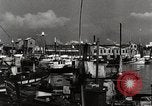
Fishermen of Japanese descent work on boats and United States destroyer ships at dock nearby in the United States
Fishermen of Japanese descent at work at a port in the west of the U.S.. Boats stand in water at a dock. Men work on docks and deal with fish. Group of United States Navy destroyers stands nearby at port. Japanese fishermen pull fishing net. Footage circa 1941-1942 near time of opening of Japanese relocation centers and internment camps in the U.S. during World War 2.
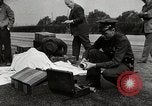
Japanese American travelers being stopped on a highway, and having their belongings searched during World War II.
Several trucks and automobiles carrying Japanese-Americans citizens are stopped and directed to the side of a highway, where policemen search their personal baggage (during time in World War 2 when the U.S. government was sending many Japanese-American citizens to internment camps or relocation centers). Police officers being directed by officials in civilian clothes, search open suitcases and other containers of clothing and personal items, laid out on the pavement. The Japanese American owners repack their suitcases after they are searched. One truck open stake truck is carrying many items of luggage and clothing rolled up and tied. These are all off-loaded and spread out on the pavement for search. A Japanese American woman stands near a 1937 Chevrolet 4-door sedan, in which children are seen looking out from the back seat. The woman helps a man roll up a bundle of clothes, as a uniformed policeman, nearby, searches another one. The woman and and two men repackage and tie the bundle with cord, as a policemen looks in the car trunk. More views of Japanese Americans with their luggage laid out on the pavement being searched. One woman has belongings tied up in a cardboard box labeled: "Sunland Biscuit Company, Los Angeles & San Francisco." Under direction of a civilian official holding a walkie talkie telephone, a policeman helps people load their belongings into an open truck after they have been searched.
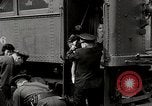
Military policemen process arriving internees at the Santa Anita Assembly Center internment camp for Japanese
United States military policemen search and question Japanese-Americans passengers at railroad train station depot next to Santa Anita Assembly Center (horse racing track converted to interment camp), during relocation of Japanese-American citizens in World War 2. Policeman lifts a baby down from the train, women get down from the train and soldiers watch them. Woman and children sit on chairs and officer writes on a paper in front of the woman. Close up views of internees arriving at center including many young children. Inspector frisks pockets and shoes of Japanese-American men. Japanese-American man carries a baby. Girl stands at a table. Inspector inspects suitcase of a woman and points with finger. Men stand at table and talk. A Japanese-American family stands in front of a train. They each have name tags on. Queue of people. Inspector searches a man. Woman walks with inspector. Wide shot of internment camp. (World War II period).
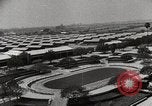
Wide view of barracks and race track of Santa Anita Assembly Center and relocation center for Japanese.
Scenes of Santa Anita Assembly Center for interment of Japanese citizens in the United States, during World War 2. Aerial view of houses and racetrack at Relocation Center. Wide elevated view of road, racetrack, and barracks buildings erected at the Center. Views inside empty horse racing stadium and track area, and view of entry gates. Statue of a horse in a garden. View of barracks erected in parking lot and infield. Cars at the Relocation Center.
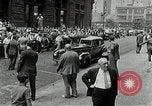
Handcuffed aliens brought by cars and led to Federal court house and arraigned.
Aliens in the United States brought to Federal courthouse and court in session of arraignment. During time of evaluation hearings, deportations, and forced internments of foreign aliens and suspected conspirators (such as German, Italian, Japanese) in the United States during World War 2 (due to the Enemy Alien Control Program authorized by President Roosevelt after the bombing of Pearl Harbor). Handcuffed alien is taken out of a car and people gathered besides road watch. Woman stands at table in court while arraignment. Photographers stand on stairs of Federal court and click pictures. More handcuffed aliens brought to the courthouse. Women alien brought to Federal courthouse, she goes into the court. Alien brought to the court goes in and hides his face by a hat. Alien hides face with his hands and goes in the court. Federal court during arraignment session. People speak. Woman stands. Man speaks. Men at table discuss.
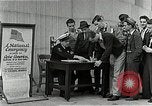
Youth fill form of the United States navy reserve force in San Francisco.
Young men enlist in U.S. Navy, in San Francisco, California, during World War 2. Youth stand in queue. Officer of Navy Recruiting Services help them to fill forms. Boy fills form on the officer's table. Advertisement board of United States Navy reserve force.
CRITICALPAST.COM: About Us | Contact Us | FAQs - How to Order | License Agreement | My Account | My Lightboxes | Shopping Cart | Advanced Search | Featured Collections | Website Terms & Conditions | Privacy Policy ©2026 CriticalPast LLC.
License Agreement |
Terms & Conditions |
Privacy Policy
©2026 CriticalPast LLC.