


 Francais
 Deutsch
 Italiano
Refine Your Search
V2 stock footage and images
- Showing 5905 to 5910 of 9941 results more
more Hide
Hide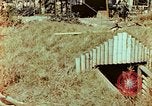
A small park along the Ginzan way in Tokyo, Japan.
A small park along the Ginzan way in Tokyo, Japan. Group of small air raid shelters in the park. Buildings in the background, seen soon after the end of World War 2. The shelters constructed of earth and bamboo reinforcement. A woman sits outside a shelter. She eats food while seated on the ground.
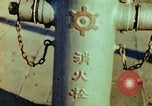
A double mouth fire plug used all over Tokyo, Japan, and Japanese citizens walking on a bridge.
A double mouth fire plug used all over Tokyo, Japan. Buildings and houses in the background in post-war Japan. Small air raid shelters made of earth, wood beams and cross bars, seen soon after the end of World War 2. Japanese people including women, and men in military uniforms, walk on the Shinbashi Bridge along The Ginza Street, Chuo-Ward, Tokyo.
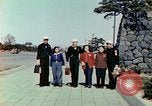
American sailors and Japanese girls out for a stroll in front of the Imperial palace in Tokyo, Japan.
United States Navy sailors and Japanese girls out for a stroll in front of the Imperial palace in Tokyo, Japan, a few months after the end of World War 2. Buildings in the background. They sit and talk near the palace. They look at a diary. A sailor reads the diary. A girl writes down something in the diary.
World War II Training film about U.S. Marine artillery units preparing for amphibious operations.
U.S. Navy World War 2 training film about artillery in landing operations. Opening scene shows a marine reading artillery settings aloud. Then gunners load their 105mm howitzer and fire it. Next scenes show more howitzers in a field also firing. View of a control tent, where marines wearing headsets communicate with the howitzer batteries. The batteries receive the instruction: "CSMO" (Close Station March Order). Firing ceases and gun crews police up their positions and board jeeps to their command post. One the way, one marine sitting in the back of an MZ jeep, talks on a TCS radio. At the Command Post, several battery leaders meet over a planning table where they receive orders for an amphibious exercise. Amphibious vehicles (DUKWs) arrive, equipped with A-frames. Film shows how the A-frame is set up and employed to raise a howitzer. Then another DUKW backs under the suspended field piece which is lowered into its cargo space. Other guns and DUKWs arrive to repeat the process. Gunners are shown spreading a tarpaulin and placing it on their howitzer, in the DUKW, as extra protection against water. Other DUKWs arrive with the battery's howitzers and marines rig tarps on them as well.
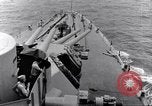
Battleship USS Colorado (BB-45) in the Pacific during World War II. Gun crews train gun turrets and fire 16 inch guns
The Battleship USS Colorado, practicing for the invasion of Tarawa, during World War 2. Gunnery officer outside on a bridge walkway wearing headset and speaking into a microphone. The 16-inch/45 main guns of the battleship USS Colorado, BB-45, seen rotating into starboard firing positions. The Colorado fires her 16 inch guns alternating turrets and barrels.
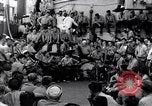
Crew members on a U.S. battleship at sea in Pacific Theater. They entertain themselves with music and dance
Crew members on a U.S. battleship at sea in Pacific Theater during World War 2. Band of U.S. Navy crew members play musical instruments. Audience of crew members crowd around and enjoy the entertainment Two African American sailors put on dance exhibition.
CRITICALPAST.COM: About Us | Contact Us | FAQs - How to Order | License Agreement | My Account | My Lightboxes | Shopping Cart | Advanced Search | Featured Collections | Website Terms & Conditions | Privacy Policy ©2026 CriticalPast LLC.
License Agreement |
Terms & Conditions |
Privacy Policy
©2026 CriticalPast LLC.