


 Francais
 Deutsch
 Italiano

Refine Your Search
Vienna Austria 1923 stock footage and images
- Showing 169 to 174 of 691 results more
 Hide
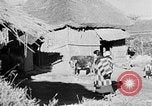
Rural population's contribution to Japanese war efforts in farm and home industries during World War II
Rural population of Japan engaged in war production and support of Japan during World War 2. Japanese rural area shows farm families outside native huts. Women cook food, pump water and wash vegetables in creek. Mud and wood huts with straw roofs. Farmers in field. Harvesting in farm. Lumbers piled up outside a building. Civilian men work with lumber. Women prepare handicrafts outside house. Home industries. Interiors show workers at work including men, women, and children working in war effort. Japanese family eats food and elderly Japanese woman smokes a pipe. Japanese people walk through rubble and debris after Great Kanto earthquake of 1923. Shows areas of rubble and workers digging through earthquake rubble, along with United States citizens involved in effort on the ground and through material relief support from America.
French antiaircraft battery firing during World War I. Burning airplane spinning down. Sinking ship. Battleship bombed and sunk
Various dramatic scenes captured by newsreel cameramen. French antiaircraft batteries firing during World War I. Aircraft in flame tailspins into earth after being struck by gunfire. Bombs falling towards earth. A capsized ship sinks in water. Bombing of the obsolete battleship New Jersey (BB-16), by one of General Billy Mitchell's bombers, during test, in 1923. View from directly above the battleship as it is hit by a bomb, and view as it capsizes and sinks.

Italian leader Benito Mussolini and Adolf Hitler place wreaths at Königsplatz, Munich
Italian Fascist leader Benito Mussolini visits Munich, Germany. Benito Mussolini and German Chancellor Adolf Hitler walk on a street. Huge crowd stands on the roadside. Torches at the Ehrentempel in Königsplatz. Benito Mussolini and Adolf Hitler at Königsplatz, where they place commemorative wreaths at the Ehrentempel, honoring Nazis who perished in the 1923 "Beer Hall Putsch."
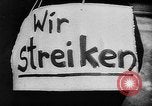
Strikes, hyperinflation, and food shortages in Germany. Germans march with shovels and Hitler launches Kraft durch Freude ship.
Scenes in Germany in 1920s and 1930s. Changes in Germany during Adolf Hitler's leadership. Workers on strike. Workers sitting with no work. Hyperinflation during the Weimar Republic 1921-1923 after World War I. Money, drafts and notes with huge values seen due to inflation. Woman buying from vendor with large prices posted. Band musicians playing jazz music, people dancing as inflation becomes uncontrollable. Men are given shovels to march with by Nazi official (likely early Reich Labor Service or RAD of NSDAP). Adolf Hitler speaks to a crowd about rebuilding of Germany. The launch of several ships. First is seen the launch of luxury ocean liner Wilhelm Gustloff in 1937, with Hitler present on a podium. (The MV Gustloff was the first ship built specifically for the German Labor Front’s Kraft durch Freude (“Strength Through Joy” program.) German officials give Nazi salutes. German flags on the ship.

Russian Bolshevik leader Vladimir Lenin reviews marching Russian troops in Moscow, near time of Russian Revolution.
Clip features multiple views of Soviet leader Vladimir Lenin near time of Russian Revolution. However, opening scene is from 1923, showing cars parked near the Kremlin in Moscow during time of the XII Congress of the Russian Communist Party which Lenin did not attend due to illness. Views of office and desk area. Russian Bolshevik leader Vladimir Lenin in his office. Lenin reviews an honor guard after the October Revolution by the Bolsheviks in Russia. Soldiers salute Lenin during a ceremony at the Red Square in Moscow. Soviet workers at a ship port, working to load goods onto ships at harbor. More scenes of Lenin viewing soldiers including some who appear to be new recruits marching and undergoing drills in training. Lenin leans out of train car or truck and talks with his secretary sitting in his wagon. Soviet Russian soldiers assembling near Kremlin in Soviet Union.

German soldiers welcomed by civilians in Austria
The Anschluss. Germany occupies Austria. German cavalry cross a bridge and enter Passau, Austria. Civilians welcome them. They cheer and salute. Crowd waves German flags. Nazi soldiers remove the border gate amid cheers. Nazi flags hang from every window. Children and adults leaning out of the windows cheer the soldiers. Similar scenes show entry of German troops into Salzburg, Austria.