


 Francais
 Deutsch
 Italiano
Refine Your Search
Vienna Austria 1923 stock footage and images
- Showing 397 to 402 of 702 results more
more Hide
Hide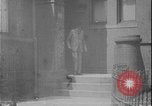
Dr. Dumba, Austria-Hungary Ambassador to the United States during WWI
Dr. Konstantin Theodor Dumba, Austro-Hungarian Ambassador to the United States USA, exits a row house and tips his hat toward the camera. Dr. Dumba was expelled from the USA during WWI after having been accused of espionage.
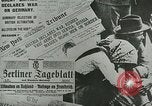
British, Turkish, Belgian, Serb, French, and Australian soldiers mobilize for World War I.
Headlines in various New York and Belgian newspapers report the entry of Austria, Germany, Russia and Great Britain into the World War 1. A poster part of the recruitment campaign by Lord Kitchener, British Secretary of State for War. British troops in the streets of England, mobilize for the war. King George V, his son and uncle, inspect British troops. Turkey: The Sultan of Turkey and other military officials emerge from a building. The Sultan takes his seat in horse carriage and is driven away. Turkish troops at a port and soldiers seated in a ship. Belgium: Bombarded buildings and ruins in Louvain. People and soldiers on the street. People in carts on a road in search of new homes. Military officers study a map. Belgrade: Serbians bomb Belgrade. Soldiers fire artillery guns. Bomb explosions on a hill. British soldiers camp with French soldiers across the channel. Australian soldiers march ahead to join the war. Germany: Retired General Paul Von Hindenburg, commander of the Germans, and other military officers pose outside a building. The German emperor, Kaiser Wilhelm II ascends from the sand dunes of Belgium to inspect his troops in a field. France: French soldiers on alert in trenches and bunkers, defend the borders of Paris. General Gallieni and his troops leave Paris for the front in taxicabs.
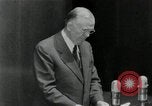
U.S. Secretary of State, George Marshall addresses the General Assembly of the United Nations
In a speech to the General Assembly of the United Nations, U.S. Secretary of State, George Marshall, refers to repeated vetoes by a permanent member of the Security Council. He discusses the post-war state of the world and the many matters yet to be resolved, including the independence of Austria, the Palestine issue, the matter of Korea, still divided along the 38th parallel, and status of nations in Eastern Europe, etc.
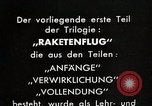
Scenes showing some of the earliest aircraft in the first decade of human heavier-than-air flight
Mankind's earliest attempts at achieving heavier-than-air flight, and footage of early and historic flight and aircraft. Animated film clip showing imaginary rocket in flight. View from an airplane taking off with other aircraft and terminal buildings seen outside. A caption reading "We can fly." Views from airplane windows of scenes below, including a town, bodies of water, Alpine lodges, and snow-covered mountains. (Views are from a Ju52 passenger plane, the corrugated wings, of which are seen.) Some views are out of the small round port window of the airplane. Sequence shifts to film reenactment of Otto Lilienthal setting up one of his early ornithopter-like gliders (looks like early hang glider), and running downhill to launch it (circa 1895). A still photo of Lilienthal aloft in one of his gliders. View of German Karl Jatho's airplane, circa 1903. The American Wright brothers airplane being started and taking off. The Wright Flyer airplane in flight. The Voisin-Farman I airplane in flight. it was built by Frenchman Gabriel Voisin and flown by aviator Henri Farman in 1907. Danish inventor-engineer,Jacob Christian Hansen-Ellehammer, in his airplane, 1906. Louis Bleriot inspects his airplane, circa 1909. A pilot (not Bleriot) sits cockpit of a Bleriot airplane with engine running. He taxis and takes off.A biplane built by Gabriel Voisin in flight, circa 1909. A light monoplane built by German aviator,Hans Grade,takes off, flies a while, and lands again,at an air show in 1909. The pilot crawls out of the airplane.Photograph of The Etrich Taube (AKA Rumpler Taube) monoplane,in flight. It was designed in 1909 by Igo Etrich of Austria-Hungary, and first flown in 1910.

Efforts by United States Information Agency to provide information to populations behind the "Iron Curtain."
Chart shows USIA information endeavors to send information behind the "Iron Curtain," including libraries, films, newspapers, and broadcasts involved in anti-Communist propaganda during the Cold War. Other charts cite cooperation with private enterprise, including 750 groups, such as businesses, schools, etc. Illustration shows letters written by Americans to family and friends abroad that can inform them of the truth. Town and city affiliation program is shown, with the example of Montclair, New Jersey, in the United States, and its relationship with Graz, Austria. The Mayor of Graz is seen being honored at a dinner in Montclair. Chart illustrates program of salvaging and sending American magazines abroad.
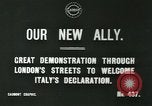
British people on streets of London celebrating Italy's decision to enter World War 1 on the side of the Triple Entente
Celebrations on London's streets following Italy's decision to join the Triple Entente– Britain, France and Russia -- and declare war on Austria-Hungary, during World War I. Crowd on street gathers for demonstration, vehicles also on road. Crowd stand in front of building with flags. Kingdom of Italy flag flies.