


 Francais
 Deutsch
 Italiano
Refine Your Search
Vietnam Bien Hoa Air Base 1968 stock footage and images
- Showing 6127 to 6132 of 13286 results more
more Hide
Hide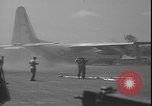
U.S. Air Force airlift operations in support of Belgian troops during crisis in Republic of Congo.
Belgian troops on Kamina airfield in Republic of Congo. U.S. Air Force C-130 aircraft behind them, raising dust with engines running. Belgian officers talk with a U.S. Air Force photographer. A U.S. Air Force Captain at flight planning table with several Belgian officers. Supplies being unloaded from C-130 aircraft. A truck moves away from the plane. Belgian Army scout cars drive across ramp and troops get down. U.S. Air Force Colonel Clayton M.Isaacson stands with an Air Force Captain and a photographer as they watch the C-130 commence its takeoff. The C-130 begins takeoff, raising dust. A Belgian soldier, with machine gun watches. The Aircraft makes long takeoff roll and barely clears trees at end of the airstrip.

United States Air Service Command crews work on B-17 Flying Fortress bomber, United States duing World War II.
U.S. Army Air Forces activities in U.S. during World War 2. Animation shows air combat crew of U.S. Army Air Forces B-17 Flying Fortress bomber aircraft representing a squadron. Animation depicts how bomber command and fighter command are formed comprising of individual crewmen, squadrons, groups, and wings. Animation shows Air Service Command work area. Aircraft engines in a repair shop. Interiors of a stock room. Large storage area and steel drums of gasoline. B-17 Flying Fortress bomber aircraft in flight. Shadow of B-17 flying over ground. B-17 landing. Damaged B-17. B-17 crash landed. Air service command crews work on a plane to get it in flyable condition. B-17 takes off from an airfield.
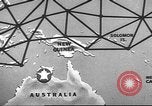
United States 5th Air Force bombers and fighters destroy Japanese targets on New Guinea in World War II.
U.S. Army Air Forces operations in New Guinea Island during World War 2. Animated map highlights New Guinea and shows limit of Japanese defenses. U.S. troops board U.S. Army Air Forces C-47 Skytrain transport plane. Formation of C-47s in sky. C-47 lands. Troops getting off the C-47 and running for cover. Australian troops getting equipment moving armament. Wounded soldier being placed aboard C-47. U.S. Army Air Forces C-56 Loadstar buzzing airfield. American troops making a runway. U.S. Army Air Forces P-38 Lightening fighter aircraft takes off. Shutter of a B-25 Mitchell bomber aircraft. Bombs exploding on Japanese targets. B-25s bomb Japanese ships. B-25s strafing Japanese planes on ground. Parafrog bombs being dropped by B-25s. Shells exploding. U.S. Army Air Forces B-24 Liberator bombers in flight. View at Wewak Island. B-17 Flying Fortress bombers and P-38s in flight.
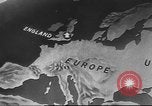
United States Army Air Force fighters and bombers attack German targets in Africa and Italy during World War II.
USAAF (United States Army Air Forces) attack German targets in Africa and Italy during World War 2. An animation shows location of U.S. 8th Air Force in England and U.S. 12th Air Force in North Africa. P-40 Warhawk fighter planes in flight over enemy targets in North Africa. German equipment and troops are strafed. A P-51 Mustang fighter in flight, peels off and dives towards ground. German planes on ground. A German transport plane takes off. German troops in plane. German transports in flight. U.S. fighter planes take off. German transport being shot down. An animation shows location of 9th Air Force in North Africa. U.S. amphibious landings and infantry troops on the coast of Italy. P-40s in flight strafing German troops. U.S. troops fire mortars and in combat. A-24 Banshee fighter plane flies low over water. U.S. troops dig foxholes. They go through a barbed wire entanglement. U.S. B-26 Marauder bomber in flight. Bombs fall and explode on the ground. A-20 Havoc fighters strafe German railroads. An animation shows reshuffling of U.S. Air Forces, the 12th in Italy, the 9th in England and the 15th in Africa.

Officer explains the procedure and the methodology of working of an air raid warning service in the United States.
A film titled: 'Spread the alarm' on the air raid warning systems and civil defense procedures in the United States during World War 2. A map locates different places. Newspaper headlines about the air raids and bombardment. Officer seated at his desk in the office. He explains the working of the air raid warning service with the help of a diagram. He states that the warnings are reported over telephones. He points at the diagram and explains the procedure. He talks about the radar service to detect the activities of incoming enemy aircraft for the purpose of air raid. As an enemy aircraft is detected, the information is communicated through the telephone lines established for the purpose. The information is disseminated through various warning centers. He also explains the air raid precaution service with the help of another diagram. He says that the rescue team takes care of the damage and the casualties. The district warning centers provide the additional aids to the people.
Air mail operations in 1928. Orville Wright helps three small boys launch their balsa wood gliders.
Air Mail Service in the United States. Mail trucks at the center of an airfield. Aircraft, including De Havilland DH-4; Boeing Model 40; Curtiss JN-4 Jenny; Travel Air 5000 ; and Ford Ford 5-AT-B trimotor, parked in a circle around the mail trucks. Mail being transferred from a truck into empty front cockpit of a two-place biplane. The side of a truck reads 'Air Mail Service'. A Travel Air 5000 transport (CAA registry C2614, NAT'S No. 16) on the field. Side of the aircraft reads 'Nat U.S. Mail Express'. The aircraft taxis on the field. The aircraft takes off. Early model air mail aircraft in flight over a large city. Orville Wright seated and wearing a tuxedo. Orville Wright posing indoors, and then standing in front of a residence, with three young boys who hold balsa wood model gliders. The boys launch their wood gliders by means of rubber bands, with some help from Wright.
CRITICALPAST.COM: About Us | Contact Us | FAQs - How to Order | License Agreement | My Account | My Lightboxes | Shopping Cart | Advanced Search | Featured Collections | Website Terms & Conditions | Privacy Policy ©2026 CriticalPast LLC.
License Agreement |
Terms & Conditions |
Privacy Policy
©2026 CriticalPast LLC.