


 Francais
 Deutsch
 Italiano
Refine Your Search
Vietnam Bien Hoa Air Base 1968 stock footage and images
- Showing 7147 to 7152 of 13286 results more
more Hide
Hide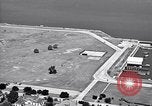
Aircraft flying over Naval Air station in Norfolk,Virginia, and views of coastline, golf course, housing, docks.
An aircraft flies over Naval air station in Norfolk,Virginia. Coastline, golf course, Captain's and Admiral's housing. Docking area with warehouses and supply buildings. Ships at the dock.
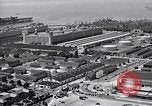
Aircraft flying over Naval Air station in Norfolk, Virginia, with views of docks and ships USS Randolph, USS Valley Forge, more
An aircraft flies over Naval air station in Norfolk,Virginia. United States Navy ships like USS Randolph, USS Valley Forge, USS Des Moines, USS Missouri and USS Macon seen docked. Warehouses and Chesapeake Bay in background. Several ships at the anchor. Virginia coal piers and supply buildings.
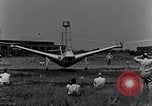
U.S. Air Corps XR-1 helicopter in preliminary testing at Eddystone, Pennsylvania
U.S. Army Air Corps XR-1 helicopter undergoing preliminary tests in a field at the Platt-LePage Aircraft company's plant in Eddystone Pennsylvania, United States. The pilot uses power only sufficient to allow the helicopter to break ground by a foot or less. Company technicians manually move the XR-1 helicopter into a hangar following the tests.
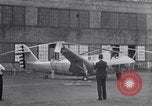
U.S. Army Air Corps XR-1 helicopter undergoes a tethered flight test in United States
Tethered tests of the U.S. Army Air Corps XR-1 helicopter at the Platt-LePage company factory in Eddystone Pennsylvania. The helicopter parked in front of hangar. Pilot Lou Leavitt in the cockpit and starts the engine. Several men watch and take pictures of the action. A group of men including Platt,Leavitt ,Le Page and Grover Loening talk to each other. XR-1 hovers as cars and trucks remain parked in the background. Several scenes in which the the helicopter lightly touches down and then takes off again.
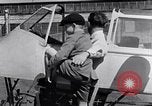
U.S. Army Air Corps XR-1 helicopter being tested at Platt-LePage Aircraft Company in Eddystone, Pennsylvania.
Platt-LePage Aircraft Company of Eddystone, Pennsylvania. A boy poses by a cockpit mockup of the XR-1 helicopter. Pilot Lou Leavitt sits in the mockup with his arm around the boy. The boy poses with four employees of the Platt-LePage Aircraft Company. Scene shifts to flight testing of the U.S. Army Air Corps XR-1 helicopter, which moves about in a variety of maneuvers, demonstrating considerable stability and control, although confined to a relatively low altitude of approximately fifty feet.
United States Army Air Force footage of Berliner helicopter 1925 variant being tested in Washington D.C.
United States Army Air Force footage of a helicopter designed by Emile Berliner and Henry Berliner being tested in Washington D.C.,United States. This was one of the final Berliner models built, if not the final, constructed after the triplane model 5 variant that had been demonstrated in February of 1924. This variant had a biplane configuration and was lighter to improve the thrust to weight ratio. The lower wing generated lift from the rotor downwash due to a high angle of incidence and large camber. The helicopter repeatedly lifts off, hovers, does some forward movement, and then touches the ground.
CRITICALPAST.COM: About Us | Contact Us | FAQs - How to Order | License Agreement | My Account | My Lightboxes | Shopping Cart | Advanced Search | Featured Collections | Website Terms & Conditions | Privacy Policy ©2026 CriticalPast LLC.
License Agreement |
Terms & Conditions |
Privacy Policy
©2026 CriticalPast LLC.