


 Francais
 Deutsch
 Italiano
Refine Your Search
Vietnam Bien Hoa Air Base 1968 stock footage and images
- Showing 9505 to 9510 of 13286 results more
more Hide
Hide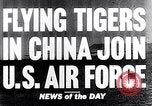
Brigadier General Chennault and Colonel Scott with Flying Tigers and their P-40 aircraft in China
Brigadier General Chennault of 23rd Pursuit Group U.S. Army Air Force, and Colonel Scott standing in front of a map of China. A picture of Chiang Kai Shek. Colonel Scott talking to Flying Tigers personnel and Chinese hosts. P-40 aircraft with shark teeth paintings seen in background. Colonel Scott is welcomed by Captain Wong of China Air force. Pilot R.T. Smith in cockpit of P-40 warplane. The plane has many Japanese kill flags painted on side. P-40s of Flying Tigers lined up. Aerial views of P-40 aircraft in flight. Pilots wearing new flying uniform but with special sign on back 'Free China' written on them. General Chennault inside aircraft as he begins command with his new role under the USAAF leading the China Air Task Force (later the 14th Air Force).
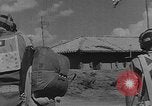
1st American Volunteer Group attacks and shoots down Japanese planes in Kunming, China.
United States Army Air Force operations against the Japanese in China in 1944. United States Army Air Force 1st American volunteer Group pilots look at a map. A pilot in a cockpit with a sign on the plane as it reads 'Pilot R.T. Smith' Soldiers are briefed and a man puts an insignia on the collar of a soldier. An animated map shows the transportation of supplies across the Himalayas to China. Chinese troops. Planes in flight. Aircraft take off and fly in formation. American Fighters in flight. Japanese plane burns and descends. Another plane explodes in mid air and falls. Men look at wreckage of crashed aircraft. Allied Officers confer. Animation shows location of Chinese towns. U.S. Army Air Force aircraft take off for attacking the Japanese positions. (World War II period).
Navigator and bombardier inside a Lancaster bomber, and RAF insignia in England.
Activities of RAF (Royal Air Force), air arm of the British Armed Forces, in England, during World War 2. Radio operator adjusts equipment inside airplane. Navigator and bombardier inside Lancaster bomber. Pilot signals from cockpi. View of painted bombs depicting many bombing missions on side of fuselage. RAF (Royal Air Force) insignia-Pathfinder Squadron. View of RAF insignia for No. 156 Squadron RAF on the side of the aircraft. Flag mast of RAF (Royal Air Force) and flag flies in breeze.
Montage of scenes related to role of 101st and 82nd Airborne Divisions and 9th Troop Carrier Command before D-day, World War II
U.S. soldiers wade ashore at Omaha Fox Green Beach on D-Day, from landing craft of USS Samuel Chase (APA 25). during the Invasion of France. Preparations for invasion underway in an idyllic village in England, United Kingdom on June 5, 1944. U.S. Army Air Force C-47 aircraft towing a Waco CG-4 glider over shelters made of wooden shipping containers. "Shanty Town" written atop one tall structure. Glider being pulled out a shipping container. Soldiers moving into empty shipping container. Glimpse of their homemade barrack. Soldiers eating a meal inside a shipping container shelter. Soldiers at barber shop. German defenses of the Atlantic Wall on the French coast. German Army gun crews drilling. German rail gun. Animated map of German fortifications of the Atlantic Wall. Allied officers, including U.S. Major General Lewis Hyde Brereton, Commander, 9th Air Force and British Air Marshal Arthur Coningham, Commander, 2nd Tactical Air Force, in D-day planning. Airborne troops board buses and arrive at restricted airfields. Troops playing musical instruments in jazz band; exercising on field; and playing volleyball. Paratroopers reading mail. Airmen painting invasion stripes for D-day on C-47 aircraft. French francs issued to paratroopers. Soldiers sharpen knives and bayonets. Chaplains conduct religious services. General Dwight D. Eisenhower visiting 101st Airborne troopers. Airborne Pathfinders. Paratroopers march to C-47s, and put on parachute packs. Troopers of the 101st Airborne, 506th Parachute Infantry Regiment, Headquarters Company Demolition Section ("Filthy 13") in their Mohawk Indian haircuts. Clarence Ware puts war paint on Charles Plaudo, using still-wet paint from their C-47's D-day stripes. Heavily laden paratrooper help one another board airplanes. Pathfinder C-47s taking off at dusk, followed by all others, on June 5, 1944. formations of C-47s. Closeup of several planes. Paratroopers exiting C-47s. Formation of towed gliders. Gliders landing in field. Troops from gliders engaging in fire fights. Naval gun barrage.
Delegates from 51 nations meet for Convention on International Civil Aviation in Chicago.
Scenes from the first International Civil Aviation Conference (ICAO) in the city of Chicago, Illinois. At the invitation of the United States, delegates from 51 nations arrive to begin drafting and concluding the Convention on International Civil Aviation (Chicago Convention), including discussion on freedom of aircraft traffic in the world's aviation routes. Opening scene shows the Stevens Hotel at 720 S. Michigan Avenue, Chicago, United States, with automobile traffic driving past it on the street. Delegates from 51 nations are seen entering the hotel Grand ballroom, being monitored by U.S. Army Military police, as they enter. View from inside the ballroom as delegates enter. Some are seen standing around a globe of the world, discussing the transfer of military air routes back to civilian operations, in the future after the end of World War 2. View from a balcony of the delegates gathered below. Closeups of delegates from: Belgium; a military aviator in uniform, representing Haiti; delegates from Iraq, India, Australia, and Norway. Assistant Secretary of State, Adolf A. Berle Jr., Head of the U.S. delegation, delivers a brief welcoming speech, on behalf of President Roosevelt, from a podium behind which flags of participating nations are displayed. He speaks of the importance of freedom of air space, noting that closed air space can lead to war. He says that the air which God gave to everyone, should not become the means of domination over anyone.
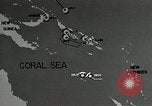
U.S. Task Force 17 and 11, and the reaction of Japanese task forces during the Battle of Coral Sea in the Pacific Ocean.
A United States Naval training film about the Battle of Coral Sea. Moves of C task Force (TF)17 on the Japanese targets without support of C task Force 11. Support system of TF 44. Animation shows probable action of Task Forces. Location of TF 11 and TF 44. TF 17 at sea. The Japanese plan. View of Japanese navy sailors on lookout on Japanese ship. Japanese Imperial Navy officers meeting and reviewing a map. Clouds show bad weather. Moves of TF 17 to Tulagi and Guadalcanal. Animation shows favorable and unfavorable weather conditions in attack of TF 17. Cruiser launches U.S. aircraft. Views of U.S. Navy aircraft attacking and dive bombing Japanese positions on island land, and Japanese ships at sea. Twelve Torpedo aircraft and 28 dive bombers are launched from USS Yorktown (CV-10). View of aircraft taking off from flight deck of USS Yorktown. Close proximity aerial view of Douglas SBD Dauntless dive bomber aircraft in flight Six planes in flight. Aerial view of islands. Torpedo bomber aircraft releasing torpedo from air to ocean during attack of a Japanese ship or a mine lair. Bombers take off and return after unsuccessful air operation. Diagram shows pilot's report after battle. Air group in flight. TF 11 approaches launch air searches within 200 miles. Moves of TF 11. Moves of Japanese commands. Reaction of Japanese Task Forces from small islands of Japan. Position of all forces depicted. (World War II period).
CRITICALPAST.COM: About Us | Contact Us | FAQs - How to Order | License Agreement | My Account | My Lightboxes | Shopping Cart | Advanced Search | Featured Collections | Website Terms & Conditions | Privacy Policy ©2026 CriticalPast LLC.
License Agreement |
Terms & Conditions |
Privacy Policy
©2026 CriticalPast LLC.