


 Francais
 Deutsch
 Italiano
Refine Your Search
Vietnam Bien Hoa Air Base 1968 stock footage and images
- Showing 10081 to 10086 of 13286 results more
more Hide
Hide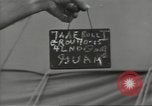
Airmen construct a water tank and a shower in Guam, Mariana Islands.
United States Army Air Forces 42nd Bomb Squadron in Guam, Mariana Islands during World War II. Airmen of 11th bombardment group, 7th Air Force. Men at work near an army camp. They construct a shower and a water tank. Trees in the area. A man welds.
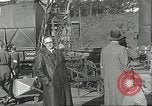
Germans prepare to launch an A-4 missile from Peenemunde, Germany, during World War II.
Preparations for the launch of an A-4 missile in Peenemunde, Germany during World War 2. German military officers and engineers near the missile in the test area. Technicians check the missile on a launching platform. Walther Thiel (in glasses) Deputy Director of the Peenemunde facility, pulls out a document that he and another civilian discuss with several uniformed German officers. View of launch control clocks for minutes and seconds. the second hand begins to move in a countdown. (Note: Walther Thiel was killed on the night of Aug 18 , 1943, during British Air raid - Operation Hydra, the first allied air strike in the "Crossbow" operations against German special weapons and research).
Enlisted men of the 1st Motion Picture Unit work in a production office in Culver City, California.
Activities of the First Motion Picture Unit of the United States Army Air Forces in Culver City, California during World War II. A high altitude view of the area. Buildings in the area. 'Army Air Forces' written outside a building. Enlisted men of the 1st Motion Picture Unit lined up at attention and march. Officers and men work in a production office. The Writing and the Camera Department. Men carry photographic equipment.
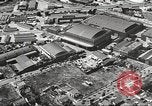
Men work in an art department and army artists act in films in Culver City, California.
Activities of the First Motion Picture Unit of the United States Army Air Forces in Culver City, California during World War II. A high altitude view of the area. Buildings of the unit sound stages. The stages are sound proof and air conditioned. Buildings along the sides of a street. Cars drive past on the street. A sign outside a building reads: 'Stage 5'. Men work on a training film project. Artists act in the film. Army artists and set designers work in the art department. They work for the conversion of scripts into sketches and models. The model of a squadron department. Men act in a film for the squadron department and discuss about army airplanes and officers.
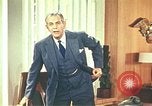
Construction of the DEW Line system of early warning radar sites
Narrator, actor Raymond Massey, sitting at a desk, covered with models of intercepter missiles, discusses the role played by the American Telephone and Telegraph Company and its subsidiaries, Bell telephone, and Western Electric, in creating the communications undergirding the North American Air Defense System. Scene shifts to arctic and view of a Dew Line site in the snow. A Pacific Western DC-3 airplane lands on snow runway, and a ship moves through icy waters, both carrying personnel and equipment for construction of the polar early warning system. A tractor hauls cargo for the project over snowy terrain. Supplies being air-dropped from a commercial C-82 Packet aircraft. Aerial view of a depot filled with supples for the DEW line project. Carpenters and other construction workers employed on the project in severe cold and windy conditions. A man making his way toward a wooden building, during a blizzard. Men installing tall steel towers at a DEW line site on a sunny day in summer. Exterior panels being placed on the geodesic dome covering a DEW line radar antenna.
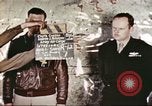
U.S. fliers inside building at USAAF Station Polebrook, England, during World War II.
Two U.S. Army Air Force fliers of the 351st Heavy Bomb Group stand in front of a large wall map during World War 2. A U.S. Army Air Force Warrant Officer, Mr. Steele, holds a packet of chewing tobacco and puts some in his mouth.. USAAF fliers seated on chairs watching the filming, are amused. Suddenly, one of them gets up and looks out the window. They all get up and leave the room quickly.
CRITICALPAST.COM: About Us | Contact Us | FAQs - How to Order | License Agreement | My Account | My Lightboxes | Shopping Cart | Advanced Search | Featured Collections | Website Terms & Conditions | Privacy Policy ©2026 CriticalPast LLC.
License Agreement |
Terms & Conditions |
Privacy Policy
©2026 CriticalPast LLC.