


 Francais
 Deutsch
 Italiano
Refine Your Search
Vietnam Bien Hoa Air Base 1968 stock footage and images
- Showing 11059 to 11064 of 13286 results more
more Hide
Hide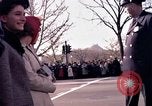
Funeral procession of President John F. Kennedy heading towards the U.S. Capitol.
Crowd waiting for funeral cortege of President John F. Kennedy to pass. Military band and marching units of the United States Army, Navy, Air Force, Marines, and the Coast Guards, followed by horse-drawn caisson with flag-draped casket passing. View of spectators. Funeral procession heading towards the U.S. Capitol. Military band, marching units, and the rider less horse passing streets.
Testing and inspection of Plane-Radial lifting screw and pitch variation of the de Bothezat helicopter.
View of rotor blades revolving on a vertical axis above the fuselage. Engineers working on Plane-Radical lifting screw and inspecting the pitch variation of De Bothezat helicopter during its development at McCook Field in Dayton Ohio, under a contract with Russian immigrant George de Bothezat issued by the U.S. Army Air Service. Engineers inspecting at fuselage. Professor George de Bothezat, the inventor of the helicopter, Lieutenant Colonel J.E.Fetchet and Major T.H.Bane discussing. Professor De Bothezat and four officers sitting on cart to which the screw is attached are lifted as the large rotor turns. The rotor went on to be used in the so called Jerome-de Bothezat Flying Octopus helicopter that featured four 6-bladed rotors.
Mechanics changing engine of aircraft B-14 before flight.
United States Army Air Corps mechanics working on B-14 aircraft and changing engine. Aircraft is towed out of hangar. Pilot climbing in cockpit and aircraft taxiing. B-14 flying in sky.
Shows Henry Ford and Edsel Ford inspecting bomber aircraft B-24 Liberator
Shows Henry Ford and Edsel Ford inspecting bomber aircraft B-24 Liberator. View of Henry Ford, Edsel Ford and U.S. Army Air Corps Officers near aircraft.
Mobile laboratory for developing prints are set up for quick availability of pictures.
U.S. Army Air Force Officers setting up a portable film laboratory besides aircraft C-45A. Aircraft B-26 dropping prints by parachute. Prints are developed in the mobile laboratory and then taken to Commanding Officer by jeep.
Machines used to generate wind for training of U.S. Army pilots in tethered glider
Men drive four vehicle-mounted wind machines across a grassy airfield at a U.S. Army glider pilot training school in Lockport, Illinois. They line the machines side-by-side creating a broad current of moving air that keeps a tethered glider airborne. An Army officer pilot trainee is seen in the open cockpit of the glider, manipulating the control stick to maneuver the craft, as it is suspended by the artificial wind, approximately six feet above the ground. He is observed by a group of men standing near a hangar, in the background, and several Army officers in the foreground.
CRITICALPAST.COM: About Us | Contact Us | FAQs - How to Order | License Agreement | My Account | My Lightboxes | Shopping Cart | Advanced Search | Featured Collections | Website Terms & Conditions | Privacy Policy ©2026 CriticalPast LLC.
License Agreement |
Terms & Conditions |
Privacy Policy
©2026 CriticalPast LLC.