


 Francais
 Deutsch
 Italiano
Refine Your Search
Vietnam Bien Hoa Air Base 1968 stock footage and images
- Showing 11233 to 11238 of 13286 results more
more Hide
Hide
Gunners aboard a United States HH-53 C helicopter fire in a wooded area in Thailand during rescue operations.
Rescue activities of United States 40th Aerospace Rescue and Recovery Squadron in Thailand. A rear gunner aboard a United States Air Force HH-53C helicopter while in flight. A side gunner at a mini gun. The mini gun being fired into a wooded area and smoke rises. Lush green hills. Smoke puffs rise from the wooded area. Another HH-53C helicopter amidst the smoke as it picks up a downed crewman. The pilot and the co pilot of the HH-53C helicopter in the cockpit as they work on controls.
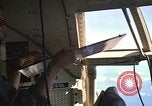
HC-130H aircraft in flight with Pilot, Co-pilot, flight engineer, Navigator and Radio Operator at their respective stations
Interior view of Air Rescue HC-130H aircraft in flight, Southeast Asia. Pilot, Co-pilot, and flight engineer are seen in the cockpit. Behind the forward cockpit area, the Navigator can be seen at his station, with the Radio operator to his right. Co-pilot speaks into microphone. Several takes are made of this. Aerial view of a muddy river flowing below.
Crew members at their respective stations inside HC-130H aircraft during flight
View inside an Air Rescue HC-130H aircraft in flight. Crew member scanning ground below, through large cabin window. Copilot conversing with pilot (unseen) in cockpit. Navigator working with chart, using pair of compasses and plotter. Radio Operator, working at station to the right of the Navigator.
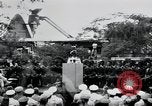
Highlights in career of Chester W Nimitz. U.S. naval campaigns against Japanese forces during World War II.
Fleet Admiral Chester W Nimitz speaks to naval officers and civilians, on third anniversary of the Japanese attack on Pearl Harbor. Sailors salute as he boards a ship. Admiral Nimitz with Admiral Halsey. Fleet of The United States ships underway to attack Japanese enemy. Battleships fire guns at enemy. Rockets being fired from U.S. ships. U.S. amphibious landing at Leyte. Japanese military show their commitment to fight. U.S. Navy crews at work aboard ships preparing to engage Japanese fleet at Leyte Gulf. Heavy U.S. naval gunfire. U.S. navy aircraft take off from carrier and engage Japanese in aerial combat. U.S. aircraft bomb Japanese ships and U.S. ships defend against Japanese air attacks. Japanese survivors floating on debris and life rafts in the ocean. U.S. wounded in stretcher. Dead Americans honored at sea by their comrades in an official ceremony.

Japanese warplanes take off from Philippine airfield to attack U.S. Naval Task Force
Japanese propaganda newsreel, in English, released from the Philippines during World War 2: Closeup views of Japanese pilots as they are briefed and take off in their aircraft from a Filipino airfield to attack United States Task Force 58 in World War 2. A variety of Japanese warplanes take off to attack the U.S. Naval Task Force. Among those seen are: Nakajima Ki-84 Hayate (Frank) fighters; Yokosuka D4Y Suise (Comet) dive bombers; and twin engine G4M1 (Betty) bombers. Aircraft are directed from a Control tower made of wood and bamboo with camouflage covering. Formations of the Japanese warplanes are seen flying overhead. Japanese battleships at sea firing their guns, planes in the air, and torpedoes being launched. Japanese trucks distribute newspapers telling of the Japanese victory over the American Naval Task Force. Filipinos reading the papers.
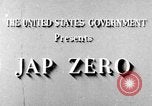
Recognition, capabilities and similarities of Japanese Zero fighter plane and United States P-40 Warhawk (WW2)
Recognition and capabilities of Japanese World War II Zero fighter plane. Japanese Mitsubishi A6M Zero in flight. Animated diagram of Zero fighter plane shows its wings, tail and engine. Animated picture of Zero fighter plane and United States P-40 Warhawk. The similarities and differences of both the aircraft is shown. United States P-40 Warhawk in flight. Actor Ronald Reagan dramatizes the experience of mistakenly shooting at a P-40. Officers converse with each other. Pilot looks at pictures of P-40 War Hawk on wall. Airmen discuss the differences and similarities between Japanese Zero fighter plane and the United States P-40 Warhawk. Pilot seated in cockpit of P-40 Warhawk. Airmen ask questions of Ronald Reagan. Pilot Ronald Reagan then takes to the air, correctly identifies a Japanese Zero fighter plane and shoots at it.
CRITICALPAST.COM: About Us | Contact Us | FAQs - How to Order | License Agreement | My Account | My Lightboxes | Shopping Cart | Advanced Search | Featured Collections | Website Terms & Conditions | Privacy Policy ©2026 CriticalPast LLC.
License Agreement |
Terms & Conditions |
Privacy Policy
©2026 CriticalPast LLC.