


 Francais
 Deutsch
 Italiano
Refine Your Search
Vietnam Bien Hoa Air Base 1968 stock footage and images
- Showing 11395 to 11400 of 13286 results more
more Hide
Hide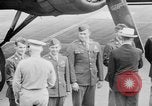
The pilot and the crew members of U.S. AA Force bomber B-17F Memphis Belle introduced in Washington DC during World War II
United States Army Air Force Bomber B-17F, Memphis Belle, lands at Washington National Airport, Washington DC, during World War 2. Secretary of War Robert P. Patterson shakes hands with the crew. Mascot Scotty dog 'Stuka' is held by a crew member. The crew member speaks about his memories when the craft took off. He discusses difficulties the crew members encountered during the mission. Captain Robert K. Morgan, pilot of Memphis Belle, speaks and introduces the members of the crew. The captain calls Sergeant John Quinlan as the Tail Gunner. Logo and name on the craft reads Memphis Belle and name of pilot. Lieutenant General Barney Mc Giles in the background.
Parts of a K-12 camera described in United States.
A U.S. Army training film about parts of the K-12 camera. Title of the film 'Aerial Photography', Part 2, 'The K-12 Camera'. A man shows a K-12 camera used for night photography. A diagram of the camera. A pointer shows parts of the camera like photo electric cell and amplifier. A solenoid is attached to the shutter. Lenses and 12 volt battery. The aligned system of camera must be 13 and a half inches. Portals attached to a battery current. Before assembling the camera it is cleaned by air blower. Lenses are wiped. Amplifier is attached and locked over camera. Electric nodes are fastened. horizontal and lateral leveling of camera is measured. Number of exposures are calculated. Shutter speed is provided at three levels. Shutter and amplifier are set at on position. Cut film holder is loaded in a dark room and roll film magazine is loaded. The man shows the parts of camera mount.
Methods of nuclear weapon delivery by A7 A/B light attack Tactical Aircraft in the United States.
A U.S. Navy film about delivery of nuclear weapons in the United States. The film is titled 'Special Weapon Mission by A7 AB Carrier Aircraft'. A light attack Tactical Aircraft in flight at low level. A board at a door reads 'U.S. Pacific Fleet Air Intelligence Support Center -FAISC-'. A sailor enters the gate. A pilot works out the mission plan. He is given two targets and information regarding his mission. The pilot prepares headings, selects initial points, and decides the method of delivery and escape maneuver. He opens a book about methods of delivery. Animation depicts methods of weapon delivery followed by demonstrations by practice weapons. The Run in, Pull up and Release methods explained. Delivery method Retarded Lay Down gives the maximum protection. The second method Retarded Loft gives the fastest escape. Low Angle Loft, Medium Angle Loft, 65 Degree Angle Loft, 90 degree Loft and Over Shoulder Loft. The pilot decides on Wing Allowances. He selects navigation and other preparations. A briefing about weather and navigation. B-43 weapons are loaded in the aircraft at the hangar deck. The pilot checks in and adjusts settings for the nuclear bomb release. He adjusts monitor and control sets, electric settings, and depresses gun side.
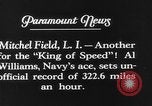
Pilot Al Williams flies Naval flying Ace in the United States.
Pursuit Airplanes of United States Army Air Corps. Pilot Al Williams flies a plane. The engine of the plane is started. It takes off. Silhouette of the plane in flight.
United States Army troops communicate with field telephones in the front (WW2)
'Your Job in the Signal Corps' discusses the importance of communication lines in the army during World War II. A sign on the door of the office of a Major General. U.S. Major General H. G. Ingles, Chief Signal Officer speaks about the U.S. Army Signal Corps and their role in all the three divisions of army. Major General Ingles speaks from his office. A soldier on top of a moving tank. Tanks in a field. Mechanized units in a field during a war. The troops communicate from the field. U.S. Army Air Force aircraft in flight and view of pilot and copilot in cockpit. Bomb bay door opens. Soldier on aircraft operates bomb sight device. Bombs fall from bombers and hit the ground. Artillery is fired. A U.S. soldier reads a map and talks over a field phone. Gun crew fires artillery. Railway gun firing. U.S. Nayg guns firing from ship. A boat lands on a beach head. Troops walk in a jungle. A soldier blows a whistle. Allied soldiers fire a bazooka on a moving German armored vehicle. Soldier sends a morse code transmission using a telegraph machine. A soldier calls with a telephone. Another soldier uses the radio for communication. Carrier Pigeons and rockets are also used to stay in touch. A hand fires a signal rocket. A messenger hand delivers a message. Officers making calls from their desks, field telephones and telephones on trees.
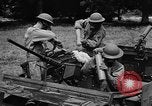
The procedure of decontamination after a gas attack on open vehicles and tanks in the United States (WW2)
A U.S. Army training film about decontamination procedures during World War II. Soldiers decontaminate an open vehicle like a half truck. They hand spray on the vehicle and rub it with a swab. They clean it on up wind side then turn it around and clean. Tanks are brought to a safer area and are turned facing the wind. A soldier opens a hatch and rubs the entrance with decontamination saturated rag. He then uses one o one half quarter sprayer. Then the soldiers clean the surface of the tank. They clean all the other parts of the tank especially openings air ways. A three gallon apparatus filled with non coronation and chlorinated lime is applied on the tank.
CRITICALPAST.COM: About Us | Contact Us | FAQs - How to Order | License Agreement | My Account | My Lightboxes | Shopping Cart | Advanced Search | Featured Collections | Website Terms & Conditions | Privacy Policy ©2026 CriticalPast LLC.
License Agreement |
Terms & Conditions |
Privacy Policy
©2026 CriticalPast LLC.