


 Francais
 Deutsch
 Italiano
Refine Your Search
Vietnam Bien Hoa Air Base 1968 stock footage and images
- Showing 3307 to 3312 of 13285 results more
more Hide
Hide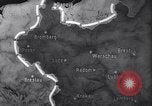
Destruction in Poland from German Luftwaffe bombing campaign in World War II
Animated map shows German Luftwaffe bombing locations all over Poland as it pursued a relentless air campaign during Poland invasion in World War 2, September, 1939. Gradually, the core of Polish military resistance is seen to shrink in size. In the aftermath, German ground troops inspect a huge bomb crater. Various scenes of destruction: destroyed buildings, torn rail lines, skeleton remains of gas tanks, destroyed and damaged rail cars, water-filled bomb craters. German soldiers walking in destroyed railroad yard. Wing of an airplane in a destroyed Polish air base. Skeletal remains of polish aircraft and hangars. Several Polish airplanes, damaged, but still recognizable. Sign on a hangar reads: "Aeroklub-Bydgoski" (Aero club of Bydgoszcz, or, in German: Bromberg). German soldiers occupying the hangar clean their rifles. They handle supplies and camp on the grounds. (One soldier shaves outdoors, next to stacked rifles.) A soldier at a field stove. German troops with shovels, fill in bomb craters and repair surface of airfield. Aerial view of the airfield with German planes parked. German soldiers march in formation in front of airplanes.
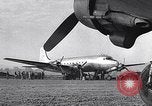
A YR-4 helicopter Pilot attends to a crashed B-25 and carries an injured in Burma during World War II.
A YR-4 helicopter being unloaded from a C-54 aircraft in Burma during World War II. Air jungle rescue unit Pilots of 10th Air Force fly YR-4 to attend to a crashed B-25. Pilot paints a big yellow cross on the plane's wing and checks instruments. The helicopter flies back to the home base. Rescue mission members briefed before leaving for Naga Hills. Helicopter YR-4 lands at a helipad and takes off with an injured soldier.

Volcanic eruptions of Mount St. Helens in Washington State, United States, in 1980
Film begins showing pristine snow-covered Mount St. Helens in Washington State, U.S.A. View on March 20, 1980, the mountain appears to have less snow on it. Camera pans over the Cascade mountains. Still picture (illustration) of Mount St. Helens erupting in the past. Several hikers are seen sitting on the peak of the mountain. Camera pans over the view, showing Spirit Lake below and, in the distance, Mount Rainier. Slate reads: "Camp Mehan 1959."View of Mount St. Helens overlooking the Y.M.C.A. Boys try rowing a boat with one oar lock unfastened to the gunnel. one boy sailing alone in a small sail boat. Boys playing volleyball. Boys diving from a dock. A camper speaking with a Forest Ranger in the Gifford Pinchot National Forest. Campers in the park at places such as Bear Cove, Cedar Brook, and Donnie Brook. Hikers with full back packs exploring the forest. Campers cooking over a charcoal grill. A man with a fishing rod casting into a lake. Interior of a lodge at the end of a trail. View of Mt. St. Helens in 1979. View of a seismograph recording a moderate earthquake of 4.1 on the Richter Scale, beneath the mountain on March 20, 1980. View of smoke and ash rising from the mountain on March 27, 1980. Forest service vehicles closing roads and access to the Gifford Pinchot National Forest. View from the air, of a newly opened crater on Mount St. Helens. Forest Service workers and cooperating scientists setting up their gear to study the phenomenon. Nearby Ranger stations, such as Pine Creek are seen after being evacuated by the Forest Service. On March 29th, a second crater is seen on the Mountain. Explosive eruptions seen on March 31st. Camera captures these. A bulge in the mountain at Goat Rocks, is show. Narrator states that it is moving at 5 ft. per day. Another view of smoke and ash rising from the mountain. Scientist David Johnson is seen as he describes how the symmetry of the mountain means that volcanic outflows would come down on all sides of Mount St. Helens. A helicopter lowers a large refuse bin to help Spirit Lake youth camp operators hauling out. Outdoor shops are seen hawking Mt. St. Helen souvenirs. On May 18, 1980, a Forest Service tree planting crew is seen at work in a field. Rumbling sounds. A mountain lion is seen running. Tree planters look up as Mt. St. Helens has a violent eruption, which is seen on film, as the field workers run to escape. Narrator states the cloud reached nearly 14 miles into the sky. The cloud and internal bolts of lightning are seen. View of daylight obscured in Eastern Washington. Policeman wearing a face mask, stops a car from proceeding eastward. A helicopter of the 304th Aerospace Rescue and Recovery Squadron depart their Portland Air Base, to search for Geologist David Johnson, who was manning a scientific lookout above Cold Water Creek. View from inside the helicopter in flight. Narrator notes they failed to find him.
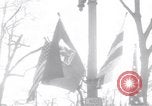
State visit of Haiti President Magloire to the United States. Greeted by Nixons at Airbase and by Eisenhowers at White House
President Eisenhower and Mrs. Eisenhower welcome President of Haiti Paul Magloire and Mrs Magloire on the North Portico of the White House, during the Magloire's State visit to the U.S. Flags of the United States, Haiti, and Washington DC on a lamp post. An honor guard drawn from all four U.S. services awaits the arrival of the 31st Haitian President. Vice President and Mrs. Nixon greet President and Mrs. Magloire as they step down from the U.S. Air Force C-121 Lockheed Constellation aircraft, in which they arrived at Andrews Air Force Base outside Washington, DC. Motorcade with Haiti President Magloire and entourage on its way to the White House, proceeding through Washington DC. The motorcade stops at one point.
German Luftwaffe operations primarily in siege of Sevastopol in World War II
German ground crews hand crank JU-87 Stuka dive bombers to start them, during World War 2. A flight of four fly over the camera, carrying a bomb under each wing. Scene shifts to German Bf-109 fighters being readied for takeoff. German ace, Captain Hans-Joachim Marseille, is being helped into cockpit of his Messerschmitt Bf-109, by a crew chief. Camera focuses on the tail of his airplane displaying eagle atop a wreath encircling "100." An iron cross appears below the wreath. Ground crews crank start other Bf-109s, that taxi out and are seen, next, in formation flying above clouds. Closeup of two airborne Ju-87 Stuka dive bombers. View from the air of the harbor at Sevastopol, Crimea. Stukas dive bombing Sevastopol. German ground forces bombarding Sevastopol with heavy artillery. German soldiers advancing towards an area being shelled by German tanks. German soldiers gather near radio operator at base of a concrete building using radio to communicate. Stuka dive bombers overhead. Bombs exploding in the city. A Junkers 88 bomber in flight. Bombs dropping on Port below. View of pilot in cockpit of German bomber. View from air of bomb craters below. View from cockpit of a Ju-88 of another Ju-88 ahead. View from overflying German aircraft of silent Soviet Coastal guns atop Fort Maxim Gorky. (Note: Some scenes may be from unrelated times and places. For example, Hans-Joachim Marseille, was know primarily for his flying exploits in Africa.)

American bomber aircraft smash Axis Oil Fields in Ploiesti Romania during Operation Tidal Wave
United States General Lewis Brereton speaking with crews of bombers of U.S. Ninth Air Force during World War 2. Soldiers plan and prepare for the destruction of the Ploiești oil refineries (or Ploesti) located in Romania. A map shows the plan of "Operation Tidal Wave." The B-24 Liberator aircraft based in Libya are readied and seen taking off and in formation on the way to the daylight attack of the Axis oil fields in Romania. Aerial views of U.S. Army Air Force B-24 aircraft in flight. View of Ploesti Oil Fields as bombers approach target. The refineries and the storage tanks are destroyed by U.S. bombing. Aerial view from bomber looking out over machine gun position during attack. Explosions on ground below. Aerial view of other B-24 aircraft in the sky during the attack, and on their way returning home.
CRITICALPAST.COM: About Us | Contact Us | FAQs - How to Order | License Agreement | My Account | My Lightboxes | Shopping Cart | Advanced Search | Featured Collections | Website Terms & Conditions | Privacy Policy ©2026 CriticalPast LLC.
License Agreement |
Terms & Conditions |
Privacy Policy
©2026 CriticalPast LLC.