


 Francais
 Deutsch
 Italiano
Refine Your Search
Vietnam Bien Hoa Air Base 1968 stock footage and images
- Showing 4081 to 4086 of 13285 results more
more Hide
Hide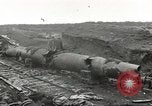
Destroyed Japanese submarine base at Kiska Island Kiska in Aleutian Island, Alaska
Japanese submarine base at Kiska Island in Aleutian Island, Alaska. Destroyed submarines at the base before their evacuation from the island.
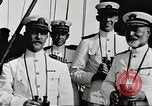
Chief of Naval Operation, Vice Admiral Edward W. Eberle at The Naval Operating Base, Hampton Roads, Virginia in 1925.
Vice Admiral Edward W. Eberle at Naval Operating Base, Hampton Roads in 1925. (The base was re-designated "U.S. Naval Station Norfolk," in 1945). Opening scene shows Admiral Eberle, Chief of Naval Operation, standing on deck of a ship with a captain, a Commander, and a Lieutenant Commander. They are pointing and peering through binoculars at objects (likely aircraft) passing overhead. Next, a Navy launch is seen entering a channel and moving toward the camera. It arrives at a dock is made secure by sailors. Vice Admiral Eberle then steps to the dock, followed by a Captain, a Commander, and several other naval officers, who line up on the dock They exchange salutes with the Admiral, who then ascends stairs followed by his retinue. The last scene is reconstituted and re-filmed. This time, naval staff officers are lined up beside the launch. They salute as Admiral Eberle steps from the launch, followed only by a staff Lieutenant Commander. The admiral then proceeds up steps, followed by officers on his staff. Another scene shows Admiral Eberle, standing on the dock with senior members of his staff behind him.
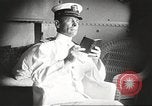
Scenes of Naval Operating Base, Hampton Roads, Virginia in 1925
Naval Operating Base, Hampton Roads, Virginia (renamed U.S. Naval Station Norfolk, in 1945 ). U.S. Navy Commander seated in a chair aboard a ship. A large group of civilian businessmen and officials pose on board a ship with several American Navy officers and one British Naval officer, for a photograph. Some of them stand and some are seated. One civilian stands in front of the group and poses with an American Navy Captain. Change of scene shows Admiral Way on the Navy Base, containing mansions and other structures from the 1907 Jamestown Exposition. It is a very windy day and several civilians are seen on a sidewalk and entering a large building on Admiral Way. Numerous Navy personnel in uniform are seen in the area, including a number of Naval officers entering that building and others heading there along a sidewalk. Residential mansions are seen in the vicinity along Admiral Way.
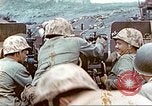
United States Marines fire field howitzers along the base of Mount Suribachi at Iwo Jima in Japan.
Activities of the United States Marine Corps at Iwo Jima, Japan during World War II. Gunners at field howitzer as they fire towards Mount Suribachi in the background. Explosions on the base of Suribachi. Smoke arises due to the firing. Landing Vehicle Tracked (LVTs) proceed along beach close to base of Suribachi.
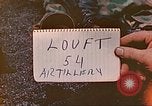
U.S. Marines fire howitzer at Mount Suribachi on Iwo Jima during World War II, Carrier -based F4Fs fire rockets
Activities of the United States Marine Corps in the battle for Iwo Jima, Japan, during World War II. U.S. Marines load and fire 105mm howitzer point blank against Japanese fortified positions on Mount Suribachi.. Heavy smoke arises due to explosions. U.S. carrier-based F4F Wildcat aircraft makes shallow runs on Mount Suribachi and fire rockets. Rockets explode at base of the mountain. Marine howitzer battery in position on the beach. Marines unloading wooden cases of artillery shells from landing craft.

Wrecked U.S. vehicles and equipment and a destroyed U.S. Navy base at Mariveles in Bataan, Philippines (WW2)
Japanese occupation of Philippines by Japanese troops during World War II. View of Mariveles, Bataan in Central Luzon. Japanese troops wander through the ruins of Mariveles Naval Base at Mariveles in Bataan. A sign board reads 'US Navy Base'. Japanese soldiers stand nearby. A gas pump and sign read “U.S. Navy Gas”. An abandoned Northwest crane and bulldozers in Bataan. A ship underway at sea. Mountains and buildings in the background. Wrecked vehicles and equipment on a field.
CRITICALPAST.COM: About Us | Contact Us | FAQs - How to Order | License Agreement | My Account | My Lightboxes | Shopping Cart | Advanced Search | Featured Collections | Website Terms & Conditions | Privacy Policy ©2026 CriticalPast LLC.
License Agreement |
Terms & Conditions |
Privacy Policy
©2026 CriticalPast LLC.