


 Francais
 Deutsch
 Italiano

Refine Your Search
Vietnam Binh Thuy Air Base 1967 stock footage and images
- Showing 11119 to 11124 of 13521 results more
 Hide
Color Sound
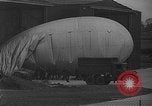
British and U.S. officials observe barrage balloon in flight in England before Battle of Britain in World War II.
British preparedness for German Luftwaffe attacks during Battle of Britain in World War 2. A British barrage balloon being inflated. Balloon suspended from ropes floats in air. Balloon attached with ropes to a military truck. Tethered barrage balloon in flight as British and American dignitaries look on, including U.S. Ambassador to the United Kingdom, Joseph P. Kennedy Sr., and British Prime Minister Neville Chamberlain.
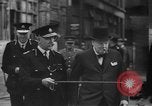
King George VI and Winston Churchill inspect blitz-ravaged areas in London, England during World War II.
Aftermath of early German blitzkrieg bombings in England during the Battle of Britain in World War 2. King George VI and British Prime Minister Winston Churchill inspect damage and seek to raise morale of citizens. Two British citizens stand in the doorway of an Anderson Shelter air raid shelter, unharmed, with much debris from a bombing around them. Crowd gathers to look at the dignitaries. Churchill, smoking a cigar, talks to fire fighters who have hoses trained on a building fire. Ruined buildings and debris on street. A car rammed into the debris.

British AVRO Vulcan jet bomber in flight and in formation with AVRO 707 jets.
British Royal Air Force AVRO Vulcan jet bomber in flight alone and then in formation with several AVRO 707s. The Vulcan delta wing design allow its 4 engines and fuel to be housed completely in the wing, leaving the fuselage free for bomb-carrying. The smaller AVRO 707s are low speed prototypes. One, the model 707C has been designed as a trainer aircraft.

Great Victory Parade in New York, United States to mark the Allied victory in World War I.
End of World War I. A Great Victory Parade in New York, United States. Soldiers march down Fifth Avenue as large crowd looks on. The Arch at Washington Square with balloons flying in the air held down by decorative pillars erected in the square. A lone man climbs on the Washington Square Arch. Spectators jam the sidewalks. Large crowd fills steps of the New York Public Library.
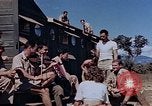
Airmen of the 65th Fighter Squadron have fun playing mucic in Alto, Corsica, during world War II.
Airmen of the U.S. Army Air Forces 65th Fighter Squadron, gather for some fun, playing instruments and singing, at their camp in Alto, Corsica, during World War 2. Aircraft in flight. The 65th Squadron's Fighting Cock logo is displayed on the top of their wooden building. Men play violin and accordion, while another sings.
Montage of scenes from the day before the invasion of Normandy in World War II
D-day minus 1 (June 5, 1944) during World War 2. U.S. soldiers eat a meal while seated on the deck of a Large Landing Craft Infantry LCI(L) number 88, docked in Weymouth, England. (This ship would be the first LCI(L) to carry troops to the Easy Red landing zone during the second wave of landings at Omaha beach, on D-Day. Among troops landing there would be the 16th Regiment, 1st Infantry Division, with support from 7th Field Artillery Battalion;1st Engineer Combat Battalion; 1st Medical Battalion; 741st Tank Battalion (DD); 62d Armored Field Artillery Battalion; and 20th Engineer Combat Battalion.) A Captain and a field grade officer sit next to each other on the ship's deck. One soldier looks through his binoculars at an English woman standing outside her back door, looking back at him through her binoculars. Wash is drying on her line. The soldier tries to call out to her, but stops, realizing it is futile. Several of his buddies are amused by the whole event. Scene shifts to U.S. Army Air Forces B-26 bombers flying in formation, and then to aerial views from an aircraft, of bombs exploding on the ground in a city below. Next, a formation of B-17 bombers is seen, escorted by P-47 fighters. Scene shifts back to Weymouth harbor again, where American troops attend a Roman Catholic mass on the pier, adminstered by a military chaplain, wearing traditional clerical garb. LCL(L)s number 89 and 93 are seen tied up in the background. Coast Guardsmen gather around one of their ship's officers who briefs them on the operation.
CRITICALPAST.COM: About Us | Contact Us | FAQs - How to Order | License Agreement | My Account | My Lightboxes | Shopping Cart | Advanced Search | Featured Collections | Website Terms & Conditions | Privacy Policy ©2026 CriticalPast LLC.
License Agreement |
Terms & Conditions |
Privacy Policy
©2026 CriticalPast LLC.