


 Francais
 Deutsch
 Italiano

Refine Your Search
Vietnam Binh Thuy Air Base 1967 stock footage and images
- Showing 3943 to 3948 of 13521 results more
 Hide
Color Sound

U.S. destroyers underway flank battleships off the coast of Japan at the end of World War II, in vicinity of Yokosuka Naval Base.
Aerial views of U.S. fleet off the coast of Japan towards the end of World War II. A U.S. Navy Iowa Class battleship USS Missouri (BB-63) underway. Destroyer USS Nicholas (DD-449) underway flanking battleship. A Japanese camouflaged DD anchored near a dock (IJN Fubuki Type II Destroyer Ushio?) A Japanese Navy BB (battleship) in a basin. Shore facilities near Yokosuka Naval Base show bomb damage.
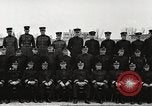
Naval officers photographed at The Naval Operating Base, Hampton Roads, Virginia in 1925.
The Naval Operating Base, Hampton Roads, in 1925 (re-designated "U.S. Naval Station Norfolk," in 1945). Opening scene shows Senior Naval officers (mostly captains plus a couple of rear admirals) seated in front row, and two rows of others officers standing behind them. At one point, they all remove their caps. Behind them is a concrete wall. But tops of some some buildings can be seen behind in the background. Closeup of a seated young rear admiral flanked by captains. In change of scene, all the officers are seen standing at attention, side-by-side on a gravel waterfront area, with a river and numerous buildings on the opposite shore visible in background. The camera pans across the assembled officers. Next, officers are seen on the waterfront, marching in white hats and carrying swords. (In these scenes, the motion is too fast, due to lack of compensation for low hand cranking speed of source camera.) The officers stop and stand in formation, and then march away.

Survivors of USS Indianapolis (CA-35) in U.S. Naval Base Hospital in Peleliu, Palau towards the end of World War II.
Survivors of USS Indianapolis at a naval base hospital in Peleliu, Palau towards the end of World War II. The survivors of USS Indianapolis (CA-35) lying on beds in quonset hospital. Three men in oxygen tents.

U.S. Secretary of the Army, Kenneth C. Royall, reviews U.S. troops on parade at a major Army base in the United States.
Army Secretary, Kenneth C Royall, leaves a car at an Army base in the United States, and is escorted by a Major General, in a combat helmet, to a reviewing stand, where he takes a position, saluting, with several General officers. The major General in combat helmet, escorts Secretary Royall to a jeep in which he sits alone in the rear. Secretary Royall stands in the moving jeep and troops the line of U.S. troops. Spectators seated in stands beside the parade grounds. Secretary Royall takes a position with senior Army officers at edge of parade grounds. Color guard moves to a side position. Large military marching band leads parade of many troops past the spectators and reviewing stand.
B-17s of the U.S. 91st Bomb Group, returning to their base at RAF Bassingbourn, England in World War II
B-17s of the U.S. 91st Bombardment Group, returning to their home base at RAF Station Bassingbourn following a bombing mission,in World War 2. B-17, tail number 41-24617, named "Southern Comfort," taxiing on outboard engines, only, after landing with a large chunk of its rudder shot away. Crew members and other airmen gather around the battle-damaged aircraft. Closeups of the damage to its rudder. Dim views of the B-17, "Memphis Belle," tail number 41-24485, with skin missing from wing exposing its internal ribs. It also has holes in its rudder and its nose. Closeup of a B-17 engine stained by fire-fighting foam. Other views of battle damage to a B-17.

A U.S. aircraft of 8th Fighter Bomber Squadron, 49th Fighter Bomber Group, strafes targets at base of mountain in Korea
View from an aircraft of the U.S. 8th Fighter Bomber Squadron, 49 Fighter Bomber Group, in flight over snow-covered foothills at the base of mountain range. Aircraft strafing foothills and area along snow-covered river. (Korean War period)
CRITICALPAST.COM: About Us | Contact Us | FAQs - How to Order | License Agreement | My Account | My Lightboxes | Shopping Cart | Advanced Search | Featured Collections | Website Terms & Conditions | Privacy Policy ©2026 CriticalPast LLC.
License Agreement |
Terms & Conditions |
Privacy Policy
©2026 CriticalPast LLC.