


 Francais
 Deutsch
 Italiano
Refine Your Search
Walcheren Island Netherlands 1944 stock footage and images
- Showing 703 to 708 of 9701 results more
more Hide
Hide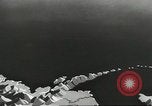
U.S. forces launch attacks against Japanese targets from the Aleutian Islands during World War II
Film opens showing animated map of Pacific and avenue of attack against Japan via the Aleutian Islands in World War 2. . Scene shifts to the Aleutian Islands, where American P-47 aircraft are seen parked on an open ramp in severe winter weather. Next, American Army truck convoys are seen traversing subarctic Canada on the Alcan highway, with supplies to sustain U.S. forces in the Aleutians. U.S. soldiers and airmen are seen obtaining various items and playing volleyball on a ramp at an airbase. Fog shrouds the Aleutians keeping aircraft grounded. Soldiers look at maps and plan targets. Aircrews are briefed about their mission and targets. U.S. Army Air Forces B-24 Liberator bombers fly in formation over snow-covered peaks. View looking down on a B-24 headed toward Japan. Airmen in a headquarters plotting the disposition of aircraft reporting to them by radio. View above thick clouds with nothing in sight. (But exploding bombs are heard.) (World War II; WW II; World War 2; World War Two)
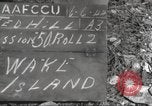
Views of destruction from Japanese air raid on Wakde Island, New Guinea, as U.S. forces occupy it during World War II.
Scenes of destruction from Japanese air raid on Wakde Island, New Guinea during World War II. (Opening slate incorrectly reads Wake Island.) U.S. troops bivouacked in tents near shore. Large supply Ship and several others visible in background.
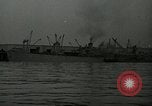
U.S. Army personnel and equipment are shipped to San Jose Island to carry out chemical warfare tests during World War II.
U.S. Army personnel and equipment loaded aboard a ship in New Orleans, United States to carry out chemical warfare tests on San Jose Island, Panama during World War II. Test animals and equipment loaded aboard the ship. Men unload a barge loaded with equipment at San Jose Island beach. Trucks move inland. A camp area is leveled. Bulldozers operate at the camp area. A gas handling area is established. An aerial view of the camp.
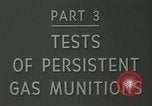
Test of persistent gas munitions during various U.S. chemical warfare tests on San Jose Island, Panama during World War II.
Tests of persistent gas munitions during U.S. chemical warfare tests on San Jose Island, Panama during World War II. A simulated chemical warfare shows U.S. troops firing mortars. A U.S. bomber aircraft in the sky. M7 100-lb bombs stacked at a munitions dump on the island. The bomber aircraft is loaded with bombs. The bombs are dropped by the aircraft from various heights. A technician examines an explosion area and makes use of an instrument to determine if there is any loss in contamination and vapor yield as a result of tree bursts. A bomber in flight and members of crew on board. The technician on the bomb drop site examines results on trees. Chemical samplings of bombed area are made in laboratories of the United States. A soldier wearing protective clothing. Mortars lay down a mustard gas barrage.
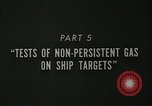
Gas bombs tested on ship's during U.S. chemical warfare tests on San Jose Island.
Tests of non-persistent gas munitions during U.S. chemical warfare tests on San Jose Island, Panama during World War II. Tests of non-persistent gas on ship targets are carried out. A Japanese fleet underway at sea in the Pacific Theater of World War II. Exposed Japanese personnel aboard a ship and Japanese fleet maneuvers at sea help determine the losses of bomb attacks. Expansion of concentrated gas bomb exploding during testing on San Jose Island. A U.S. 6th Air Force bomber aircraft drops bombs on water to determine results. B-24 Liberator bombers in flight. Tests are carried out by dropping bombs over a stationary raft and a barge in water.
U.S. Task Force including LCTs , landing crafts and transports off the coast of Enewetak, Marshall Islands during World War II.
The U.S. Army secures Enewetak Island in the Marshall Islands during World War II. A shoreline as seen from a vessel off the coast of Enewetak. United States Task Force including LCTs (Landing Craft Tank), LCs (Landing Crafts) and APs (transports) underway.
CRITICALPAST.COM: About Us | Contact Us | FAQs - How to Order | License Agreement | My Account | My Lightboxes | Shopping Cart | Advanced Search | Featured Collections | Website Terms & Conditions | Privacy Policy ©2026 CriticalPast LLC.
License Agreement |
Terms & Conditions |
Privacy Policy
©2026 CriticalPast LLC.