


 Francais
 Deutsch
 Italiano
Refine Your Search
Walcheren Island Netherlands 1944 stock footage and images
- Showing 9271 to 9276 of 9701 results more
more Hide
Hide
German V-1 flying bomb (Fi 103) test explosion during WW2
German V-1 rocket testing in snowy landscape during World War 2. Title card says “Geheime Kommandosache” (“Secret commando operation” in English). “Erprobungsstelle der Luftwaffe Karlshagen” (“Test site of the Air Force Karlshagen” in English). A V-1 rocket with no wings or engine running is dropped to a snowy field and explodes during WWII.
German V-1 flying bomb test failure during WW2
German V-1 rocket testing in snowy landscape during World War 2. Title card says “Geheime Kommandosache” (“Secret commando operation” in English). “Erprobungsstelle der Luftwaffe Karlshagen” (“Test site of the Air Force Karlshagen” in English). From an altitude of 2000 meters, a V-1 rocket without wings is dropped over snowy terrain. The V-1 rocket hits snow-covered field, but fails to explode.
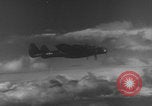
Northrop P-61 Black Widow shoots enemy plane at night aided by radar.
United States Northrop P-61 Black Widow fighter flying at night during World War 2. Fighter pilot seen through canopy at night. Enemy target seen on radar scope of P-61. Radar operator at radar console and giving instructions. Finger pressing button to fire machine guns. P-61 firing machine guns at night. Enemy plane smoking and falling at night.
Yugoslav communist leader Josip Broz Tito, also known as Marshal Tito, talks with fellow officer at his mountain headquarters (WW2)
A female host wearing an U.S. army uniform, reads a letter from a sergeant asking to hear news about Marshal Tito, leader of the Yugoslav Partisan forces. Yugoslav communist revolutionary and President Josip Broz Tito, also known as Marshal Tito, with some of his fellow officers, meeting with Allied officers during World War II. Josip Broz Tito with his loyal partisans at his mountain headquarters in Yugoslavia. One of the few early footage segments of Josip Broz Tito. A cameraman walks away as Josip Tito talks with others.
Scrap metal used in steel production to manufacture war materiel in the United States (WW2)
Naval artillery firing from warships during World War 2. Artillery fire during nighttime. A thick smoke from a battered ship after a naval battle. Smokestacks of a factory. View of a steel plant. Carts of scrap metal being brought to a steel plant. A horizontal charging machine empties boxes of metal and scrap into the furnace. Molten metal inside factory foundry ladles. Molten metal pours from ladle. A war production worker in steel factory. Coal burning in foundry furnace. A worker operates a machine to lift mold from newly cast blooms. Hot slabs of steel roll and take shape on factory assembly line. War Production Board headquarters in Washington DC. Chairman of the War Production Board, Donald Nelson, speaks about the importance of steel production to meet increasing war demands. “We must have a continuing flow of scrap in order to keep steel production at the level needed to meet our war requirements”, says Donald Nelson.
President of Lukens Steel Company, Robert W. Wolcott, speaks about the importance of scrap metal in the wartime steel industry (WW2)
Smokestacks in a steel factory in the United States during World War 2. Robert W. Wolcott, the President of the Lukens Steel Company in Coatesville, Pennsylvania (the oldest steel mill in commission within the United States), and also chairman of the American Industry Salvage Committee, speaks about the importance of scrap metal in steel production for the war efforts in World War 2. Robert W. Wolcott speaks to two men inside his office. Wolcott’s office is decorated with patriotic posters on the use of scrap for war production (“Half the Metal in every ship, every tank, every gun is SCRAP!”). Behind Robert W. Wolcott is a sign saying “American Industries Salvage Committee”. “This decline in scrap must be checked. Steel, scrap must flow to the mill. This is becoming a serious situation. And it is a definite challenge to industry” concludes Robert W. Wolcott.
CRITICALPAST.COM: About Us | Contact Us | FAQs - How to Order | License Agreement | My Account | My Lightboxes | Shopping Cart | Advanced Search | Featured Collections | Website Terms & Conditions | Privacy Policy ©2026 CriticalPast LLC.
License Agreement |
Terms & Conditions |
Privacy Policy
©2026 CriticalPast LLC.