


 Francais
 Deutsch
 Italiano
Refine Your Search
Walcheren Island Netherlands 1944 stock footage and images
- Showing 13 to 18 of 9703 results more
more Hide
Hide
Cold War commences in Europe and UN takes military action against North Korean aggression
Opening scenes show people of East Germany escaping from the Soviet-controlled zone, to the West, through forests. Whole families are seen carrying whatever they could in back packs and suitcases. Early in Korean War period: An animated map is inserted showing a map centered on Korea, with the 38th Parallel dividing Communist North Korea from South Korea. View of a line scratched in a dirt road, designating the 38th Parallel, leading to a temporary border with guard post, established for administrative purposes. View of Ducksoo Palace, in Seoul, Korea, headquarters of the United Nations (UN) Commission on Korea. Diplomats inside its chambers, trying (in vain) to negotiate the withdrawal of Soviet forces from North Korea. United States troops are seen evacuating from South Korea, after the establishment of the Republic of Korea. Carrying duffel bags and all their gear, they board trains to evacuation ports. General scenes of landscape and South Korean people going about their normal activities, under the new government. Smoke rising from surprise attacks by North Korea against the South. Republic of Korea (ROK) troops march to defend against the North's aggression. ROK troops in trucks and trenches fire small arms against the invaders. Huge numbers of refugees are shown fleeing the North. Soldiers raise international flags at the headquarters of the United Nations, in Lake Success, Long Island, New York. Inside, diplomats meet to deal with the crisis. View of empty place at the table labeled "Union of Soviet Socialist Republics." Warren Robinson Austin, U.S. Ambassador to the UN is seen as well as other UN representatives. (Narrator states that after its cease fire order had been ignored by the Communists, the Security Council voted for united military action against the aggressor, and provided for a unified command of United Nations forces.) View of the delegates voting with raised hands. U.S. General Douglas MacArthur is seen receiving the first UN battle flag. Aerial views of the Port of Pusan, Korea. The U.S. Navy transport ship, USS Pickaway (APA-222) is seen being moved by tug boats in the port. View of the troop ship loaded with American troops headed to the port of Pusan, Korea. Color guards waving flags of the UN, the U.S. and the Republic of Korea, as they lead a military brass band marching along the pier. Change of scene to American troops marching along opposite sides of a road in Korea, as jeeps drive in the middle. Troops, including ROK soldiers, engage North Koreans with small arms, mortars, machine guns and artillery field pieces. Back in America, troops parade along Constitution Avenue in Washington DC, with capitol building seen in background. American soldiers boarding a train. Camera focuses on shoulder emblem of a Canadian officer boarding a train and then shows Canadians marching to a port of embarkation. Turkish troops pass in review on their way to Korea. Troops of the Netherlands on the march. Australian troops assembled before sailing to Korea. Swedish doctors and nurses boarding a ship to Korea, where they will set up hospitals to treat the wounded. British sailors boarding ships for action in Korean waters. Glimpse of a British Colossus class aircraft carrier, underway in Korean waters. Views of other UN forces headed to Korea. The UN General Assembly building in Lake Success, Long Island, New York. View of delegates inside the building. Film ends showing a rotating globe of the world, with flags of Nations participating in UN actions in Korea, being shown as the globe passes their respective countries.
Japanese actions leading to 2nd Sino-Japanese war and attack on United States at Pearl Harbor in World War II
Japanese army officers examining foreign military equipment. A Japanese worker employing electric drill developed in a Western country. The Japanese freighter, Tatsuno Maru, loading scrap iron at a port in the United States. Other Japanese freighters loading coal and oil for shipment back to Japan. View of the Washington Naval Conference in Memorial Continental Hall, Washington, DC, held in 1921-22 and again in 1927 and 1930, to deal with several lingering issues. Glimpse of Japanese people holding flags while gathered near the Imperial Palace in Tokyo. Glimpse of Japanese army troops on parade. Japanese Navy warships at sea. A fleet of Japanese Mitsubishi G3M bombers and Nakajima Ki-27 pursuit planes, parked on an airfield. A loose formation of Ki-27s airborne. Animated map illustrates Japanese fortification of Mariana, Caroline, and Marshall islands in the Pacific. Animated map illustrating China's greater size and population vis-a-vis Japan. Animated map illustrating Japanese occupation of Manchuria in 1931. New York Times newspaper with headline "Japs Seize Manchuria" hovers over fires burning in Manchuria. Other newspaper headlines reporting on Mussolini's invasion of Ethiopia; the Spanish civil war; surrender of Czechoslovakia; invasion of Poland; assaults on France, Belgium, and the Netherlands by Nazi Germany; the London Blitz; and Nazi advances against Russia on the Eastern Front. Fnally, a Boston Hearald extra edition headline reports: "Pearl Harbor Bombed." A still photograph of Japanese Baron Tanaka Giichi (on left) with two other dignitaries, circa 1929. Japanese infantry streaming into Manchuria and then celebrating as they walk into local town. A busy street in a Chinese city. Japanese soldiers in Manchuria escorting local prisoners along a street. Animated map illustrating Japananese warships surrounding harbor of Shanghai, China. View from a Japanese ship bombarding Shanghai. Smoke rising from shell striking on Shanghai waterfront. View from land of severely damaged buildings on a street, and a shell exploding in background, as Chinese defenders move to successfully repel the Japanese forces. New map illustrates subsequent Japanese move, annexing Jehol, from occupied Manchukuo, and Korea. Japanese troops entering a town in Jehol. Sun newspaper headline: "League Censures Japan." Chinese diplomat protesting at League of Nations. Japanese troops exiting railroad trains in Jehol. Aisin Gioro Puyi aka Henry Pu Yi, Kangde Emperor (Kang-te Emperor) of the Japanese puppet state of Manchukuo, is seen saluting Japanese troops on parade. Closeup of Puyi wearing shaded glasses, looking directly into the camera. chiang Kai-shek, with other Chinese officers. Reenactment of barbarian forces riding against China and thwarted by the Great Wall. Many Chinese walking in a long line along the Great Wall. Map tracing the Great Wall across China. Aerial view of the Great Wall from overflying airplane. Japanese troops marching through a city gate; infantry climbing a sheer cliff; and helmeted Japanese soldiers marching past civilians in a city. Map illustrated progress of Chinese unification by year 1937. Japanese officers conferring during occupation. Japanese troops leave a barracks, riding in open trucks. A line of the troop trucks moving along the dirt street of a town. The troops climb from their trucks in the town.
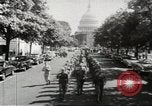
The United Nations Security Council passes Resolution 82 on June 25, 1950 and takes action in response to North Korean aggression against South Korea.
In the United States, American troops prepare to reinforce those responding to North Korean aggression against South Korea in the Korean War, and parade along Constitution Avenue in Washington DC, with Capitol building seen in background. American soldiers boarding a train to transport them to a port of embarkation. Remainder of the film is devoted to soldiers from the 53 nations contributing forces to the United Nations (UN) action. Canada contributes troops to the effort. Camera closeup of shoulder emblem on a Canadian officer boarding a train. Canadian troops marching to a port of embarkation. Turkish troops on their way to Korea, pass in review before a commanding officer. Troops of the Netherlands, also seen marching. Australian troops assembled before sailing to Korea. Swedish doctors and nurses board a ship bound for Korea, where they will set up field hospitals to care for wounded. British sailors boarding transport ship to Korea. Brief view of the Royal Navy Colossus class aircraft carrier, HMS Triumph (16) underway in Korean waters. Australian soldiers boarding an aircraft to Korea. One raises his rifle and waves from the top of the stairs as he enters the plane. More soldiers climbing gangways to large transport ships. Asian civilians waving small flags as they cheer departing soldiers. British soldiers wearing berets with pom poms are seen disembarking from a troop ship. More views of United Nations troops marching in formations. The UN General Assembly building in Lake Success, Long Island, New York. View of delegates inside the building. Film ends showing a rotating globe of the world, with flags of Nations participating in UN actions in Korea, being shown as the globe passes their respective countries.
People in the English colonies led by George Washington moving against the English Army during the American Revolutionary War.
The history of the United States. A pictorial map shows the path followed by Christopher Columbus in 1492 across the Atlantic Ocean. He found a group of islands where other explorers from Spain, Portugal, Netherlands, England, Italy and France found two continents. The representation of the area in the northern continent over which the English and the French fought and the French were defeated. The French gave up their colonies and in 1763 they belonged to England. People in the English colonies at work. English officials during a meet. The workers rebelling against English troops. Farmers, who became soldiers, moving with guns. The army led by George Washington moving against the English Army. The thirteen colonies of the English became independent, during the American Revolution, leading to the birth of American nation.
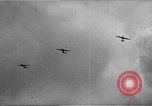
USAAF B-24 bombers drop bombs over target areas in Volcano Island and Yap island in the Pacific Theater during World War II.
U.S. bombings on islands in the Pacific Theater during World War II. Several aircraft in flight. A map showing a flight path from Volcano Island in the Philippines to Iwo Jima in Japan. On 10th August, 1944 : A United States Army air Force B-24 Liberator bomber aircraft in flight. Several B-24s in flight. The aircraft drop bombs over target areas and explosions occur. Smoke rises from the bombed areas. A map showing the flight path to Yap island. On 20th August, 1944 : A B-24 in flight drops bombs over target areas on Yap island. Smoke rises from the resultant explosions.
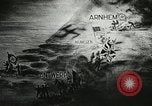
Allied forces clear German forces from control of the Scheldt River and open the Port of Antwerp in World War II
Map sketching positions of German forces at Alcheren and Arnhem separated by Allied forces at Antwerp and Numegen, Belgium, during World War 2. Views of the port at Antwerp silent and unusable due to German control of the Scheldt River downstream. British forces attacking those German forces at Walcheren, as Canadian, and Polish forces secure the South bank of the river. Royal Navy and Marines and Norwegians operating in the river itself. British minesweepers in the Scheldt River. View from the mine sweeper as mines are destroyed raising large plumes of water. The first supply ship arriving at port of Antwerp after Allied forces secured the river to the sea. The restored derricks and port facilities busy handling Allied ships and supplies. American Army trucks carrying supplies from the Port of Antwerp to Allied forces. Closeup of an African American soldier driving a truck. Supply trucks maneuvering around obstacles in a town. British soldier directing truck convoy traffic. Allied artillery barrage at night.
CRITICALPAST.COM: About Us | Contact Us | FAQs - How to Order | License Agreement | My Account | My Lightboxes | Shopping Cart | Advanced Search | Featured Collections | Website Terms & Conditions | Privacy Policy ©2026 CriticalPast LLC.
License Agreement |
Terms & Conditions |
Privacy Policy
©2026 CriticalPast LLC.