


 Francais
 Deutsch
 Italiano
Refine Your Search
Walcheren Island Netherlands 1944 stock footage and images
- Showing 4501 to 4506 of 9702 results more
more Hide
Hide
The various ways of attacks by Japanese kamikaze suicide aircraft on ships in Okinawa, Japan.
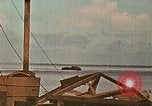
Japanese suicide plane attacks (kamikaze) in Okinawa, Japan. A ship at a sea. The propellers of a Japanese suicide plane. A Japanese suicide aircraft with a radar equipped aircraft in flight. An airman works on the radar equipment. An animation depicts Japanese plan of attack to avoid the interception by the Civil Air Patrol(CAP). A Japanese aircraft lands. A pilot in the aircraft. It takes off. Aircraft tilt and depart. A ship at a sea. The aircraft in flight over the clouds. Animations depict the changes in approaches to attack due to changing weather. An aircraft taxis on water. The aircraft lifts and crashes on a ship. An explosion on the ship. (World War II period).
The various ways of combating the Japanese suicide plane attacks in Okinawa, Japan during World War II.
The U.S. forces combat the Japanese kamikaze suicide plane attacks in Okinawa, Japan during World War 2. Aerial view of the field. A U.S. aircraft takes off. A pilot in the cockpit. Aircraft stationed on the aircraft carrier and men on the deck. Aerial view of the air field and the bombed ground installations. An aircraft in flight during night. A delay fuse on the ground.
The radar detection and radar pickets being used for combating the Japanese kamikaze suicide planes in Okinawa, Japan
The U.S. forces combat the Japanese kamikaze suicide plane attacks in Okinawa, Japan during World War II. View of a radar on a tower. Animation depicts the situations in which radar detection can help detecting the enemy planes. A radar to detect the low flying planes. Men in the control room. Animation depicts the use of radar pickets and the increased area of surveillance of radar.

The lookouts recognition a Japanese suicide aircraft and being fired from ships in Okinawa, Japan.
The U.S. forces combat the Japanese kamikaze suicide plane attacks in Okinawa, Japan during World War II. The suicide planes attack a ship at sea. A U.S. lookout watches through a binocular. The lookouts being given recognition training. A lookout observes through a binocular from the deck of a ship. A ship being attacked. Lookouts stand on the ship deck . Artillery being fired from gun barrel. Soldiers climb on the naval gun. The inclination of the gun barrel being adjusted. The U.S. ships at sea. The animation depicts the fire distribution of the ships on the suicide planes. The naval guns fire on the suicide planes. The aircraft catches fire and falls into the sea. Soldiers at the naval gun. animation depicts the course of formation of the ships to hit the target.
Day two of the amphibious assault on Betio, Tarawa atoll, by U.S. 2nd Marine Division, during World War II in the Pacific.
U.S. Marines of 2nd Marine Division setting up communications on beachhead of Betio, Tarawa Atoll, on day two of their amphibious assault against Japanese forces there, in World War 2. Individual marines moving low and fast across the sand, as gunfire sounds all around. Casualties being moved on litters. Entire area under fire with destruction everywhere. Marines taking cover wherever possible. Some firing machine gun from sandbagged position. Area covered by smoke from gunfire and explosions. Marines shielded by remains of Japanese structures as they move about, engaged in fierce fire fights. More wounded being tended. Marines using hand grenades and flame throwers against Japanese soldiers in fortified positions. Marines moving carefully across series of Japanese positions, checking for remaining Japanese defenders. Several move against a Japanese position in a hill, using small arms hand grenades and flame thrower. Many dead Japanese soldiers are seen on the other side of the hill, after it is taken. Marine carrying a machine gun and setting it up. An ambulatory wounded marine.
Marines fire at Japanese soldiers occupying abandoned U.S. landing craft during Battle of Tarawa in World War II
Activities of U.S. 2nd Marine Division during the Battle of Tarawa during World War 2. U.S. marines firing at their own abandoned landing craft in the surf, where Japanese soldiers have infiltrated at night and set up machine guns. M3 Stuart light tank on sand at water's edge, with image of an elephant and word, "Colorado" painted on its side. On day two of the assault, marines, are still seen occupying a limited beachhead. They fire mortars at the Japanese defenders. Scene further inland, show hill with destroyed Japanese fortification and smoke rising, as Marines fire their weapons. A Marine steps from rubble of destroyed Japanese position and moves forward. (The M3 tank is seen in background.) Marines hunkered down in debris. One marine firing at a Japanese sniper in a tree. Narrator comments that snipers don't fall when hit (presumably tied in place). Scenes of heavy firefights. Marines with an M3 tank in the thick of it. Destroyed Japanese structures and denuded palm trees. Rubble everywhere. Fires burning and continuous sounds of gunfire.
CRITICALPAST.COM: About Us | Contact Us | FAQs - How to Order | License Agreement | My Account | My Lightboxes | Shopping Cart | Advanced Search | Featured Collections | Website Terms & Conditions | Privacy Policy ©2026 CriticalPast LLC.
License Agreement |
Terms & Conditions |
Privacy Policy
©2026 CriticalPast LLC.