


 Francais
 Deutsch
 Italiano

Refine Your Search
Walcheren Island Netherlands 1944 stock footage and images
- Showing 463 to 468 of 9743 results more
 Hide
Color Sound

Scenes of U.S. Army Air forces operations on Adak Island during the Aleutian Islands Campaign of World War II
As film begins, organ music is heard. Camera pans across tops of tents showing sky above. Scene shifts to a Chaplain conducting Sunday services in the open. A soldier plays a field organ as soldiers and airmen participate in the service. Closeup of the Chaplain kneeling before a makeshift altar where objects are placed to facilitate communion in a mass or service. Complete change of scene shows airmen arranging bombs for loading aboard an open truck that then backs up to an airplane, into which they are loaded. Narrator notes that these are all purpose bombs weighing 250, 500, and 1000 lbs, respectively. Closeup of a 1000 lb bomb in foreground marked "GP 1000 lb AN-M44." Airmen arnorers install fins and fuses before loading the bombs aboard the aircraft. An airman loads belts of machine gun ammunition at a gun turret of the airplane. others load guns elsewhere on the aircraft. Closeup of pilots being given final briefing about the mission, before departure. Narrator notes that the mission will involve two flights of B-24s and one of B-17s. Planned altitudes and routes of the bombers are drawn on a map in colors. They are to attack a Japanese installation on Kiska Island. Fighter support is described. A Flight crew assembles near their B-24 Liberator bomber. Closeups of individual crew members waiting on the airfield ramp. Scene shifts to fighter pilots who will be accompanying the bombers. They converse in front of a row of fighter aircraft. They are wearing flotation gear over their flight suits. The area is paved with Marsden matting (pierced steel planking). Closeups of men in the group, including: Lieutenant George I. Rudell, Lieutenant Holy P. Mail, Lieutenant Lial A. Bean, Major Willson Aston, Lieutenant Henry J. Strencops and Colonel Jackson.
Aftermath of Japanese air attacks on Dutch Harbor, Unalaska Island, Aleutian Islands, in World War II
The aftermath of the Japanese bombing of Dutch Harbor, June 3 & 4 1942, during World War 2. Scenes include the bombed ship, S.S. Northwestern, which was being used as housing for construction crews. The docked steamer was damaged by bombs from "Val" dive bombers launched by the Japanese aircraft carrier "Junyo". Smoke rises from an oil tank as it burns. Bombed & wrecked trucks at the island. Also shown are bomb damage and fires at Fort Mears, Dutch Harbor.

Japanese delegates reach Ie Shima, Ryukyu Islands and then advance towards Manila, Philippine Islands in the South East Asia.
Japanese surrender in Southeast Asia during World War II. Airplanes in formation flight. Two Japanese Mitsubishi G4M-1 'Betty' twin-engine bombers painted white with green crosses on their wings, fuselage and tail land at Ie Shima Ryukyu Islands near Okinawa carrying Japanese delegates. The planes land at Nichols Field at 1813 hours. The planes are dubbed 'Bataan number 1' and 'Bataan number 2.' Lt. Gen. Torasirou Kawabe, the vice chief of the Japanese Army's General Staff and his surrender party disembark from the airplanes. Members of the surrender party include Rear Admiral Ichiro Yokoyama Representative, Imperial Japanese Navy Staff., Colonel Yashima Terai General Staff, Colonel Orato Yamoto General Staff, Mr. Morio Yakawa Secretary, Japanese foreign office. Kawabe leads the surrender party. Army C-54 transport airplanes parked. Japanese surrender delegates board the airplanes which take off for Manila, Philippines. United States Army General Douglas MacArthur speaks to his troops from a balcony at the war damaged Manila City Hall (Padre Burgos Ave, Ermita, Manila, 1000 Metro Manila) on 20 August 1945. He notes that he is hopeful that they will all be able to return home soon.
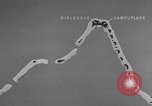
A U.S. ship convoy undertakes a three phase occupation plan for the Marshall Islands during World war II.
A training film on operations of U.S. forces on Kwajalein Atoll in the Marshall Islands during World War II. A map locates Burlesque and Camouflage Islands. The occupation plan for northern landing forces is to occupy and defend the North Carillon group of islands in three phases. The first phase is 'how hour dog day'. Jasper, Ivan, Albert and Allen Islands are included in the phase. Phase II is 'William hour dog plus one day'. Burlesque, Camouflage and Abraham Islands are included in the phase. Operations of phase III include organization of defenses on Burlesque and Camouflage Islands. Capture of the remaining islands is also included in this phase. The Arlington and the Hollis Islands are to be captured. Officers discuss. Smoke rises from naval guns fire. Aerial view of the target area. A ship convoy bombs the main parts of the atoll. Heavy columns of black smoke rise from the bombing. Air support is provided and naval gun fire is carried out according to schedule in phase I. The island is secure after sometime. Animation depicts occupation of the islands and casualties. Japanese men come aboard a ship as they climb a net.

A map locates various islands of the Pacific and the invasion of these islands by U.S. forces.
A training film titled 'The Kwajalein Operations' on the operations of U.S. forces on Kwajalein Atoll in the Marshall Islands during World War II. A map locates islands in the Pacific Ocean. Animation depicts the area invaded by U.S. forces. The Gilbert Islands, the Solomon Islands, Midway Island, Tarawa and other islands located on the map. U.S. lines of communication on various islands. Kwajalein Atoll on the map. The atoll is selected as a base for U.S. forces. It is selected because of various benefits which would prove useful during the invasion of the Marshall Islands. Bases and installations on Kwajalein Atoll.
Icebreaker, USS Burton Island stops at Kodiak island to load equipment and then proceeds on mission towards King Island, Alaska
The icebreaker, USS Burton Island (AGB-1) en route to King Island in Alaska as a part of U.S. Navy annual winter ice reconnaissance mission. USS Burton Island stops at Womans Bay, Kodiak Island. Naval air station at the island. An aircraft pulls up into the hangar. Residential area in Kodiak. Snow covered mountains. The U.S. troop transport submarine, USS Perch (SSP-313) moves slowly on the surface, past the camera. The USS Perch crew lines her afterdeck. Notable on the USS Perch, is a large rounded watertight container for storing amphibious landing equipment. A helicopter being loaded aboard USS Burton Island. Crew fastens the helicopter securely in anticipation of rough seas through which she is later seen making way. Views of crew members removing rime ice from the deck, superstructure, and turret of a 5 inch gun. Small slabs of sea ice termed, "lilly pads," floating in the water. Rime Ice covering the railings of the USS Burton Island.
CRITICALPAST.COM: About Us | Contact Us | FAQs - How to Order | License Agreement | My Account | My Lightboxes | Shopping Cart | Advanced Search | Featured Collections | Website Terms & Conditions | Privacy Policy ©2026 CriticalPast LLC.
License Agreement |
Terms & Conditions |
Privacy Policy
©2026 CriticalPast LLC.