


 Francais
 Deutsch
 Italiano

Refine Your Search
Wiesbaden Germany 1945 stock footage and images
- Showing 79 to 84 of 10473 results more
 Hide
Color Sound
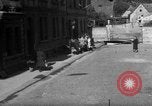
German people lined up in front of a food store in Wiesbaden, Germany.
Activities of German citizens on streets in Wiesbaden, Germany. People lined up in front of a food store during time of shortages and rationing a year after World War 2 ended. German children sit on a footpath. View of buildings near the streets. Some young boys and girls sit and others play on the streets.
U.S. President John F Kennedy's visit to Germany.
United States President John F Kennedy visits the United States Air Base in Wiesbaden, West Germany during the Cold War. The presidential Air Force One VC-137 aircraft taxiing before takes off from Wiesbaden Air Base, Germany. Sign of Headquarters 7101st Air Base Wing Wiesbaden Air Base. A car exits the Wiesbaden Air Base and U.S. Army Fliegerhorst Kaserne, Hanau.
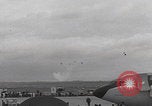
President Kennedy and General Landon inspect Air Force crew and depart from Wiesbaden
United States Air Force aircraft perform an airshow upon the departure of United States President John F. Kennedy at the Wiesbaden Air Base Operations in Wiesbaden, Germany. President Kennedy and of United States Air Forces in Europe General Truman H. Landon inspect United States Air Force officers and crew and greet spectators. General Landon salutes as he stands beside President Kennedy. President Kennedy greets the military band playing music. President Kennedy and General Landon board Air Force One aircraft (VC-137C SAM 26000). Crewmen pushing air stair back before departure. Sign reads “Headquarters 7101st Air Base Wing Wiesbaden Air Base”.
U.S. President Kennedy goes to Kurhaus in Germany
People wave flags of U.S. and West Germany on streets and from balcony in Wiesbaden during U.S. President John F. Kennedy's visit. Presidential party cavalcade with West Germany Economics Minister Ludwig Erhard escorted by motorcycle police down Wilhelmstrasse to Kurhaus (Kurhauspl. 1, 65189 Wiesbaden, Germany).

Allied aircraft bomb the City of Dresden in Germany on February 13, 1945 (British) and again on February 15 (American)
Aerial views of British Royal Air Force Lancaster bomber aircraft heading toward Dresden. View of the Lancaster bombers as they drop bombs over German targets in Dresden during night of February 13-14, 1945, during World War 2. Bombs impact and view of explosions and smoke. Two views of German scarecrow bombs exploding, designed to look like the explosion of an Allied bomber aircraft in order to intimidate the enemy. Next scene is two days later, with aerial views of United States Army Air Force B-17 bombers in flight toward Dresden. They attack the city again on February 15-16, 1945, focusing on railroad marshaling yards. Narrator notes that the population of Dresden before the war was 625,000 people, and that the combined bombing by the American and British forces is estimated to have destroyed virtually the entire city.
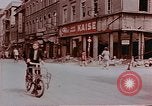
Buildings damaged due to Allied bombings in Wiesbaden, Germany, during World War II
German civilians walk in a street of Wiesbaden with damaged buildings in the background. Views of buildings damaged by Allied bombings. Trucks and cars move past the wrecked structures. Rubble piled up on the ground. American military nurses, and both American and British military uniformed women move past the buildings. A U.S. Army soldier is also seen among what are mostly German civilians. (Note: The film was shot from the following locations: Kirchgasse/Luisenstrasse; Luisenstrasse near St. Bonifatius Church; and Langgasse near Webergasse.)
CRITICALPAST.COM: About Us | Contact Us | FAQs - How to Order | License Agreement | My Account | My Lightboxes | Shopping Cart | Advanced Search | Featured Collections | Website Terms & Conditions | Privacy Policy ©2026 CriticalPast LLC.
License Agreement |
Terms & Conditions |
Privacy Policy
©2026 CriticalPast LLC.