


 Francais
 Deutsch
 Italiano
Refine Your Search
Wiesbaden Germany 1945 stock footage and images
- Showing 121 to 126 of 10464 results more
more Hide
Hide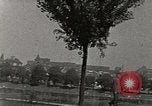
Panoramic view of a German town showing houses on hillside, river, and mountains.
A town on a river in Germany. (Possibly Wiesbaden-Biebrich on the Rhine River, or maybe Heidelberg). Stone arch bridge over a river. River bank with mountains in the background. Sidewheeler excursion boats moving along the river. Men in lederhosen riding bicycles on a tree-lined promenade parallel to the river (possibly the Rheingaustraße). Houses and other buildings on a hillside. Cyclists and a car crossing a bridge in town. Sign on a small wooden building advertising Coca Cola, and another sign advertising milch (milk) from a producer in Nuremberg. (Amateur home movie.)
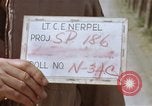
Liberated United States airmen prisoners at Stalag 7A in Moosburg, Germany (WW2)
Liberated United States prisoners (mostly military airmen) at POW camp called Kriegsgefangenen-Mannschafts-Stammlager (Stalag) VII A, located just North of Moosburg, Germany during World War II. The airmen cook food. Several are seen sunning themselves. Airmen seen shaving, shining shoes and cleaning clothes. A group of airmen around sign 'I Wanted Wings' and 'Luft 3'. These are some of the prisoners who were originally held at Stalag Luft III, in German Province of Lower Silesia, near the town of Sagan (now in Poland). (Note: Stalag Luft III is famous because the "Great Escape" took place there in March, 1944. Prisoners were forced to march from Sagan to Spremburg during the coldest winter in Germany in 50 years. There, they boarded a train of boxcars for a 3 day trip to Moosburg in January 1945, because the Russians were closing in. The addition of these prisoners to Stalag 7A, at Moosburg, led to serious overcrowding of the camp. On May 1, 1945, the New York Times reported that "The Fourteenth Armored Division liberated 110,000 Allied prisoners of war at Stalag 7A at Moosburg." This corrected an earlier report that 27,000 prisoners had been liberated.)
Harry S Truman, Joseph Stalin and Winston Churchill discuss the problems related to Germany in Potsdam Conference, Berlin (WW2)
Question marks on screen. Reconstruction of the buildings and denazification in Berlin, Germany after World War II. A factory in Germany. A farmer leads a horse to plow a field. Men at a farm cultivate crops. The wreckage of the IG Farben plant. Men speaking to Hermann Göring. The trial of Norwegian leader and Nazi collaborator Vidkun Quisling. The rail goes on for the criminal. People burn Nazi books and pamphlets in a bonfire. A man burns a pamphlet with a photo of Adolf Hitler. The people stand around the burning books. German civilians read a poster on a wall. General Dwight D. Eisenhower of the United States, Marshal Georgy Zhukov of the Soviet Union, and Field Marshal Bernard Montgomery of the United Kingdom sign a joint agreement. The three of them stand together. The United States Capitol building. Chongqing National Government building in No. 232 Renmin Road, Chongqing (Chungking), China. The Big Ben in London, United Kingdom. Aerial view of the Arc de Triomphe in Paris, France. General Francisco Franco saluting to marching soldiers in Spain. The delegates including United States President Harry S. Truman, General Secretary of the Communist Party of the Soviet Union Joseph Stalin, and UK Prime Minister Winston Churchill seated around a table during the Potsdam Conference in 1945. They discuss the problems. A close up view of Truman looking into some documents. Stalin smokes a cigarette. The delegates discuss problems. The funeral ceremony of President Franklin D. Roosevelt. The soldiers fire guns. President Harry S. Truman attends the ceremony. Churchill salutes from a moving vehicle. Women voting in the United States. Truman gets off an aircraft. Delegates in the Potsdam conference. Newspaper headlines read Russian declares war on the Empire of Japan in 1945. The first atomic bomb explosion over Hiroshima, Japan. The newspaper headlines about the war. Truman, Stalin and delegates at the Potsdam Conference. Soldiers advancing in the battlefield. A flag of the United States and people celebrate the victory. Newspaper headlines feature the surrender of Japan.
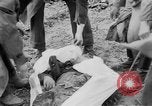
German Civilians wrap dead bodies in shrouds and place them in individual graves during a mass burial in Gardelegen, Germany.
A mass burial in Gardelegen, Germany during World War II, for victims of the Gardelegen massacre. German civilians wrap dead bodies in shrouds and place them in individual graves. They pour dirt in the graves with shovels. Burned barn building in background.. They are burying concentration camp and slave laborer victims of nazi atrocities who died after being locked in the barn that was then set on fire, in Gardelegen, Germany, on April 13, 1945. The atrocity was discovered by the U.S. Army 102nd Infantry Division on April 14, which directed the German civilians to properly bury the victims from April 21-25, 1945.
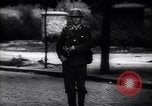
History of Berlin before and after World War II showing zones of occupation and poor living conditions post-war.
Nazi soldiers at attention with guns drawn in Berlin during World War 2. U.S. soldiers on watch from damaged Berlin building. Man watching the Brandenburger Tor with binoculars while sitting in car. Pan American passenger airplane in flight after the war. Pan American passenger reading Time and other magazines onboard. Aerial view of Berlin early 1960s. Pan American plane landing at Tempelhof Airport. Pan American passengers descending to tarmac under sign that reads, "Today Pan American has completed 93153 Transatlantic Crossings". West German immigration officer inspects passport of tourist in Tempelhof Airport’s passport control. Brandenburg Gate from West Berlin during the early 1960s. A man observing the Brandenburger Tor from the Straße des 17. Juni street in West Berlin. Sign saying “Achtung! Sie verlassen jetzt West-Berlin” (“Warning! You are now leaving West-Berlin” in German). View of Berlin in 1920s and 1930 decades. Drive through Brandenburg Gate in the 1920s. Point of view shot driving through Berlin in the 1920s. Various street signs in Berlin showing “Unter Den Linden” and “Friedrichstraße”. Tourist bus flying American flag departs in Berlin 1920s. Humboldt University of Berlin (Humboldt-Universität zu Berlin) along the Unter den Linden boulevard during the 1920s. View of the Berlin Cathedral dome. View of the Gendarmenmarkt square showing the Konzerthaus and the French Church. Pedestrians in Friedrichstraße. Berliners in Lustgarten park on Museum Island. Early Nazis driving in Berlin streets in 1930s. Hitler saluting parade. Hitler addressing Germans. Berlin in ruins in Spring 1945 as occupying Allied tanks pass in front of Brandenburg Gate. Old starving woman walks on streets of Berlin amid ruins in 1945. Ruins of Berlin include Reichstag Building during 1945 Battle of Berlin. Women and children emerging from underground Berlin bunker in 1945, to a scene of devastation and rubble in the city. Ground view of the Kaiser Wilhelm Memorial Church (Kaiser-Wilhelm-Gedächtniskirche) after being bombed. Interior of ruined Reichstag Building. Potsdam Conference 1945, Map of WWII Europe. Berlin map, including official Berlin map with signatures showing Zones of Occupation. Germany allied control authority gathering including American, British, and Soviet representatives. French, American, Soviet flags in Germany. Rebuilding of Berlin mostly by women clearing rubble, using shovels, buckets, wheelbarrows and cleaning old bricks for reuse. Over-crowded train in Germany post-WWII filled with German civilian refugees abandoning the cities and heading to the countryside of Germany to resettle.
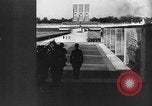
Nazi Party ceremonial grandeur is contrasted to the horrors perpetrated under the 3rd Reich
6th Nazi Party Congress at Nuremberg, in 1934, featuring a "Totenehrung" ceremony, honouring dead. Nazi SA ( Sturmabteilung) and SS (Schutzstaffel) troops in precise formations fill the Zeppelin Field Luitpold Arena, leaving only a wide pathway to the Ehrenhalle war memorial. View from behind honor guard standing at the Ahrenhalle, as Adolf Hitler, flanked by SS leader, Heinrich Himmler (in Black) and Viktor Lutze, head of the Sturmabteilung (SA), approach. Three huge banners with swastikas are seen in the far background. Scene shifts to 1945. American troops are now assembled at the main grandstand (Ehrentribüne) of Zeppelin Field. The American flag covers the wreathed swastika sculpture at the top of the Grandstand. View of German soldiers, who have been mustered out, mingling with civilians in a town. Some speak with an American soldier, who is part of the U.S. occupying force. Scene shifts to the Yalta conference in February, 1945. Winston Churchill, Franklin D. Roosevelt, and Joseph Stalin are seen seated while their most senior military staff members stand in the background. Allied leaders sit around a large conference table. U.S. Secretary of State James F. Byrnes, sits near Prime Minister Winston Churchill. Scene shifts back to Nazi era. Joseph Goebbels, Reichminister of Propaganda is speaking and haranguing a crowd. In contrast, German soldiers are seen conversing with occupying American soldiers. This is contrasted with more scenes of Nazi leaders giving impassioned speeches to a hall filled with Nazi faithful. German soldiers, prisoners of war are seen directed by U.S. military police, behind a barbed wire enclosure. Large numbers of German prisoners of war in an open holding area. Closeups of some. Bucolic scenes of farmers working in fields and herds of sheep and cattle. Hitler speaking in a forceful, animated way and haranguing an audience of rapt listeners. German civilians standing quietly in a group. (Narrator refers them being the people of Beethoven, Goethe, and Martin Luther, as statues of those iconic Germans are shown.) In dramatic contrast, numerous dead bodies of victims are being shown to German citizens by American troops, at Nordhausen, Buchenwald, and Bergen-Belsen concentration camps. This is contrasted against views of German people folk dancing in traditional costumes, German contributions to science (view of Albert Einstein speaking) and industry (view of professional glass blowers at work). Glaring contrast shows German civilians moving the body of a concentration camp victim; several civilians being shot dead by a firing squad (unseen); Rudolf Himmler; and an image Germany being destroyed, as result of the Nazis. American soldiers are loosely assembled in an open field. by the Elbe River at Torgau, Germany on 26 April 1945. American and Russian officers greet each other at the site, where their armies have met in World War 2. American and Russian soldiers mingle and greet one another. Views of Allied forces entering Germany. Another scene of victims' bodies stacked at a concentration camp. French soldiers examine stake where prisoners were tied and executed in the Gestapo headquarters on Paris France. Other views of the Gestapo prison, where victims were buried. Examples of torture devices used to coerce information from prisoners. More views of stacked bodies of victims. Germans carrying bodies from a concentration camp. General Dwight Eisenhower and General George Patton visiting the Ohrdruf Concentration Camp. Burned remains of victims. Closeup of General Patton. German officials and citizens confronting horror as they are compelled to walk through the camp. A huge wagon loaded with bodies of the dead. German women appalled and repelled by the sights. Countless numbers of dead victims covering a large courtyard. German citizens compelled to carry body of a victim from the yard. Others carrying bodies of victims. Large numbers of German citizens, seemingly shamed and remorseful at the revelations. A group of German men carrying shovels and others carrying crosses to commence burying the victims appropriately. Men carrying victims bodies in open wooden caskets along a road lined with spectators. Coffins of victims laid out in a cemetery. (Narrator alludes to them never forgetting.) German men gently place covered coffins in a long mass grave.
CRITICALPAST.COM: About Us | Contact Us | FAQs - How to Order | License Agreement | My Account | My Lightboxes | Shopping Cart | Advanced Search | Featured Collections | Website Terms & Conditions | Privacy Policy ©2026 CriticalPast LLC.
License Agreement |
Terms & Conditions |
Privacy Policy
©2026 CriticalPast LLC.