


 Francais
 Deutsch
 Italiano

Refine Your Search
Wiesbaden Germany 1945 stock footage and images
- Showing 295 to 300 of 10473 results more
 Hide
Color Sound

Surrender of Japan after atomic bombings of Hiroshima and Nagasaki, Japan.
Surrender of Japanese Imperial forces leads to end of World War II. V-J Day (Victory over Japan) celebrations in August 1945. Americans celebrate as newspaper headlines announce V-J Day. Close up view of man holding Boston Post with headline "War Is Over." Teeming crowds in New York City's Times Square celebrating the news. Crowd of citizens, soldiers, and sailors in uniform surrounds a newspaper with headline "U.S. Announces Jap Surrender." Happy crowds of people waving, jumping, and smiling in jubilation. People show V signs. U.S. warships underway at sea. U.S. soldiers aboard ship. Japanese troops parading in Japan. Japanese aircraft lined up in flight line ready for take off to defend the Japanese mainland. Japanese amphibian tanks lined up ready for use against a possible allied invasion. Aerial view of actual atomic bomb explosion over Hiroshima as seen from second B-29 aircraft accompanying the Enola Gay on the bombing run on August 6, 1945. Ruins of twisted metal and debris in Hiroshima and Nagasaki and civilians walking among the devastation. Japanese civilians along road. Japanese Generals deplaning and meeting U.S. General MacArthur on an airfield. Troops of 11th Airborne Division land in Japan. Marines reach Japanese shores at Yokosuka Naval Base in Landing crafts. American soldier raises American flag in Japan. American troops aboard Japanese battleship Nagato after Japanese surrender. View of the Nagato (later used as a target ship during Operation Crossroads).

New German soldier Volkssturm recruits and conscripts pledge allegiance to their country and Hitler, and receive their rifles.
A new German army unit in uniform is assembled in a large hall, late in World War 2 (January 1945), comprised of Volkssturm ("people's army") conscripts (mostly youth and elderly). Rifles are stacked in the foreground. A German officer at a podium gives a speech. The soldiers raise their hands and pledge allegiance to their country and leader (Hitler). The hand of a soldier on the German flag. The rifles are distributed to the individual Volkssturm soldiers.
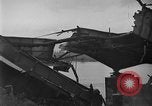
German civilians walk along the damaged Tangermünde Bridge after its destruction in WW2
Scenes following the April 1945 destruction of the Tangermünde Bridge over the River Elbe, by retreating German forces in World War 2. View of damaged Tangermunde Bridge. Defeated German soldiers and German civilians walk along the bridge, moving westward into American and British controlled areas, and fleeing advancing Soviet forces (fearing their retribution). Civilians climb the bridge carefully with their luggage, having to hold twisted steel girders with no flooring beneath. Wounded German walks carefully on the bridge. U.S. Army soldiers checking papers of German citizens crossing the bridge.
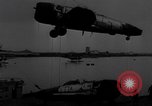
Montage of scenes from the air war between U.S. and German warplanes during World war 2
Montage of scenes from air war in Europe, covering period from about 1943 through 1945 during World War Two. U.S. P-47 and P-38 fighter aircraft being unloaded from a ship at a port in Europe during the Second World War. A line of P-47s on an airfield. German aircraft taking off and inflight, including: Me-109; He-111 bombers; Me-110 fighters; and Fw-190 fighters. U.S. P-51s firing at and destroying German aircraft. Multiple aerial dogfight scenes with gun camera footage showing dramatic mid air explosions of various enemy German aircraft. U.S. B-17s flying to Berlin and back again, with P-51 fighter escorts. P-38 aircraft flying in formation and returning from escort duty, seeking targets of opportunity, strafe German airfields, and fire on German aerodromes and parked aircraft, destroying many airplanes.
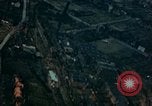
American aircraft attacks town and factory area.
American aircraft in flight strafing factory area and town through clouds and attacking railroad marshalling yards, in 1945, near end of World War II in Europe.
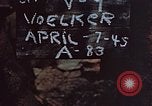
Activities of U.S.airmen in 323rd Bomb Group, at Denain Airbase (A-83) near end of World War II.
A number of Martin B-26 Marauder aircraft of 323rd Bombardment Group (9th Air Force) are lined up for takeoff. As they taxi past camera, tail number of one: 43-34344, is visible. All aircraft display the distinctive White Tail identifying the 323rd BG. (The Group is known to some as Wood's Rocket Raiders, so-named for their Commanding Officer, Lieutenant Colonel Wilson r. Wood.) The location is Denain Airfield (A-83), near the City of Valenciennes, France. The time is April, 7,1945, a month before VE Day. Several airmen are pitching horseshoes, while others watch. They use a shoe to measure how close one came to the pin. Two airment use a two-man saw to saw a timber while a third sits on it to hold it still.
CRITICALPAST.COM: About Us | Contact Us | FAQs - How to Order | License Agreement | My Account | My Lightboxes | Shopping Cart | Advanced Search | Featured Collections | Website Terms & Conditions | Privacy Policy ©2026 CriticalPast LLC.
License Agreement |
Terms & Conditions |
Privacy Policy
©2026 CriticalPast LLC.