


 Francais
 Deutsch
 Italiano
Refine Your Search
Wiesbaden Germany 1945 stock footage and images
- Showing 4681 to 4686 of 10464 results more
more Hide
Hide
Attack on German World War II aircraft JU-88
German Air Force Junker Plane JU-88 seen in flight. Luftwaffe aircraft JU-88 explodes during World War II in Germany.

German soldiers make preparation for a counter attack on Britain (WW2)
A view of damaged homes, churches, hospitals and schools in Germany during World War II. buildings Wrecked due to air raids from Britain are seen. German soldiers making preparation for a counter attack. Nazi German war planes taking off. German planes bombing Britain. Smoke is seen. Pilots at the controls in the cockpit.
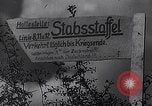
German ace fighter pilot, Werner Molders, leads squadron of Bf-109 (Me-109) aircraft on a mission (WW2)
Street sign refers to public transport connection to Germany that runs daily until the end of the war. A dirt airfield in World War II. Ground crews load belt ammunition into boxes near Bf-109 (Me-109) aircraft on which mechanics are working. Ground crew refuels an aircraft. Famous German fighter pilot ace, Werner Molders, is assisted as he changes into flight clothes and climbs into the cockpit of his Bf-109 airplane. (Tail of his airplane shows 42 painted marks, representing aerial victories.) Crew chief stands on wing and cranks engine. Molders taxis out and takes off. Formation of Bf-109s in flight and over coastal waters. View from cockpit as German plane dives to attack allied ship in water.
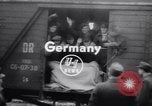
German P.O.W.'s freed after living for ten years in Russian jails
German P.O.W.'s (Prisoner of War) freed after living for ten years in Russian jails. They return to Germany. The prisoners on the railroad tracks. Relatives cry and hug them as they reunite. Welcome speeches by the officials.

U.S. Eighth Army Air Force attack on German ME-262 fighter aircraft during World War 2.
Highlights of United States Eighth Air Force Fighter Combat in Germany. Gun camera footage showing Eighth Air Force attacks on German Luftwaffe Messerschmitt ME-262 jet propelled fighter aircraft. ME-262 attacked by 360th, 83d, 375th, 383d, 63d, 486th, 77th, 361st and 82d Squadron Groups. Several German planes catch fire and fall from the sky.
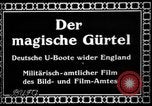
German submarine UB-35 leaves port on mission during World War I
Early slates allude to failed attempts at peaceful resolution of issues between Germany and England, in World War 1, and the Kaiser's consequent decision on February 1, 1917, to intensify German submarine warfare against Britain. Slate refers to Churchill's admitted concerns expressed in the "Sunday Pictorial," about the resulting constraint on England's control of the seas around the British Isles, referring to the U-boats creating a magic girdle (Magischen Gurtel) around England, which becomes the title for the film. In the first part, Captain, Lothar von Arnauld de la Periere of the German U-boat UB-35, stands in a skiff as he is rowed out to his submarine. He exchanges salutes with his officers, as he boards the U-35, nestled against a German ship. He gives the order to cast off the lines and proceed half power in reverse. The crew scrambles to get underway. German sailors on the nearby ship watch from her railings. Sailors use a long pole to help move the submarine away from the ship. Officers and men on the ship wave as the U-boat pulls away. Views from the submarine deck as it moves on the surface of the water heading toward the Mediterranean Sea. (World War i; World War 1; WWI; WW1)
CRITICALPAST.COM: About Us | Contact Us | FAQs - How to Order | License Agreement | My Account | My Lightboxes | Shopping Cart | Advanced Search | Featured Collections | Website Terms & Conditions | Privacy Policy ©2026 CriticalPast LLC.
License Agreement |
Terms & Conditions |
Privacy Policy
©2026 CriticalPast LLC.