


 Francais
 Deutsch
 Italiano
Refine Your Search
Worms Germany 1945 stock footage and images
- Showing 9679 to 9684 of 10469 results more
more Hide
Hide
Japanese paper balloon which was used to attack North America in the Pacific Theater during World War II.
Japanese Paper Balloon or fire balloon used to attack on North America in the Pacific Theater during World War II. Japanese paper balloon or fire balloon bomb in flight over field in the Pacific Theater. The paper balloon descends to the ground. Diagrammatic presentation of the mechanism of the wind velocity when the balloon is in flight.
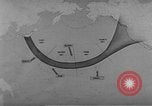
U.S. Navy personnel demonstrates balancing mechanism of fire balloon used to attack North America during World War II.
Diagram shows pattern of air currents that carried Japanese paper balloon fire bombs from Japan to America's West Coast, during World War II. The paper bomb balloon or fire balloon unit consists of the paper gas sac and an automatic balancing and firing control device. United States Navy personnel inspects the balloon as it descends to the ground. He looks at the paper bags filled with sand which provide balance and the central payload,incendiary and bombs. He holds paper material and inspects its strength. The balloon is filled with hydrogen gas. Pressure is exerted by a rubber ring. United States Navy personnel demonstrates the various parts: demolition block,aneroid switches,jacks,blow out plugs,incendiaries and central payload. He demonstrates the balancing mechanism: Balance bags,payloads and incendiaries are suspended by T-hooks switched between the blow out plugs on the balancing ring. A man unhooks the T-hook and releases balance bags.
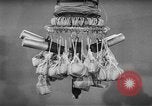
United States Navy technicians set up attachments in the fire balloon used to attack on North America during World War II.
Demonstration of the Japanese Paper Balloon or fire balloon bomb used to attack North America in the Pacific Theater during World War II. A United States Navy technician demonstrates the set up of the attachments in the Japanese paper balloon or fire balloon. He sets up the demolition block and connects the plugs. He demonstrates the wire connections of the aneroid. Animation depicts the rise up and descend of the balloon in air as the fuse burns and plug blows. United States Navy technician explains the diagram showing mechanism of battery, starter fuse, blowout switch, fuse leads, blow out plugs and the aneroid box.
U.S. Navy personnel demonstrates blow out plugs connection in fire balloon bomb used to attempt attack on North America during World War II.
Demonstration of the Japanese Paper Balloon Bomb or fire balloon used to attempt attack on North America during World War II. United States Navy personnel demonstrates connections of the blow out plugs in a Japanese paper balloon or fire balloon . Animation depicts: rise up and descend of the balloon in air as the blow out plugs are released and plugged in. Personnel explains the diagram showing bomb mechanism of battery, starter fuse, blowout switch, fuse leads, blow out plugs and aneroid.
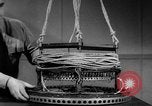
U.S. Navy personnel demonstrates set up of central payload in fire balloon bomb to be used for attack on North America during World War II.
Demonstration of the Japanese Paper Balloon or fire balloon bomb used for attempted attack on North America during World War II. United States Navy personnel demonstrates the set up of the central payload suspended using a T-hook from the bottom center of the balancing ring in a Japanese paper balloon bomb or fire balloon. He demonstrates the release of the pay loads. He explains the diagram showing mechanism and release of the pay loads. Animation depicts: the rise and descend of the balloon in air as the incendiaries and the payloads are dropped one by one from the ring. The balloon in flight over the field and mountains in the Pacific Theater.
President Harry S. Truman reads prepared speech after dropping of atomic bomb on Hiroshima Japan during World War 2.
U.S. President Harry S. Truman delivers a speech following the dropping of the atomic bomb on Hiroshima, Japan, during World War II. U.S. President Harry S. Truman seated at desk in cabin of a ship. He reads prepared speech stating that a single American aircraft dropped one atomic bomb on Hiroshima and destroyed its usefulness to the enemy. He reminds listeners that the Japanese began the war from the air at Pearl Harbor. He speaks about the U.S. Armed Forces and the production of atomic bombs in the United States. The President states that the U.S. is now prepared to completely destroy every productive enterprise of Japan, by bombing Japanese docks, factories, and communications. Truman states that the U.S. shall completely destroy Japan's power to make war. President Truman notes that acceptance of the Ultimatum of July 26th issued at Potsdam, could have saved the Japanese people much suffering. But it was rejected by Japan's leaders. He states that the U.S. have spent more than two billion dollars on the greatest scientific gamble in history and have won. This is due to the greatest achievement of organized science in history.
CRITICALPAST.COM: About Us | Contact Us | FAQs - How to Order | License Agreement | My Account | My Lightboxes | Shopping Cart | Advanced Search | Featured Collections | Website Terms & Conditions | Privacy Policy ©2026 CriticalPast LLC.
License Agreement |
Terms & Conditions |
Privacy Policy
©2026 CriticalPast LLC.