


 Francais
 Deutsch
 Italiano
Refine Your Search
Worms Germany 1945 stock footage and images
- Showing 97 to 102 of 10469 results more
more Hide
Hide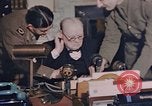
Winston Churchill prepares to make radio broadcast in London, England as Germany surrenders in World War II.
Scenes from May 8, 1945 in London as England hears news of the surrender by Germany in World War II. Winston Churchill seated at desk and preparing to make a 3:00pm (15:00) radio broadcast about the German surrender. Churchill along with a British Naval officer greeted by Secretaries who clap and cheer as Churchill gets into a car and doffs his hat as he smokes a cigar. The car pulls away. View of Big Ben clock tower in London, showing the time of 3 o'clock pm, (15:00) which was the time of the broadcast by Churchill.
President Harry S. Truman announces surrender of Germany in World War II. Crowds celebrate in streets of Manhattan
VE Day (Victory in Europe) May 8, 1945. From the White House, in Washington DC, President Truman announces that Germany has surrendered, bringing World War 2 in Europe to an end. Americans are seen celebrating the good news in the streets of downtown, Manhattan, New York City. Crowds on Wall Street and cheering on steps and in front of statue of George Washington at Federal Hall. Ticker tape falls on Wall Street. View of Trinity Church between tall buildings. Cheering crowd fills Times Square. Many in the crowd are soldiers, sailors and other military servicemen in uniform. American flags are seen on buildings and some carried by people in the crowd.
Harry S Truman assumes office of President of the United States following death of Franklin D. Roosevelt during World War 2
Harry S Truman appointed President of the United States. The U.S. Capitol building in view. Trees in the foreground. President talks on the phone. Harry Truman attends the 1944 Democratic convention with his daughter, Margaret Truman. People gather holding boards and placards of Truman in hand. A board reads: 'Truman for Vice President'. Franklin Roosevelt seated in a car during his fourth inauguration parade, on January 20, 1945, with motorcade proceeding on Constitution Avenue in Washington DC, and then driving up to the White House. Past events show President Franklin Roosevelt talking to Vice president Truman. Flag at half staff on the U.S. Capitol following death of President Roosevelt. Truman addressing a joint session of the Congress. General Marshall, Admiral King, Secretary of War Stimson all arriving at the White House to meet with President Truman. Also seen are James Byrnes and Truman receiving Lord Halifax, Anthony Eden, Secretary of State Stettinius in the White House. Truman speaks to joint session of congress on April 16, 1945 and expresses desire to continue the efforts and direction set by Franklin Roosevelt, saying, "With great humility I call upon all Americans to help me keep our nation united in defense of those ideals which have been so eloquently proclaimed by Franklin Roosevelt...." He also states, "So that there can be no possible misunderstanding, both Germany and Japan can be certain, beyond any shadow of a doubt, that America will continue to fight for Freedom until no vestige of resistance remains. Our demand has been, and it remains, unconditional surrender. We will face the problems of peace with the same courage that we have faced and mastered the problems of war. In the memory of those who have made the supreme sacrifice; in the memory of our fallen president, we shall not fail."
Images of signed affidavits by U.S. military personnel verifying authenticity of images of German Concentration camp scenes
Camera shows close up of two certificates of affidavit signed by Lieutenant Colonel George Stevens and Lieutenant Kellogg. The first affidavit by U.S. Army Signal Corps Colonel Stevens cites Stevens' work from 1 March 1945 to 8 May 1945 photographing concentration camps and prison camps liberated by Allied forces. It is read aloud by George Stevens (or by a narrator reading the text of the affadavit). The second affidavit, signed by U.S. Navy Lieutenant E.R. Kellogg, and witnessed by Captain John Ford, is also read aloud. It cites Kellogg's expertise in motion picture and photographic techniques through his employment with Twentieth Century Fox Studios in California from 1929 to 1941. He attests that he has thoroughly examined the concentration camp liberation films of the Army Signal Corps and found them to be unaltered, genuine, and true copies of the originals in the U.S. Army Signal Corps vaults. A map shows the location of concentration camps in Germany and other parts of occupied Europe under Nazi control. (World War II period).
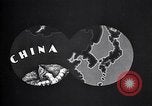
Silk worms taken from mulberry trees, sorted and placed on thorns to weave cocoons in China.
Describes raw materials used in telephone manufacturing. The map shows location of China. Silk worms are taken from mulberry trees in China. Worms are sorted and placed in a nest of thorns to weave cocoons. Cocoons are picked up from the nest. Man shows a box containing various samples of silk. Animation shows the use of silk as an insulator inside a telephone.
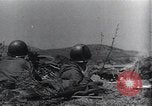
United States Army 187th Airborne Regimental Combat Team returns to Japan from Korea and is welcomed by City of Beppu, Oita
Clip opens with rapid changing scenes: American troops in trench in Korea during the Korean War. American tank on street in Germany. American Ski troops in Alaska. Amphibian assault training in Puerto Rico. Rotating Globe shows: U.S. Army on alert to defend against aggression. Sergeant Stuart introduces episdoe and states that U.S. Army has come to Japan to know their culture and make friends after war and occupation. U.S. Army troops of the 187th Airborne Regimental Combat Team, are seen arriving by railroad train at a train stateion near their base near Beppu,Oita on the island of Kyushu, Japan. U.S. Army soldiers, including white and African American soldiers, exit train cars. They receive a warm welcome from Japanese population. Banner reads:" Welcome Pala Troop comin back from Korea, City of Beppu."[sic] Women holding flowers and families with small children waving American and Japanese flags, welcome them on the train station. A sign over the train station platform reads: "Welcome 187 Para Troop Coming Back From Korea, City of Beppu." The troops stand in formation on the platform while the unit's officers receive the flowers from the women. Japanese men in fraternal uniforms and the general population all join in the welcoming ceremonies. The troops march off the train station under another sign reading: Welcome Home 187 RCT." and march down the main street of Beppu under a swirl of paper confetti. Next scenes are from autumn of 1945, as U.S. soldiers march through streets of Japan during occupation following the end of World War 2. U.S. troops seen marching behind Japanese police to occupy Japan, in 1945, amidst the aftermath of suffering and destruction of the war. The local population standing at road sides and watching with worry and concern. Scenes of postwar destruction in Japan. Rubble of bombed buildings. Scene of simple wooden dwelling shacks and wreckage nearby. A Japanese boy with his baby brother on his back. The baby is crying. Next scene moves again to circa 1950 in streets of a Japanese city, possibly Tokyo, rebuilt and with busy scenes of traffic on streets and commerce. Large outdoor rally with a Communist speaker addressing large crowd of Japanese people who sit and listen. Scenes from a what the narrator describes as a Communist rally in Japan, against America, which turns violent. Protestors running in streets during demonstration, with signboards and police and fire fighters extinguish flames at scene of an overturned, burning car. Flashback again to 1945 or 1946 as U.S. Army soldiers use tractors and heavy equipment to clear and level an area of war rubble and debris during rebuilding efforts after World War 2. Japanese citizens look on, watching the machines at work.
CRITICALPAST.COM: About Us | Contact Us | FAQs - How to Order | License Agreement | My Account | My Lightboxes | Shopping Cart | Advanced Search | Featured Collections | Website Terms & Conditions | Privacy Policy ©2026 CriticalPast LLC.
License Agreement |
Terms & Conditions |
Privacy Policy
©2026 CriticalPast LLC.