


 Francais
 Deutsch
 Italiano
Refine Your Search
Worms Germany 1945 stock footage and images
- Showing 1921 to 1926 of 10469 results more
more Hide
Hide
German prisoners board trucks at U.S. 3rd Army headquarters in Bad Tolz, Germany after World War II.
German prisoners and perpetrators of Dachau Concentration Camp at U.S. 3rd Army headquarters in Bad Tolz, Germany after World War II. Building with sign reading 'War Crimes Branch, Judge Advocate Division'. German prisoners arrive at courthouse in truck. Prisoners exit from enclosure in courthouse yard and board truck.
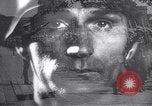
Film juxtaposing German defeat in World War 1, with its defeat in World War II, and comparative postwar impacts.
Film begins stressing the historic aggressive military traditions of Germany. A brief view of thousands of Adolf Hitler's Nazi troopers assembled in dramatic formation at the Nazi party rally grounds in Nuremberg, Germany. Explosion of the Nazi eagle, with swastika symbol, atop the Zeppelintribüne grandstand at Zeppelinfeld in Nuremberg, being blown up by U.S. Army soldiers at the end of World War 2 in Europe. Germans celebrating the armistice ending World War One. German soldiers captured, in unconditional surrender, ending World War Two. Huge open field filled with defeated German soldiers in the second world war. German armies parading through Berlin at the end of World War One. American troops occupying the entire country of Germany after the second world war. A Nazi eagle being destroyed on a German government building at end of the second world war. Old photograph of the German general staff, led by Helmuth von Moltke the Younger, that was still intact, after World War I. In contrast, after World War 2, the entire Nazi military was held and subject to trials at Nuremberg. Großadmiral Erich Raeder seen being taken in custody. Closeup of Field Marshal Wilhelm Keitel. German industry unimpaired by World War I, contrasted with utter destruction in the second world war. American officer coordinating resumed operation of of a postwar plant. View of German diplomats remaining in office after WWI. Proclamation barring Nazi party members from all offices after WWII. German Kaiser Wilhelm II in peaceful exile in Holland after the first world war. A Nazi officer war criminal, is taken in custody by American Military Policemen, and executed by a firing squad. World War 1 did not affect German schools and curriculums. After World War 2 all Nazi doctrines were destroyed. New text books and curriculums were prepared by the Allies for German use. Map shows small area of post World War 1 occupation, in contrast the the entire Germany after WWII. Weimar Republic government, post WWI is contrasted with post World War 2 government by the Allied military powers. British Marshal Bernard Montgomery, American General Dwight D. Eisenhower, Soviet Marshal Zhukov, and French General Charles de Gaulle, are shown. Views of American soldiers interacting with German citizens during their occupation of Germany. Images of Germans: Frederick the Great, Otto von Bismarck, and Kaiser Wilhelm. Views of German farmer sowing seed, postman delivering mail, policemen escorting children. Normal activities resumed in Germany, in areas of culture such as orchestral concerts, etc.
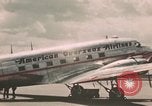
Former war correspondents tour Frankfurt, Germany five years after World War 2
A passenger airplane of the American Overseas Airlines in Frankfurt, Germany. It is on a multi-leg journey carrying 45 former War Correspondents back to Europe for celebrations commemorating the 5th anniversary of the D-Day Invasion of World War II. Views of Frankfurt from a moving vehicle, high atop a ridge, looking down at the city, and winery grape fields. Many Frankfurt buildings visible and the Main River running beside the city. Views of some buildings still destroyed from World War II, five years prior. Several African American U.S. Army soldiers beside cars greet the party of former war correspondents. The correspondents meet with a U.S. Army General -- possibly J. Lawton Collins or Thomas Handy. A correspondent looks out from a window at a war-damaged building in the background. A street car with the sign "Nied Hochst" arrives at a stop and civilians get into it. Exterior and interior views of the main train station, the Frankfurt Hauptbahnhof. Some cakes and pastries in a bakery. Correspondents meeting with a local Frankfurt official and his wife. Remains of a largely destroyed church, likely either Frankfurt Cathedral (Imperial Cathedral of Saint Bartholomew) (German: Kaiserdom Sankt Bartholomäus) or Katharinenkirche (the Church of St. Katherine). Views of the wrecked exterior and interior of the church. A West German flag draped over an interior balcony. Sign outside the church door indicates "Entrance to the Exhibition" (Eingang zur Ausstellung). A Germany girl selling trinkets at a market cart. German boys and girls in a market square and fair area, possibly Romerberg. Correspondents approach a booth selling cigars and cigarettes. More partially destroyed buildings in Frankfurt. Correspondents boarding a plane at Rhein Main Airbase. View of the airport terminal. Sign on a building reads 'Rhein Main Base Operations. Elev 358'. The correspondents boarding the American Overseas Airlines aircraft, and seated inside the aircraft. Aerial view of the German countryside below. Passengers sleep and relax aboard the airborne aircraft.
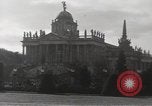
Communs of New Palace in Potsdam, Germany.
The Communs of the New Palace (Neues Palais Am Neuen Palais, 14469 Potsdam, Germany) in Potsdam, Germany. View of the colonnade connecting the two communs (now housing the University of Potsdam). Statuary obelisks at entrance in front of the communs. Dome of the New Palace from the west side. Other building of Communs. Statues and figures seen on pillars.
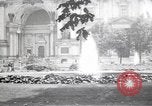
People walk by monuments in Berlin, Germany.
View of a fountain in front of the Berlin Cathedral. People stand in front of the City Palace of Berlin (the Stadtschloss Berliner, Schloßpl. 1, 10178 Berlin, Germany). An equestrian statue of a German emperor near the Berlin Cathedral or Unter den Linden. People walk on a road. People walk by sculptures besides the road. The National Gallery of Berlin (Alte Nationalgalerie, Bodestraße 1-3, 10178 Berlin, Germany). People walk on the sideways near the Nationalgalerie.
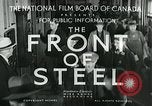
War machinery prepared in Canadian factories. Adolf Hitler's army parades honoring his 50th birthday in Berlin, Germany.
Machine power in Canada and Germany in World War 2. Canadian Industry workers walk into a war production plant punching time cards as they enter. Men welding. Steel worker checking heat of hot steel with temperature-reading glasses. Workers in Canadian factory prepare machinery for war. 20th April 1939: Adolf Hitler in Berlin, Germany reviews German army in parade on his 50th birthday (Narrator incorrectly states the year as 1938, but Hitler's 50th birthday was in 1939 and these images are from the 1939 parade). Heavy breakthrough tanks roll by, followed by Army division assault tanks. Motorized troops march followed by Infantry and then parachute troops. Stuka Dive bombers fly overhead with Berlin Victory Column (Siegessäule) in the foreground. Hitler and others watch the flight.
CRITICALPAST.COM: About Us | Contact Us | FAQs - How to Order | License Agreement | My Account | My Lightboxes | Shopping Cart | Advanced Search | Featured Collections | Website Terms & Conditions | Privacy Policy ©2026 CriticalPast LLC.
License Agreement |
Terms & Conditions |
Privacy Policy
©2026 CriticalPast LLC.