


 Francais
 Deutsch
 Italiano
Refine Your Search
Worms Germany 1945 stock footage and images
- Showing 3847 to 3852 of 10470 results more
more Hide
Hide
U.S. General Lucius Clay in Washington DC warns that continued food shortage in Germany will harm the European Recovery Program
U.S. providing Marshall Plan aid to Europeans U.S. Commander of occupation zone in Germany Lucius D. Clay climbs down a ladder. General Lucius Clay interviewed by men at the airport. The General speaks into a microphone. General Clay gives a report about communist inspired strike and food demonstration. General Clay says that if food shortage continues in Germany, communists may stir up greater trouble and harm the European Recovery Program. Congressmen Smith and Mundt seated on a chair. The men talk about the European Recovery Program also known as Marshall Plan. The men talk about various ways through which they can give information about the plan to the whole world.
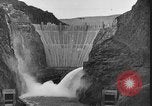
Industrial and cultural advances in USA contrasted with Nazi Germany; children sing a song in a church and play
A motion picture film explores the background of World War II. In the United States a view of a large hyrdoelectric dam with water gushing through its gates. Electrical towers of a power plant and a man throwing large switches to activate power. Newspaper headlines: 'Senator oppose the league of nation' and 'Senate passes tariff bill by 44 to 42 vote'. A crowd holds posters of Dewey, German Chancellor Adolf Hitler and other leaders. Books of competing ideologies for sales in the United States, including those of democracy, socialism, fascism including Mein Kampf and books about Stalin. Voting time in Germany with Hitler as the only candidate and signs promoting Hitler. Germans casting voting ballots for Hitler. People burning books in Nazi Germany. A church in America or Britiain with close up views of a boys choir singing hymn "Onward Christian Soldiers." Children in America playing at a playground on a jungle gym and slide. A girl makes a drawing of natural scenes. American children smiling, playing, and running.

Ralph Heinzen gives an intelligent analysis of internal conditions in Germany as SS Gripsholm arrives in New York (WW2)
SS Gripsholm (Ship) arrives in New York, United States in World War II. Cameramen take photos as SS Gripsholm as it arrives at New York harbor. The rails are crowded with Americans. She docks at Pier F in Jersey City and ambulances roll away with wounded soldiers. Six hundred and sixty-two repatriates from German internment camps come ashore. S. Pinckney Tuck, excharge d'affairs in Vichy seen. Douglas MacArthur (General Douglas MacArthur's nephew), approaches with his dog. Passengers are happy to come in home. Ralph Heinzen of the United Press gives an intelligent analysis of internal conditions in Germany today. Stalingrad was the turning point, he states. Germany began losing the war with that defeat and Hitler started losing prestige.
Germany concludes armistice with France in Compiegne, France during World War II.
The Armistice at Compiegne, France on 22nd June, 1940 between France and Germany during World War II. German officers including General William Keitel, accompany Chancellor Adolf Hitler as they walk past a German honor guard lined up, while a band plays the German National Anthem. French General Charles Huntziger and another officer arrive and enter a railway carriage (the same one in which Germany signed the 1918 armistice). Interiors of carriage showing French General Huntziger signing the documents. Adolf Hitler has left and is chatting with German officers outside. General Keitel presents the document to Hitler for countersigning. Hitler asks for a pen, and they drop it as Keitel hands it to Hitler. Keitel quickly retrieves it and Hitler signs. French General Huntziger steps down from the rail car and is escorted away with others of his party. Hitler expresses pure delight in chatting with members of his staff.
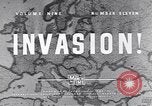
News media military analysts discuss the problems of Allies invading Europe to defeat Germany in World War II
Map of Europe and label "Invasion." Westbrook Van Voorhis leading a panel discussion about the problems arising from the Allied invasion of Europe in World War 2. He introduces panelists: Hanson Baldwin (military editor of the New York Times) Dewitt MacKenzie (Associated Press military analyst), and Paul Schubert (of Mutual Radio Network). He asks Mr. Baldwin about the importance of aerial bombing campaigns. Baldwin also stresses importance of a land invasion of Europe. Relief map of Europe highlighting major German cities. Asked about the merit of invading Italy on the way to Germany, Mr. Schubert cites the problem of the Alps and suggests other more effective invasion routes. Van Voorhis asks Mr. MacKenzie about best route into fortress Germany. He considers the criterion of ease of supply as most important, and suggests the Atlantic coast, near a good port and not far from England. Animated map shows this idea. When asked about this, Mr. Baldwin agrees completely, calling the conflict "a quartermaster's war." He adds, "The problem of victory is the problem of supply."

Officer points to chalk board maps of Germany and UK during bombing mission presentation.
Officer pointing to various mission items on a chalk board map of Germany. The cities of Emden and Wilhelmshaven are prominently displayed on the bombing mission map. The note "HIT the Target" is seen on the board. A senior officer reads from a paper. A side view depicting planes with targets below is pointed to. A map of the UK and Germany with flight routes over the English Channel is displayed.
CRITICALPAST.COM: About Us | Contact Us | FAQs - How to Order | License Agreement | My Account | My Lightboxes | Shopping Cart | Advanced Search | Featured Collections | Website Terms & Conditions | Privacy Policy ©2026 CriticalPast LLC.
License Agreement |
Terms & Conditions |
Privacy Policy
©2026 CriticalPast LLC.