


 Francais
 Deutsch
 Italiano
Refine Your Search
Worms Germany 1945 stock footage and images
- Showing 4537 to 4542 of 10470 results more
more Hide
Hide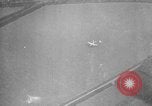
Allied Army paratroopers land at Arnhem Netherlands and advance inwards fighting with enemy during World War II.
United States Army and British Army airlifts paratroopers from England to the border of Holland during World War II. British and American transport airplanes and gliders land near Arnhem Holland (Netherlands). Soldiers, tanks and guns supplies offloaded and soldiers begin fighting with the enemy. Soldiers of Dutch Army aid the Allied forces. Allied soldiers rescue injured soldiers and advance towards enemy lines. Allied soldiers meet with Dutch Resistance or Dutch Underground Army members wearing identifying armbands. Group of German Army prisoners is seen including many young boy soldiers. Allied landing draws attention of German units allowing U.S. Army units to cross border into Germany. American soldiers near a bridge and crossing into Germany. They pass near railroad station at Roetgen Germany. Nazi German prisoners use horse carts and bicycle transport while being led away under Allied guard.
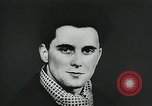
Shooting of Bernt Leuton in 1961 explained in context of Soviet history, beginning with Czar Nicholas II and Russian Revolution of 1917
A picture of Bernt Leuton, a resident of East Berlin East Germany, who fled to West Berlin West Germany. Border guards at the Communist side of Berlin in East Germany. View of Leuton on August 13, 1961 after being shot by an East German guard, after successfully swimming across the connecting canal. He is hauled out by West German guards. A map of the world. Narrator begins to trace history of Bernt Leuton's shooting by recounting prior events in history of Russia and Soviet Union. View of the Winter Palace of Czar Nicholas II, with the Czar and Czarina Alexandra standing on a balcony. Saint Petersburg, Russia on January 22nd , 1905 : Peasants and workers, with their leader Russian Orthodox Priest, Father Georgi Gapon, gathered outside the palace to deliver a petition to Czar Nicholas II. A number of the people carry banners. A picture of Czar Nicholas II. Reenactment of Czar's armed cossack cavalry dispersing the crowd, The words 'My autocracy will remain unchanged' issued by the Czar to which Father Gapon replies that they "no longer have a Czar." Picture of Father George Gapon. Picture of Vladimir Ilyich Lenin, and moving images of Lenin speaking. The Czar Nicholas II and his wife, escorted by guards, moving on a path during a ceremony. The Czar mounting a horse and the guards saluting him. A picture of the Czar's wife and hemophiliac son. Picture of Russian mystic Grigori Rasputin, whose occult powers were believed to have kept the Czar's son alive.
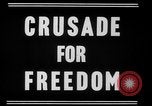
Ronald Reagan talks about how Radio Free Europe pierced Iron Curtain and appeals for help to keep it operating, in New York.
Public Service Announcement (PSA) for Crusade for Freedom in New York. Ronald Reagan, famous Hollywood actor, talks about how Radio Free Europe has pierced the Iron Curtain (approaching people beyond reach in Communist countries). Reagan stands beside a poster advertising the campaign. Close-up view of the "World Freedom Bell" ringing atop Berlin City Hall or Rathaus Schöneberg (John-F.-Kennedy-Platz, 10825 Berlin, Germany) in West Berlin, Germany. View of the 135,000-watt radio transmitter and radio tower. Personnel in radio studio working on transmitter and radio station in West Germany. Views of various men speaking into microphone in radio studio. Dramatized view of people handing over letters of gratitude to Radio Free Europe, "smuggled past the secret police" under hats identifying Communist informers by name. View of a letter being cut into multiple pieces for safe transport in secret. U.S. Army General Lucius Clay steps to podium during unveiling ceremony for the bell unveiling ceremony on October 24, 1950. Animated map shows Radio Free Europe transmission tower and locations of planned future transmitter towers to penetrate the Iron Curtain (during Cold War). Another map is shown with a transmitter location east of China "to establish Radio Free Asia to stop the spread of Communism in the far east." Ronald Reagan appeals for help to keep Radio Free Europe operating. He holds up a large envelope with the New York City mailing address to send contributions for the radio campaign: "General Clay, Crusade for Freedom, Empire State Building, New York City."
Lt General Ben Lear, Maj General Manton S Eddy and other U.S. officers inspect Merkers Mines containing Nazi gold and stolen art
Lieutenant General Ben Lear, Major General Manton S Eddy and other officers exit the Merkers Mines in Germany. Major General Eddy dusts off his shoes. The men drive to another location among the industrial warehouses of the mines. They enter a warehouse. Views of piles of gold in bags labeled "Reichsbank" as well as boxes of currency and suitcases.
German civilians tear down roadblock for U.S. Army 4th Division vehicles (WW2)
German civilians watch the arrival of United States Army 4th Division Jeeps and vehicles in Bad Kreuznach, Rhineland-Palatinate, Germany during World War II. Civilians tearing down roadblock. German civilian men and boys form in a line and pass rocks from roadblock down the line (like a bucket brigade), piling them at side of the road. German boy smiles. One German man smokes a pipe. U.S. Army Jeeps and an M4 tractor towing 155mm gun past the roadblock and through the village streets. German civilians clearing the road for United States Army.
Soldiers string wire from a moving M3 halftrack (WW2)
147th Armored Signal Company of 7th Armored Division U.S. Army string wire along road from an M3 half-track in Delitzsch, Saxony, Germany during World War II. Soldiers stringing wire on the roadside from the moving half-track. The soldiers trail behind the half-track. A soldier grabs wire and climbs a local telephone post. A soldier from the ground lets go of the string before looking up, with a German boy behind him. Soldier adjusts wire on top of the telephone pole.
CRITICALPAST.COM: About Us | Contact Us | FAQs - How to Order | License Agreement | My Account | My Lightboxes | Shopping Cart | Advanced Search | Featured Collections | Website Terms & Conditions | Privacy Policy ©2026 CriticalPast LLC.
License Agreement |
Terms & Conditions |
Privacy Policy
©2026 CriticalPast LLC.