


 Francais
 Deutsch
 Italiano
Refine Your Search
Xuan Loc Vietnam 1969 stock footage and images
- Showing 2341 to 2346 of 4374 results more
more Hide
Hide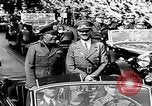
Twentieth Century scenes spanning German annexation of Austria; Italy-Ethiopia conflict; Korean War; and Vietnam War.
Adolf Hitler and Benito Mussolini standing together in an open car during a motorcade in Munich, in 1938. Civilian spectators render Nazi salutes as they pass. Next, British Prime Minister, Neville Chamberlain, arriving for the Munich treaty conference, steps from a British Airways Lockheed Model 14 passenger plane. An honor guard of helmeted and white-gloved German soldiers stands at attention during his welcome. Adolf Hitler climbs stairs of Berghof together with Chamberlain and Hitler's interpretor, Paul Otto Schmidt, on September 15, 1938 for their conference. Crowds of Germans give Nazi salute and cheer as Hitler and Mussolini appear on a balcony. Prime Minister Chamberlain back from the conference, speaks to the crowd at Heston Aerodrome on 30 September 1938, saying, among other thing, "We regard the agreement signed last night, and the Anglo-German naval agreement as symbolic of the desires of our two peoples never to go to war with one another again." Damaged buildings and ruins of city. Mussolini giving an impassioned speech. Italian cavalry carrying out a charge in Ethiopia. Italian troops employing machine guns in the Second Italo-Ethiopian War circa 1936. Italian infantry charging across sand dunes. Ethiopian Emperor Haile Selassie at the League of Nations podium. Nazi Swastika eagle statue. A formation of German troops, during the Anschluss (German annexation of Austria,in 1938). Hitler at a podium. People rendering Nazi salute in annexed city. At this point, the film transitions to 1950 as North Korean troops cross the 39th parallel and start the Korean War. A nighttime artillery barrage. North Korean troops firing a Browning M1917 machine gun and rifles. The feet of American soldiers are jumping out of foxholes as U.S.M26 Pershing tanks fire their guns from tilted positions below hills. A Pershing tank crosses a bridge back into South Korea, where a sign reads:"You are now crossing the 38th parallel, Co.B 728 MP." Scene shifts again, to President Lyndon B. Johnson delivers speech about Vietnam at a news conference on July 28, 1965, in which he states,among other things, "Three times in my lifetime...Americans have gone to far lands to fight for freedom..." as he explains U.S. involvement in Vietnam and the Vietnam War.
U.S. Defense Secretary Robert McNamara addresses a news conference and reports on Vietnam in the United States.
U.S. Defense Secretary McNamara addresses a news conference in the United States. United States Secretary of Defense Robert McNamara addresses a news conference and reports on Vietnam. He points at the bombed out supply routes from the North Vietnam. He shows the Chinese machine gun. He points at the charts showing the air raid damaged bridges. Reporters note down the points. The Defense Secretary states presence of the regular North Vietnamese troops in the South. (Vietnam War period).
U.S. President Lyndon B Johnson addresses the Association of American Editorial Cartoonists on Vietnam in the United States.
President Johnson addresses the Association of American Editorial Cartoonists in the United States. View of the White House. Members of the Association of American Editorial Cartoonists gather during the conference. President of the United States Lyndon Baines Johnson addresses gathering. Members note down the points. President reaffirms U.S. policy in South Vietnam. He visualizes the prosperous Vietnam once the war ends. street and field scenes. Monuments and buildings. President continues his speech and talks about the Red China and North Vietnam.
Large crowd of Anti-Vietnam war demonstrators march holding banners in New York and rally in Central Park
An anti-war march event in New York City, organized by the Spring Mobilization Committee to End the War in Vietnam (later became the National Mobilization Committee to End the War in Vietnam). Large crowd of anti-war demonstrators begin in Central Park and march on the streets holding banners. Students, housewives, doctors, businessmen, teachers, Beatniks, Hippies, and other demonstrators attend the protest. Group of demonstrators burns draft cards. Pro war and anti-war demonstrators argue. Right wing demonstrators protest the anti-war march. Civil Rights leader Martin Luther King and officials walk towards the United Nations headquarters building (46th St & 1st Ave, New York, NY 10017) during the peace demonstration. Military policemen arrest demonstrators protesting the Vietnam War.
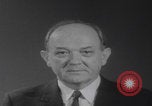
President Johnson addresses the public at a news conference about the Vietnam War
President Lyndon B. Johnson addresses the United States public at a White House news conference about the Vietnam War on July 28, 1965. “We do not seek the destruction of any government, nor do we covet a foot of any territory. But we insist and we will always insist that the people of South Vietnam shall have the right of choice, the right to shape their own destiny in free elections in the South or throughout all Viet-Nam under international supervision, and they shall not have any government imposed upon them by force and terror so long as we can prevent it… We do not want an expanding struggle with consequences that no one can perceive, nor will we bluster or bully or flaunt our power, but we will not surrender and we will not retreat,” says President Johnson,
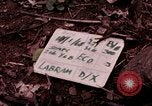
196th Light Infantry Brigade company disassembles and burns NVA huts in Vietnam.
United States Army soldiers of B Company, 196th Light Infantry Brigade during Vietnam War. Soldiers patrol through an area of damaged trees. Two soldiers examine an entrance hold at a tunnel. A soldier hands another soldier a white canister that the latter puts down into the hole. A soldier smokes a cigarette and looks at the leaves. U.S. Army Soldiers disassemble partially standing huts (which had been used by North Vietnamese Army NVA 2nd Regiment), pile up wood and straw of huts that they tore down, and set it on fire. A soldier operates a 16mm movie camera and films the event. Smoke rises from the pile of huts and materials set on fire.