


 Francais
 Deutsch
 Italiano
Refine Your Search
Yokohama Japan 1945 stock footage and images
- Showing 61 to 66 of 7988 results more
more Hide
Hide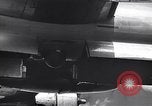
Bombing of Hiroshima, Japan, during World War II. B-29 in flight, bomb doors open, explosion on ground and devastation scenes
Bomb bay of United States Army Air Force B-29 aircraft opens. Interior view of aircraft shows bombardier in nose as he looks through bomb sight. Actual atomic bomb detonation over Nagasaki Japan as seen from B-29 aircraft on August 9, 1945. View of mushroom cloud rising rapidly from an atomic blast (a different blast; not Nagasaki or Hiroshima). Ground views of devastated city of Hiroshima following atomic bombing in World War 2.
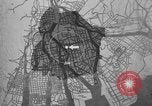
Damaged Hiroshima Castle, City Hall, and Yorozuya Bridge after atomic bomb attack during World War 2 in Hiroshima Japan.
Damage in Hiroshima, Japan after the atomic bomb attack in August 1945. A map shows the explosion range with in 1/6 miles. Buildings in Hiroshima after the atomic bomb strike. The wooden structure of Hiroshima Castle is demolished due to bombing. Less damaged Hiroshima City Hall. A soldier inspects the floor and railing of Yorozuya Bridge located 0.6 miles from the explosion zero point. Burn shadow marks from posts on the bridge indicate direction of the explosion. The soldier stands on a shadow area created by the stride of a pedestrian who had been crossing the bridge at the time of the explosion. The soldier marks in chalk the shoes prints from the shadow of the person who had been crossing the bridge at the moment of the blast.
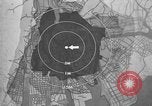
Damage in the range of 1 mile to 6 miles from impact in Hiroshima, following atomic bomb attack in Japan.
Damage in Hiroshima, Japan after the atomic bomb attack in August 1945. Views within 1 mile to 1.5 miles from center and 1.5 to 2 and 2 to 6 miles. Damaged wooden buildings in the 1.5 mile range. Damaged Hirosaki railway station. Damaged buildings. A steel beam twisted out of shape and a center wall stand undamaged. Building of a school with its north wall specially damaged. The school building is not damaged. A bent high school wall. Shattered glasses of a chapel on a hill 4 miles away from the center. (World War II period).
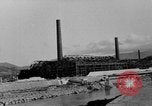
Damaged Mitsubishi steel and arms plants in Nagasaki, Japan due to atomic bomb attack.
Damage in Nagasaki, Japan after the atomic bomb attack in August 1945. Damaged Mitsubishi steel and arms plants in Nagasaki. Damaged steel frames of the factory whereas concrete walls stay unharmed. Smoke stacks also stand unharmed at the factory site. Pushed in steel frames due to directional force of the blast. Rumbled over head cranes. Damaged artillery and aircraft guns. Homes at the factory area. Damaged equipment and machinery. (World War II period).
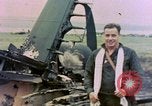
U.S. Navy fliers examine wreckage of FG-1D Corsair airplane, at the Omura airfield in Nagasaki, Japan, after World War II.
U.S. Navy flyers at the Omura Air Field in Nagasaki, Japan after the end of World War 2. They poke around the wreckage of a U.S. Navy Corsair(FG-1D Corsair BuNo.88056 flown by Lt.Col. D.K. Yost of MAG-51, US Navy, lost on 11 September, 1945.) They are accompanied by a Sergeant, carrying a long handle axe that he jokingly swings a couple of times at the fuselage of the Corsair. Camera shows numerous Japanese military airplanes parked randomly on the grass field.
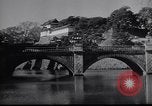
Film tracing activities of General Douglas MacArthur from defeat of Japan in World War II through Korean War (1950)
Highlights covering General Douglas MacArthur, from 1945 through 1950. The Imperial Palace in Tokyo, Japan. Several Japanese bowing towards the Palace. General Douglas MacArthur exits a car in Tokyo and walks up steps to enter his headquarters in Japan. Emperor Hirohito walks between two U.S. sentries, as he leaves a building and enters his limousine. Japanese citizens form lines on streets to cast ballots in election.Several Japanese women voting. Exterior of the Japanese National Diet building. Interior with representatives seated. A farmer behind a cultivator, pulled by an ox, in a rice paddy. Japanese school children waving American and Japanese flags together, as MacArthur leaves his Tokyo headquarters, walks down steps, and enters car. MacArthur saluting at a military ceremony, where his wife, Jean MacArthur, and son Arthur are spectators. Explosions in hills, from American Patton tank shelling North Korean positions in Korean War. American soldiers firing a mortar; infantry advancing along sides of road; and American tank commander rendering first aid to wounded comrade. United States Air Force (USAF) C-47 transport aircraft ferrying American troops into Korea, from Japan. American infantry marching across a bridge; firing mortars and rifles; and advancing on foot across fields. American troops on trucks followed by a Patton medium tank. MacArthur meeting troops on river boat; riding in a jeep; being briefed by U.S. officer in the field; examining a knocked out tank; and decorating U.S. troops in winter. Closeup of MacArthur in winter gear with his circle of five stars pined into a fur cap. Views of U.S. amphibious landing at Inchon (or Incheon) in Korean War. MacArthur watching from a ship offshore. Syngman Rhee, President of South Korea, reading message of appreciation to General MacArthur and shaking hands with him at the podium. U.S. President Harry S. Truman, pinning a medal on General MacArthur,on Wake Island in October, 1950.
CRITICALPAST.COM: About Us | Contact Us | FAQs - How to Order | License Agreement | My Account | My Lightboxes | Shopping Cart | Advanced Search | Featured Collections | Website Terms & Conditions | Privacy Policy ©2026 CriticalPast LLC.
License Agreement |
Terms & Conditions |
Privacy Policy
©2026 CriticalPast LLC.