


 Francais
 Deutsch
 Italiano
Refine Your Search
Yokohama Japan 1945 stock footage and images
- Showing 6913 to 6918 of 7988 results more
more Hide
Hide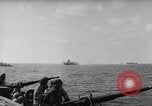
Aircraft of U.S. Navy Task Force 58, attack Kyūshū and Japanese home islands in World War II
Film begins showing sailors in battle gear manning Bofors 40mm anti-aircraft guns beside flight deck of U.S. aircraft carrier, during World War 2. Navy Task Force 58 ships, including a cruiser and another aircraft carrier, are seen in background. View of SBD Douglas Dauntless dive bomber aircraft on the carrier flight deck. Two have engines running.The rest are parked with wings folded. Next, the aircraft are seen being sent on takeoffs by a white shirt on deck. The number "6" on her flight deck identifies her as the USS Enterprise (CV-6). Views of several Douglas Dauntless aircraft flying off her deck. Glimpse of aircraft in formation from a different Squadron, bearing checkerboard markings on their tails. View from above of 5 of the aircraft in formation above the sea below. Gun camera views of U.S. aircraft strafing Japanese ships. One explodes in fireball and smoke. U.S. aircraft firing rockets that strike a Japanese carrier, setting it on fire, and causing an escort ship to blow up. Task Force 58 aircraft strike Japanese coastal installations and strafe several Japanese airfields destroying parked Japanese aircraft. They attack industrial sites causing fires and explosions. Gun cameras show aircraft firing rockets at lines of communication and striking more Japanese airfields.
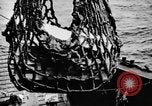
U.S. Navy ships of Task Force 58 fight against Japanese Kamikaze attacks and repair battle damage during Okinawa campaign, WW2
Opening scene shows Landing Ship Tank USS LST 1006, with her front doors open after delivering her cargo at shore of Okinawa, during World War 2. Resupply operations are seen with landing craft shuttling between transport ships. Landing ships delivering supplies and equipment directly to the shore. An Army truck drives down the ramp of a Landing Ship Tank. A huge crane installed on a vessel behind LST 633 on the Okinawa waterfront. Vehicles driving from ships to the shore from a Landing Ship Dock (LSD). Landing Ship Tanks (LSTs) numbers 606, 30, and 559 are parked at the shore, delivering vehicles to Okinawa. Suddenly Japanese Kamikaze aircraft begin attacking. View from ship in Navy Task Force 58, as its gunners shoot down a Kamikaze that crashes into the sea. View from island of an aircraft carrier, as all the anti-aircraft guns along the side her flight deck fire continuously raising lots of smoke from the gunfire. A Kamikaze plane speeding across the water at low altitude. Closeup of Navy ship gunners firing. View from a ship's deck of sky filled with tracer rounds the strike a Kamikaze airplane. It explodes into flaming pieces that fall into the ocean close to the ship. Navy gunners firing twin Bofors anti aircraft guns. Sky filled with black flak clouds and tracer bullets. A Japanese Kamikaze aircraft (Kawasaki Ki-61) hit and diving straight down into the water where it explodes raising a large cloud of smoke and water. Aircraft carrier gunners firing at a low flying Kamikaze plane that passes the USS Alaska (CB-1) in the foreground and strikes an Essex-class U.S. aircraft carrier. Views of sailors on her flight deck fighting fire. Bow view from nearby ship of heavy smoke billowing from the carrier. Side view of the same. Closeup of sailors cutting holes in her flight deck to allow firefighting hoses to reach fire below. A welder using cutting torch to clear jagged pieces of metal. Firefighters hosing down the deck with foam. A Kamikaze crashes close to another Essex-class carrier, exploding at her waterline. Views of firefighting aboard that ship. Men hauling fire hoses onto the flight deck to bring ocean water up for firefighting. View from above of sailors pouring water below decks. A welder repairing a damaged stanchion. Gunners firing from the ship's superstructure as Japanese aircraft continue to maneuver among ships of Task Force 58. Streams of tracer rounds tracking a Kamikaze plane. View from above of sailors spreading foam over the flight deck. Firefighters playing hoses on pieces of destroyed Douglas Dauntless aircraft on the flight deck. External view of the severe waterline damage to the carrier. Welder working on deck. Landing officer with paddles directing a Douglas Dauntless aircraft landing on a carrier. Sailors carrying an injured flight crew member, across the flight deck on a litter. Dead covered in white shrouds laid out on the ship's deck, for burial at sea.
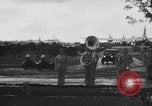
Gen. Henry H. Arnold arrives at headquarters and visits 314th Bombardment Wing at North Field in Guam, Mariana Islands.
U.S. Army General Henry H. Arnold visits 314th Bombardment Wing at North Field in Guam, Mariana Islands during World War II. Staff cars and military police escorts arrive at headquarters. A band plays in the foreground. U.S. Army Air Force Major Generals Curtis E. Lemay and Thomas S. Power greet General Henry H. Arnold. Generals and staff officers at attention as the band plays. The Generals leave the headquarters and walk to service apron where General Arnold speaks to 314th Wing personnel.
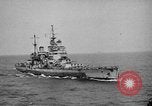
Admiral Halsey celebrates Japanese surrender with a special cake aboard USS Missouri in the Pacific Ocean.
William Frederick Halsey celebrates Japanese surrender aboard USS Missouri in the Pacific Ocean during World War II. Iowa-class battleship USS Missouri underway at sea. U.S. Navy Admiral and Commander of Third Fleet William Frederick Halsey, Jr and other senior U.S. and British Navy officers raise a toast aboard USS Missouri as they receive news of Japanese surrender. They are seated at a table. A special cake decorated with Japanese rising sun is brought. A marine holding a bayonet stands behind the group. After the cake is placed on the table, the marine proffers the bayonet to Admiral Halsey, who uses it to cut the cake and serves it. He eats the cake. Views of Admiral Halsey as he speaks.
Unwounded men and ammunition is found as U.S. Navy 7th Fleet officers capture a Japanese mercy ship in the South Pacific Ocean.
A Japanese mercy ship is captured in the South Pacific Ocean during World War II.. A Japanese mercy ship underway at sea. U.S. Navy 7th Fleet officers capture the Japanese mercy ship. Unwounded men come off the ship. Cases of 75mm ammunition are uncovered. Labels 'Medical Supply' on the ammunition. Prisoners are taken in custody.
De Gaulle is greeted by Byrnes and meets President Truman at the White House in Washington DC.
President of the Provisional Government of the French Republic Charles De Gaulle arrives in Washington DC. An aircraft taxis at the Washington Airport. Charles De Gaulle arrives and is greeted by United States Secretary of State James Francis Byrnes. Motorcars arrive at the White House. Honor guards standing at attention. De Gaulle meets U.S. President Harry S. Truman.
CRITICALPAST.COM: About Us | Contact Us | FAQs - How to Order | License Agreement | My Account | My Lightboxes | Shopping Cart | Advanced Search | Featured Collections | Website Terms & Conditions | Privacy Policy ©2026 CriticalPast LLC.
License Agreement |
Terms & Conditions |
Privacy Policy
©2026 CriticalPast LLC.