


 Francais
 Deutsch
 Italiano
Refine Your Search
Yokohama Japan 1945 stock footage and images
- Showing 799 to 804 of 7988 results more
more Hide
Hide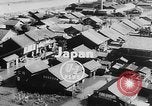
People wading in the flood caused by typhoon in Japan.
A typhoon ravages Japan. Destruction and homes in the flooded areas in the wake of the typhoon (Super Typhoon Tess). Typhoon Tess struck the Central Honshū Island in Japan. People wade through flood with their belongings. A man rows a boat in the flood. Men row a wooden board.
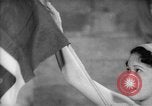
Japanese girls wave Italian flags and dance with Axis emblem parasols at a theater in Japan.
Young Japanese women perform on a stage at a theater in Japan. Japanese dancing girls wave Italian flags on the stage. They dance with parasols (dance umbrellas) that are painted with Axis power country symbols of Japan, Germany, and Italy. The parasols have Nazi German, Italian, and Japanese emblems on them.
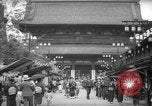
Women sew Senninbari belts and burn incense sticks to god Rokujizo in Sensō-ji, Asakusa, Tokyo, Japan.
Sensō-ji (also known as Asakusa Kannon Temple) in Tokyo, Japan. People in front of the Sensō-ji temple (2 Chome-3-1 Asakusa, Taito City, Tokyo 111-0032, Japan). Women sew Senninbari belts which are to be sent to soldiers in China. A woman with a child on her back also sews in the Buddhist temple. In Senko Booth, women burn incense to god Rokujizo who symbolizes pity. A woman prays. Japanese soldiers of the Young Men Youth Movement parade through the streets coming from the temple.
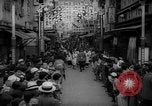
Women of the National Defense Association parade to Sensō-ji temple in Asakusa, Tokyo, Japan.
Sensō-ji (also known as Asakusa Kannon Temple) in Tokyo, Japan. Women of the National Defense Association parade to Sensō-ji temple (2 Chome-3-1 Asakusa, Taito City, Tokyo 111-0032, Japan) for service. Women in the front of the parade are carrying flags. The parade nears the Buddhist temple, stops and bows.
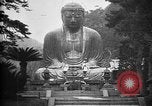
Japanese people visit shrines in Japan.
The Great Buddha of Kamakura at the Kōtoku-in Temple (4 Chome-2-28 Hase, Kamakura, Kanagawa 248-0016, Japan). People worship in front of the statue. Monks in the temple. People walking in the courtyard of a shrine in Kamakura. Monks feed birds in front of th Higashi Hongan-Ji temple (Karasumadori Shichijo-agaru Kyoto, 600-8167 Japan) in Kyoto. Wood carvings on the ceiling of a temple. A monk touches the famous Hair Rope of Higashi Hongan-ji Temple. Back pose of a Japanese woman with traditional “icho-gaeshi” hair. The woman turns.
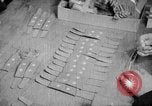
Japanese girls make insignia and sew clothes for the soldiers in Japan (WW2)
Japanese people work to help the soldiers during World War II. Many Japanese girls hand sew army insignia in class. Japanese schoolgirls use sewing machines to make insignias. A teacher demonstrates insignia making in class. Sewing pattern for diagram is drawn on the blackboard. Other girls, wearing white aprons, sew some clothes and belts for the soldiers. Girls folding handmade parachutes and stacking them on a pile. View of the Imperial Diet building in Tokyo, Japan (1 Chome-7-1 Nagatachō, Chiyoda City, Tokyo 100-0014, Japan). Sign in Japanese reads “Section Committee”. Japanese office workers working inside a small office. Piles of paper on desks. Men seated at desk as they work on the documents.
CRITICALPAST.COM: About Us | Contact Us | FAQs - How to Order | License Agreement | My Account | My Lightboxes | Shopping Cart | Advanced Search | Featured Collections | Website Terms & Conditions | Privacy Policy ©2026 CriticalPast LLC.
License Agreement |
Terms & Conditions |
Privacy Policy
©2026 CriticalPast LLC.