


 Francais
 Deutsch
 Italiano
Refine Your Search
Yokohama Japan 1945 stock footage and images
- Showing 979 to 984 of 7988 results more
more Hide
Hide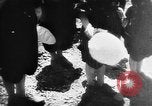
Hierarchy of social strata in Japan and subjects bow to the Japanese Emperor.during World War II
Psychology and living habits of Japanese people. Hierarchy of social strata in Japan during World War 2. Japanese children bowing. A little boy bows to a woman. A woman in kimono bows to a man. A young man bows to his parents. Civilians bow to military personnel. Subjects bow to Emperor Hirohito. Emperor Hirohito riding a white horse. Japanese people come out of their homes and bow as Emperor Hirohito’s convoy passes by. Posters on the walls remind the Japanese civilians of their duties. Japanese calligraphy reads 'Duty is heavier than mountains and death is lighter than a feather'. A dying old man rises from his futon. Dying man bows to the Japanese Emperor. Japanese samurais bow to the Shogun during the Tokugawa era. A Japanese couple in their home. The man sits on the cushion and the woman sits on the mat. A woman bows to the couple. A Japanese woman in western clothing bows to her husband. A modern Japanese woman argues with her fiancé. breaks her engagement. A Japanese photograph depicting a man standing. A Japanese kabuki melodrama exemplifies the duties which each person owes to others. A Japanese kabuki performer dances on stage. Men escape a tunnel during a kabuki play. A kabuki actor plays a distraught servant.
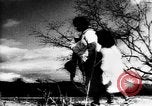
Japanese people and hierarchy of social strata in Japan (WW2)
A dramatization depicts Japanese psyche and living habits in World War II. Hierarchy of social strata in Japan. Japanese people and their sense of duty. A Japanese woman and her daughter walk along a road. The woman goes to meet her husband who is captured by the enemy and is in prison. The mother dies while traveling on foot. The daughter cries. She fulfills her duty and goes to meet her father. A man helps her and takes her on horseback to meet her father. A man returns home after six years. His wife and son want to meet him, but his father does not permit them. As the father pretends to sleep the wife comes to meet him. The man declares he is going to participate in the war. A matchmaker or 'go-between' asks a girl some questions before the girl gets married. A father scolds his son. The son is well behaved and does not answer back. Japanese boys attack each other on the street.

Children and teenagers in whimsical party dresses and kimono brought from Japan.
Children and teenagers wear whimsical fashionable dresses brought from Japan by Max Hess of Allentown, Pennsylvania. Three girls wear boxy Japanese-inspired dresses made of metallic fabric. Girl with Happi coat written with word “Matsuri”. A girl wears a baggy sack suit. Clothes being displayed for children and teenagers. A girl wears a “peekaboo” beach hat inspired by basket hats worn by Japanese Buddhist priests. Children pose in sack suit. Dresses for fishing and play time. A teenaged girl wears a short dress with Kimono-inspired sleeves.
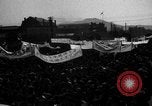
A woman addresses a large crowd of civilians gathered for a rally at a square in Japan.
Civilians gather in a square for a rally in Japan. A large crowd of civilians gather during the rally. They hold banners. A woman reads, from a long scroll, to the the crowd .Then a man addresses the crowd, and finishes by leading them in three cheers. The rally moves through the streets. Trees seen on either side of the streets. The rally proceeds. Mountains seen in the background.
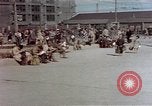
Japanese people wait for streetcars and board them in front of a station in Osaka, Japan.
Japanese people near stations in Japan. In Osaka : people on a street. People at a station. Two men talk. People wait for streetcars. People load the streetcars in front of the station. People walk around at the station. In Tokyo : people wait for trains and walk along streets.
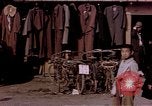
Shopkeepers sell articles and food items in a crowded market in Japan.
A market place in Japan. Clothes in a garment shop. People in their shops. A fisherman weighs fish on a balance. A man near a machine. A woman stands near a table of packed bottles. Oranges on a table in a market. A crowded market. A butcher cuts meat in a meat shop. A woman sells newspapers. People buy the newspapers.
CRITICALPAST.COM: About Us | Contact Us | FAQs - How to Order | License Agreement | My Account | My Lightboxes | Shopping Cart | Advanced Search | Featured Collections | Website Terms & Conditions | Privacy Policy ©2026 CriticalPast LLC.
License Agreement |
Terms & Conditions |
Privacy Policy
©2026 CriticalPast LLC.