


 Francais
 Deutsch
 Italiano
Refine Your Search
Yokohama Japan 1945 stock footage and images
- Showing 2125 to 2130 of 7988 results more
more Hide
Hide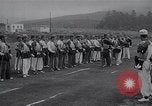
Japanese Self Defense Force training. Combined Arms School at Camp Fuji.
Japanese ground self defense force under training provided by United States and Japanese government jointly in Japan.Combined Arms School at Camp Fuji. Bayonet drill practice using wooden rifles. Firing recoiless rifles. Firing 155mm howitzers. Firing guns on Sherman tanks. Japanese mechanics repairing and maintaining 155mm howitzers. Japanese drills with semaphore flags. Japanese play volleyball at Camp Fuji. American military advisors work with general staff of Japanese self defense force in "paper war," including Command, Control and Communications exercises in the field, where. Japanese operate military communications facilities. Japanese Defense Forces in chow line and dining hall tent, during field exercises.
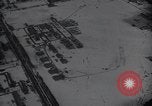
Training Japanese Ground Self Defense Forces.Hokkaido.Honshu.Japanese 2nd Division, Engineers, Armor,Artillery,Aviation
Aerial views of snow-covered Camp Ashigawa Hokkaido, Japan, home of the 2nd Division, Japanese Ground Defense Forces Northern Corps. Japanese self defense force engineers assemble a Bailey Bridge. Defense Force personnel cross the new bridge in a half-track armed with antiaircraft guns Officers of 2nd signal unit, surrounded by snow banks, work on map reading exercise. Members of 2nd artillery regiment do practical exercises in setting up and operating a 155mm howitzer, in the snow. Members of the Aviation section practice emergency receiving and sending messages from ground to air. A light airplane (PA-18?) snags a message capsule suspended between two poles. The Japanese flag. A new unit of Japanese self defense forces in Northern Honshu. Local townspeople visit the camp in motorcade of jeeps. Japanese Defense force units parade in a ceremony. High ranking Japanese Officers, along with United States Generals Orlando Troxel and Herbert J. Vander, seated during ceremony. Officer, on Japanese Defense Force Sherman tank, salutes. Squadron of L-5 Sentinal Airplanes in flight.
General of the Imperial Japanese Army, Baron Sadao Araki speaks. Images of Japanese people walking
After opening slate in Japanese, General of the Imperial Japanese Army, Baron Sadao Araki, enters and stands before the Japanese flag to introduce the film. As he continues to speak in the background, images move across the screen, including clouds, a spinning world globe, a relief map of Japan, a circular striped spinning disk, a man seen from waist down walking across low grass and foliage. He transitions to walking along a sidewalk and then to a street, where his shadow is cast on the pavement. Next, storm clouds appear, followed by numerous images of the legs and feet of ordinary people walking on a city sidewalk. Most are in Western dress. But some women wear kimonos.
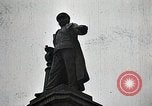
Japanese forces engaged against Chinese forces in the January 28 Incident (Shanghai Incident) of 1932
Film opens showing a Japanese monument commemorating officers in the Russo-Japanese War between Russia and Japan. Commander of a small contingent of Japanese troops offers saki to his soldiers, before they march off into combat. They rush into trenches and begin firing at Chinese forces. Next, Japanese infantry are seen moving across vast barren lands, as some take up defensive positions behind those advancing, who also begin digging holes and setting up defenses after their advance. Chinese artillery shells explode close ahead of them. Soldiers in the Japanese front lines throw smoke canisters and dense white smoke is carried by the wind to the left and side of their positions. As the smoke dissipates, shells burst again, right in front of the Japanese lines. Immediately, after, the Japanese troops leave their defensive positions and charge forward. View of a small battlefield cemetery with posts marking the graves of Japanese soldiers.
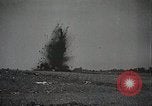
Japanese army conducts military exercises that involve inflatable rafts and pontoon bridges
Japanese Army conducts military exercise. Artillery shells explode in the distance. Some raise white smoke, while others create craters and throw large amounts of earth into the air. Japanese soldiers run carrying rolled up canvases. From them they remove and inflate rubber rafts that they carry up over a hill and down to a shoreline. They jump into the rafts and paddle furiously toward an opposite shore. The national red ball flag (sun-mark flag) is displayed on one raft. Closeup of occupants in one raft. Machine gun fire is heard in the background. The rafts reach the opposite shore where the troops jump out and charge up a hill in smoke. View from camera located at defensive obstacle as the troops arrive there. They place sections of pontoon bridges over the obstacles and cross over them. Then they carry bridge sections down a steep embankment to another shoreline where they place them end-to-end in the water to form a serpentine floating bridge. Soldiers on each section maneuver them with long poles into position spanning the water to the next shore. Next, armed troops are seen running across the new pontoon bridge. Two of them carry a version of a Hotchkiss machine gun (licensed by Japan as their Type 3 Heavy Machine Gun). One of the last few soldiers crossing the bridge, carries the sun-mark flag.
Illustrated discussion of Japanese self-sufficiency in forest products prior to World War II.
Japanese women in kimonos viewing Sakura cherry blossom trees in full bloom. Japanese loggers felling a tree. Logs readied for transport to sawmills. Japanese men pushing backwards to move a load of finished wood on a dolly. Men cutting wood for sandals in a factory. Animated map illustrating three forest regions of Japan. View of column of men walking in forest of the subtropical zone, containing oak, camphor, bamboo, and palm trees. Views of temperate zone forests containing pine, cypress, arborvitae, cedar, fir, beech, ash, chestnut, and poplar trees. The arboreal area contains coniferous forests of fir and spruce. Japanese officials in dress clothing initiate a reforestation project, as other officials and Japanese military officers watch. Women and children participate in the project. Cross-section of a cut tree illustrating products derived therefrom. Animation depicts various uses of produces wood products like sandals, houses, barracks, and military uniform for the Japanese.
CRITICALPAST.COM: About Us | Contact Us | FAQs - How to Order | License Agreement | My Account | My Lightboxes | Shopping Cart | Advanced Search | Featured Collections | Website Terms & Conditions | Privacy Policy ©2026 CriticalPast LLC.
License Agreement |
Terms & Conditions |
Privacy Policy
©2026 CriticalPast LLC.